A Comparative Study of Approved Drugs for SARS-CoV-2 by Molecular Docking
DOI:
https://doi.org/10.33084/jmd.v1i1.2148Keywords:
SARS-CoV-2, Remdesivir, Favipiravir, Lopinavir, Hydroxychloroquine, Chloroquine, Molecular dockingAbstract
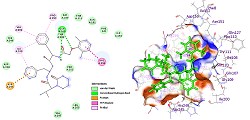
SARS-CoV-2, a new type of Coronavirus, has affected more millions of people worldwide. From the spread of this infection, many studies related to this virus and drug designing for the treatment have been started. Most of the studies target the SARS-CoV-2 main protease, spike protein of SASR-CoV-2, and some are targeting the human furin protease. In the current work, we chose the clinically used drug molecules remdesivir, favipiravir, lopinavir, hydroxychloroquine, and chloroquine onto the target protein SARS-CoV-2 main protease. Docking studies were performed using Arguslab, while Discovery Studio collected 2D and 3D pose views with the crystal structure of COVID-19 main protease in complex with an inhibitor N3 with PDB ID 6LU7. Computational studies reveal that all ligands provided good binding affinities towards the target protein. Among all the chosen drugs, lopinavir showed the highest docking score of -11.75 kcal/mol. The results from this molecular docking study encourage the use of lopinavir as the first-line treatment drug due to its highest binding affinity.
Downloads
Published
Issue
Section
License
Authors continue to retain the copyright to the article if the article is published in the Journal of Molecular Docking. They will also retain the publishing rights to the article without any restrictions.
Authors who publish with this journal agree to the following terms:
- Any article on the copyright is retained by the author(s).
- The author grants the journal, right of first publication with the work simultaneously licensed under a Creative Commons Attribution License that allows others to share work with an acknowledgment of the work authors and initial publications in this journal.
- Authors are able to enter into separate, additional contractual arrangements for the non-exclusive distribution of published articles of work (eg, post-institutional repository) or publish it in a book, with acknowledgment of its initial publication in this journal.
- Authors are permitted and encouraged to post their work online (e.g., in institutional repositories or on their websites) prior to and during the submission process, as can lead to productive exchanges, as well as earlier and greater citation of published work.
- The article and any associated published material are distributed under the Creative Commons Attribution-ShareAlike 4.0 International License.