Optimalisasi Potensi Lokal Desa Rejosari Kabupaten Malang dengan Inovasi Prouk Kuliner Berbasis Tepung Jemunak Optimizing the Local Potential of Rejosari Village, Malang Regency with Culinary Product Innovations Based on Jemunak Flour
Article Sidebar
Main Article Content
Abstract
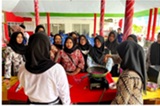
Rejosari Village in Malang Regency has long been a community development site for Universitas Negeri Malang and a regular location for student community service (KKN). One of the region's leading agricultural commodities is talas bentul, locally known as "Jemunak." The fertile soil and favorable climate provide optimal conditions for the crop's growth. However, its utilization remains limited, as most of the harvest is still sold raw in traditional markets at low prices. Some residents have attempted to produce Jemunak chips, but the quality has not yet met the standards for broader commercial distribution. The main issue lies in the lack of processing to turn the abundant Jemunak harvest into higher-value products. To address this, the community service program offered solutions such as: 1) empowering residents to process Jemunak into innovative food products like abon Jemunak (seasoned shredded Jemunak), 2) designing and providing more attractive packaging, and 3) conducting training on using digital technology for marketing via social media and online marketplaces to expand sales beyond Rejosari Village. This activity was held on July 19, 2025, at the Rejosari Village Hall, attended by two village officials, 15 PKK (Family Welfare Movement) members, 4 MSME (Micro, Small, and Medium Enterprises) representatives, and 1 Jemunak farmer. The speakers were two lecturers, assisted by two students. The program received an enthusiastic and positive response from participants eager to develop the potential of Jemunak.
Downloads
Article Details

This work is licensed under a Creative Commons Attribution-ShareAlike 4.0 International License.
Authors who publish with this journal agree to the following terms:
- Any article on the copyright is retained by the author(s).
- Author grant the journal, right of first publication with the work simultaneously licensed under a Creative Commons Attribution License that allows others to share work with acknowledgment of the work authors and initial publications in this journal.
- Authors are able to enter into a separate, additional contractual arrangements for non-exclusive distribution of published articles of work (eg, post-institutional repository) or publish it in a book, with acknowledgment of its initial publication in this journal.
- Authors are permitted and encouraged to post their work online (e.g., in institutional repositories or on their websites) prior to and during the submission process, as can lead to productive exchanges, as well as earlier and greater citation of published work.
- The article and any associated published material is distributed under the Creative Commons Attribution-ShareAlike 4.0 International License
References
Amala, A., & Rahmawati, F. (2021). Pemanfaatan Umbi Talas (Colocasia Esculenta (L.) Schoot) Sebagai Bahan Pembuatan Tarogi (Talas Onigiri) Dengan Isian Sambal Cakalang Daun Kemangi. https://journal.uny.ac.id/index.php/ptbb/article/view/44463
Balisa, D., Leffia, A., & Shino, Y. (2024). Karya ini berlisensi di bawah Creative Commons Attribution 4.0 (CC BY 4.0) Memanfaatkan Fungsi Sistem Informasi Manajemen: Prospek dan Tantangan di Dunia Bisnis. 2(2), 123–133. https://journal.pandawan.id/mentari/article/view/452
Furquim, T. S. G., Quaesner, L. S., Martins, T. S., & Korelo, J. C. (2025). Beyond clicks and likes: a typology of affect in digital marketing. In European Journal of Management and Business Economics. Emerald Publishing. https://doi.org/10.1108/EJMBE-08-2024-0278
Imran Musa, C., Ruma, Z., & Ilham Wardhana Haeruddin, M. (2025). Optimalisasi Usaha Mikro Kecil di Desa Kassi Melalui Ekonomi Kreatif Optimizing Micro and Small Enterprises in Kassi Village Through Creative Economy. Jurnal Pengabdian Masyarakat, 2(2). https://doi.org/10.62951/inovasisosial.v2i2.1571
Maria, O., Vinsensia, F., Kewa Niron, D. P., Pantaleon, M. G., Peni, J. A., Boro, R. M., Setia, A., Agung, A., Adi, A. M., Poltekkes, P. G., & Kupang, K. (2025). DAYA TERIMA BISKUIT “JATISAR” BAGI BALITA STUNTING. Cetak) Journal of Innovation Research and Knowledge, 5(1).
Nofianti, K. A., Ekowati, J., Purwanto, B. T., Prayoga, A., Yuwono, M., Prayoga, A., Rijal, M. A. S., Suciati, S., Paramita, D. P., Sulistyowaty, M. I., & Hakim, L. (2024). Upaya Peningkatan Kualitas Produk UMKM Makanan Minuman di Surabaya Melalui Pelatihan Keamanan Aditif dan Kemasan Pangan serta Program Self Declare Halal Menggunakan Aplikasi SEHATI. PengabdianMu: Jurnal Ilmiah Pengabdian Kepada Masyarakat, 9(8), 1407–1413. https://doi.org/10.33084/pengabdianmu.v9i8.7044
Putri, S. F., Widyastuti, S., Amaro, M., Rasyda, R. Z., Pawestri, S., & Unsunnidhal, L. (2025). Pengaruh Proporsi Tepung Komposit dan Konsentrasi Karagenan Terhadap Mutu Kimia, Fisik dan Organoleptik Roti Tawar Rendah Gluten. Pro Food, 11(1), 139–150. https://doi.org/10.29303/profood.v11i1.502
Salampessy, Dkk (2024). Sosialisasi Peluang Promosi Digital Produk Olahan Mangrove di Desa Pantai Bahagia Bekasi. In PROFICIO: Jurnal Pengabdian Kepada Masyarakat, 5. https://doi.org/10.36728/jpf.v5i1.2932
Santoso, U., & H. E. (2023). Ragam Kudapan Jawa.
Suminartika, E., Hapsari, H., & Deliana, Y. (2024). Pelatihan Kemasan Produk UMKM di Desa Mekarmanik Kecamatan Cimenyan Kabupaten Bandung Jawa Barat. PengabdianMu: Jurnal Ilmiah Pengabdian Kepada Masyarakat, 9(11), 2011–2019. https://doi.org/10.33084/pengabdianmu.v9i11.8139