Ta’awun-Based Psychosocial Training sebagai Strategi Penguatan Nilai Kepedulian Sosial Anggota ‘Aisyiyah Somagede, Banyumas Ta’awun-Based Psychosocial Training as a Strategy for Strengthening Prosocial Values among ‘Aisyiyah Members in Somagede, Banyumas
Article Sidebar
Main Article Content
Abstract
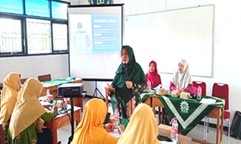
A decline in empathy and a rise in individualism have been identified as contributing factors to the weakening of social cohesion and the increasing psychological burden on society. This study was conducted to enhance social concern through the implementation of Taʾawun-Based Psychosocial Training (TBPT), a program that integrates religious values with psychosocial interventions. The training was designed using an experiential learning model consisting of four phases: concrete experience, reflection, conceptualization, and active experimentation. A total of twenty-two members of 'Aisyiyah Somagede Branch, Banyumas Regency, participated in the program. Post-test results showed a higher average score for social concern than pre-test scores. Thematic analysis revealed two psychological mechanisms underlying the development of social concern: emotional resonance (expressed as a feeling of "not having the heart"), which strengthens empathy, and the anchoring of empathy through moral identity grounded in taʾawun values. Based on these findings, it is recommended that future activities include quarterly booster sessions focusing on practical psychosocial services and case-based reflection.
Downloads
Article Details

This work is licensed under a Creative Commons Attribution-ShareAlike 4.0 International License.
Authors who publish with this journal agree to the following terms:
- Any article on the copyright is retained by the author(s).
- Author grant the journal, right of first publication with the work simultaneously licensed under a Creative Commons Attribution License that allows others to share work with acknowledgment of the work authors and initial publications in this journal.
- Authors are able to enter into a separate, additional contractual arrangements for non-exclusive distribution of published articles of work (eg, post-institutional repository) or publish it in a book, with acknowledgment of its initial publication in this journal.
- Authors are permitted and encouraged to post their work online (e.g., in institutional repositories or on their websites) prior to and during the submission process, as can lead to productive exchanges, as well as earlier and greater citation of published work.
- The article and any associated published material is distributed under the Creative Commons Attribution-ShareAlike 4.0 International License
References
Alghanam, A. M. A., & Shehadeh, J. H. (2025). Religiosity and its relationship with prosocial behavior: The mediating role of intentional self-regulation. Dirasat: Human and Social Sciences, 52(5), 1–10. https://doi.org/10.35516/hum.v52i5.7639
Anindhita, M., Haniifah, M., Putri, A. M. N., Karnasih, A., Agiananda, F., Yani, F. F., Haya, M. A. N., Pakasi, T. A., Widyahening, I. S., Fuady, A., et al. (2024). Community-based psychosocial support interventions to reduce stigma and improve mental health of people with infectious diseases: A scoping review. Infectious Diseases of Poverty, 13(1), 1–17. https://doi.org/10.1186/s40249-024-01257-6
Azizah, S. N., Wahyuningsih, S., & Susetyo, A. (2023). Literature review of an Islamic positive work behavior: Ta’awun. Fokus Bisnis. Media Pengkajian Manajemen Dan Akuntansi, 22(1), 1–6. https://doi.org/10.32639/fokbis.v22i1.161
Chan, H. H. K., Kwong, H. Y. C., Shu, G. L. F., Ting, C. Y., & Lai, F. H. Y. (2021). Effects of experiential learning programmes on adolescent prosocial behaviour, empathy, and subjective well-being: A systematic review and meta-analysis. Frontiers in Psychology, 12, Article 709699. https://doi.org/10.3389/fpsyg.2021.709699
Fadlia, I. R., & Casmini, C. (2024). Prosocial behavior in Islamic psychology. Al-Tazkiah: Jurnal Bimbingan Dan Konseling Islam, 13(1), 17–28. https://doi.org/10.20414/altazkiah.v13i1.9407
Ghanam, A. M. A. Al. (2024). Religiosity, empathy, and its relationship with prosocial behaviour: The mediating role of peer’s relationship. International Journal of Religion, 5(2), 256–266. https://doi.org/10.61707/z3xbh904
Kaleel, M. I. M., & Reeza, M. J. R. (2017). The impact of landslide on environment and socio-economy: GIS-based study on Badulla District in Sri Lanka. World Scientific News, 88(2), 69–84.
Knifton, L., & Inglis, G. (2020). Poverty and mental health: Policy, practice and research implications. BJPsych Bulletin, 44(5), 193–196. https://doi.org/10.1192/bjb.2020.78
Kondo, K. (2020). Social determinants of health in non-communicable diseases: Case studies from Japan (Vol. 41). Springer. https://link.springer.com/book/10.1007/978-981-15-1831-7
Masiran, R., Ibrahim, N., Awang, H., & Lim, P. Y. (2022). Changes in prosocial behaviors among children with behavioral problems following Incredible Years Parenting Program. Frontiers in Psychology, 13, Article 847722. https://doi.org/10.3389/fpsyg.2022.847722
Maximiano-Barreto, M. A., Luchesi, B. M., Matias, M., & Chagas, M. H. N. (2024). Effects of empathy training on psychological concerns and empathy in caregivers of older people: A randomized, double-blind, crossover clinical trial with follow-up. Geriatric Nursing, 57, 1–10. https://doi.org/10.1016/j.gerinurse.2024.02.024
Overholser, J. C. (2010). Psychotherapy that strives to encourage social interest: A simulated interview with Alfred Adler. Journal of Psychotherapy Integration, 20(4), 347–363. https://doi.org/10.1037/a0022033
Peng, L., Jiang, Y., Ye, J., & Xiong, Z. (2024). The impact of empathy on prosocial behavior among college students: The mediating role of moral identity and the moderating role of sense of security. Behavioral Sciences, 14(11), 1024. https://doi.org/10.3390/bs14111024
Petruța, R. T. R., & Stănculescu, E. (2025). The benefits of a school intervention for prosocial behaviour and psychological well-being in early adolescents. Current Psychology, 44(6), 5216–5226. https://doi.org/10.1007/s12144-025-07353-6
Purnami, R. S., & Rohayati, R. (2016). Implementasi metode experiential learning dalam pengembangan soft skills mahasiswa yang menunjang integrasi teknologi, manajemen, dan bisnis. Jurnal Penelitian Pendidikan, 13(1). https://doi.org/10.17509/jpp.v13i1.3511
Siwiyanti, L., Komariah, K., & Ramdan, A. M. (2025). Women’s leadership in Aisyiyah organizations: Study on implementation and challenges at the regional level. Islamic Management: Jurnal Manajemen Pendidikan Islam, 8(1), 649–664. https://doi.org/10.30868/im.v7i02.8203
Suud, F. M., Na’imah, T., Ismail, F. B. H., Shinta, & Mirawati. (2024). Ta’awun anti-bullying program: An experimental approach to reducing bullying behavior in Malaysia. Proceeding International Conference of Community Service.
Tampubolon, G., & Hanandita, W. (2014). Poverty and mental health in Indonesia. Social Science & Medicine, 106, 20–27. https://doi.org/10.1016/j.socscimed.2014.01.012
Trombini, C., Jiang, W., & Kinias, Z. (2025). Receiving social support motivates long-term prosocial behavior. Journal of Business Ethics, 197(4), 689–711. https://doi.org/10.1007/s10551-024-05743-7
Wang, Y., Ran, G., Zhang, Q., & Zhang, Q. (2024). The association between social support and prosocial behavior: A three-level meta-analysis. PsyCh Journal, 13(6), 1026–1043. https://doi.org/10.1002/pchj.792
Xia, W., Guo, X., Luo, J., Ye, H., Chen, Y., Chen, S., & Xia, W. (2021). Religious identity, between-group effects and prosocial behavior: Evidence from a field experiment in China. Journal of Behavioral and Experimental Economics, 91, Article 101665. https://doi.org/10.1016/j.socec.2021.101665
Zahra, D. N., & Fasa, M. I. (2018). The cooperative learning concept on Qur’an. Hunafa: Jurnal Studi Islamika, 15(1), 1–23. https://doi.org/10.24239/jsi.v15i1.508.49-67