Sosialisasi Literasi Digital: Upaya Pencegahan Dampak Negatif Gawai terhadap Kesejahteraan Mental Siswa SMA Negeri 21 Medan Digital Literacy Socialization: Efforts to Prevent the Negative Impact of Gadgets on the Mental Well-being of Students at SMA Negeri 21 Medan
Article Sidebar
Main Article Content
Abstract
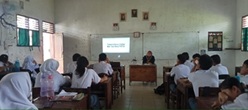
This Community Service (PkM) activity was carried out as a promotional effort to enhance digital literacy competence and mitigate the psychological risks associated with excessive gadget use among students at SMA Negeri 21 Medan. The program was implemented on October 13, 2025, using an interactive socialization method involving 33 eleventh-grade students. The intervention included lectures, discussions, and the screening of two educational videos: "Semu" Short Film by ROTARI FILMS (regarding digital ethics) and Paham Literasi Digital Biar Gak Kena Mental (regarding mental health). Evaluation data were collected through a post-socialization reflective questionnaire (post-test). Descriptive analysis results showed that the socialization successfully increased students' understanding, evidenced by 94% of respondents achieving high comprehension of digital ethics and responsibility. However, the data also highlighted that 24% of students were still exhibiting symptoms of Nomophobia (anxiety when separated from their phone) and sleep quality disturbances due to uncontrolled screen time. These findings underscore the importance of self-regulation training in digital literacy interventions to suppress psychological risks in the digital age.
Downloads
Article Details

This work is licensed under a Creative Commons Attribution-ShareAlike 4.0 International License.
Authors who publish with this journal agree to the following terms:
- Any article on the copyright is retained by the author(s).
- Author grant the journal, right of first publication with the work simultaneously licensed under a Creative Commons Attribution License that allows others to share work with acknowledgment of the work authors and initial publications in this journal.
- Authors are able to enter into a separate, additional contractual arrangements for non-exclusive distribution of published articles of work (eg, post-institutional repository) or publish it in a book, with acknowledgment of its initial publication in this journal.
- Authors are permitted and encouraged to post their work online (e.g., in institutional repositories or on their websites) prior to and during the submission process, as can lead to productive exchanges, as well as earlier and greater citation of published work.
- The article and any associated published material is distributed under the Creative Commons Attribution-ShareAlike 4.0 International License
References
Aresti, N. G., Lukmantoro, T., & Ulfa, N. S. (2023). Pengaruh tingkat fear of missing out (FoMO) dan tingkat pengawasan orang tua terhadap tingkat kecanduan penggunaan TikTok pada remaja. Jurnal Interaksi Online, 11(3), 272–284.
Bawden, D. (2008). Origins and concepts of digital literacy. In C. Lankshear & M. Knobel (Eds.), Digital literacies: Concepts, policies, and practices. Peter Lang.
Buckingham, D. (2015). The media education manifesto. Polity Press.
Fitriasari, F. (2023). Smartphone addiction dengan depresi, kecemasan dan stres pada mahasiswa. Jurnal Kesehatan Masyarakat, 11(1), 1–10.
Gilster, P. (1997). Digital literacy. Wiley.
Jogjabelajar. (2023, March 28). ILM | Paham literasi digital biar gak kena mental [Video]. YouTube. https://youtu.be/bGeJ_jbOkqY
Kementerian Komunikasi dan Informatika. (2024). Laporan nasional literasi digital Indonesia. Kominfo.
King, A. L. S., Valença, A. M., Silva, A. C. O., Baczynski, T., Carvalho, M. R., & Nardi, A. E. (2013). Nomophobia: Dependency on virtual environments or social phobia? Computers in Human Behavior, 29(1), 140–144. https://doi.org/10.1016/j.chb.2012.07.025
Kuss, D. J., & Griffiths, M. D. (2017). Social networking sites and addiction: Ten lessons learned. International Journal of Environmental Research and Public Health, 14(3), 311. https://doi.org/10.3390/ijerph14030311
Maulana, Y. (2019). Literasi media digital sebagai strategi peningkatan kompetensi digital pada siswa. Jurnal Komunikasi, 10(2), 145–156.
Miles, M. B., & Huberman, A. M. (1994). Qualitative data analysis: An expanded sourcebook (2nd ed.). Sage Publications.
Nasrullah, R. (2022). Literasi digital dan budaya media di era milenial. Prenadamedia Group.
Prasetyo, D., Hidayat, F., & Lestari, N. (2022). Dampak penggunaan media sosial terhadap kesehatan mental remaja. Jurnal Psikologi Remaja, 4(2), 112–123.
Rahman, A. (2023). Sosialisasi literasi digital sebagai upaya pencegahan hoaks di kalangan pelajar. Jurnal Pengabdian Masyarakat Edukasi Digital, 5(1), 44–53.
Rahmadani, H. (2020). Profil keterampilan literasi digital: Penelitian survei di SMA IT Al Bayyinah Pekanbaru. Jurnal Penelitian dan Pendidikan IPA, 6(2), 120–130.
Santoso, E., & Wulandari, D. (2023). Waktu layar dan gangguan tidur pada remaja digital natives. Jurnal Psikologi Kesehatan, 6(2), 77–89.
Thessia Permata Bunda, T. P., Firman, F., & Sukma, D. (2025). Peran guru BK di era digital: Mempertahankan nilai budaya dalam menghadapi revolusi industri. Madani: Jurnal Ilmiah Multidisipline, 3(1), 723–735.
UNESCO. (2021). Media and information literacy curriculum for teachers. UNESCO.
Widodo, A. (2023). Pengaruh pendekatan partisipatif terhadap literasi digital siswa SMA. Jurnal Pendidikan Teknologi Informasi, 9(1), 33–42.