Peningkatan Kapabilitas Supervisor Keperawatan dalam Monitoring Keselamatan Pasien Berbasis Aplikasi E-Supervisi Improving Nursing Supervisors' Capabilities in Monitoring Patient Safety Based on E-Supervision Application
Article Sidebar
Main Article Content
Abstract
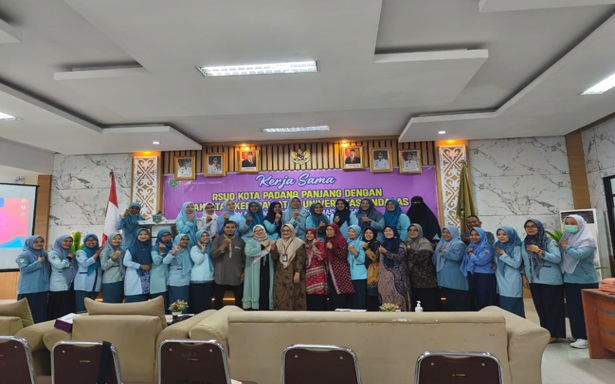
The shared vision of Progressive Indonesia toward a Golden Indonesia 2045 represents an effort to achieve the Sustainable Development Goals. One of the development issues highlighted in these goals is health, with a focus on ensuring healthy lives and promoting well-being for all people at all ages. Padang Panjang City Regional General Hospital recognizes this commitment; it has set priority targets for patient safety performance. The hospital leadership has launched patient safety programs by establishing monitoring mechanisms. The proposed strategies include enhancing supervisors' capabilities through training in effective supervision methods and strengthening the digital monitoring system through the E-Supervision Patient Safety Application. The objective of this community service program is to improve the capabilities of patient safety supervisors and to enhance safety management systems to reduce the incidence of patient safety events. This community service was conducted using a quantitative method. The implementation process consisted of three main stages: preparation, socialization of the E-Supervision Patient Safety Application method, and evaluation. The nurses' knowledge about patient safety increased significantly between the pre- and post-training periods, with a substantial improvement of 54.81%. The pretest score was 44.79%, and the posttest score was 99.6%. The knowledge components that showed the greatest improvement included patient safety goals, patient safety supervision, supervision methods, supervisors, and patient safety regulations. The E-Supervision Patient Safety Application has proven effective in increasing nurses’ knowledge.
Downloads
Article Details

This work is licensed under a Creative Commons Attribution-ShareAlike 4.0 International License.
Authors who publish with this journal agree to the following terms:
- Any article on the copyright is retained by the author(s).
- Author grant the journal, right of first publication with the work simultaneously licensed under a Creative Commons Attribution License that allows others to share work with acknowledgment of the work authors and initial publications in this journal.
- Authors are able to enter into a separate, additional contractual arrangements for non-exclusive distribution of published articles of work (eg, post-institutional repository) or publish it in a book, with acknowledgment of its initial publication in this journal.
- Authors are permitted and encouraged to post their work online (e.g., in institutional repositories or on their websites) prior to and during the submission process, as can lead to productive exchanges, as well as earlier and greater citation of published work.
- The article and any associated published material is distributed under the Creative Commons Attribution-ShareAlike 4.0 International License
References
Abuelhassan, A. E. (2019). The effect of trust in supervisor on employee organizational citizenship behaviour and knowledge sharing: Evidence from the Egyptian hospitality industry. Minia Journal of Tourism and Hospitality Research, 8(1), 55–77. search.mandumah.com
Aditya, P. T., & Ismanto, B. (2020). Model peningkatan mutu pendidikan melalui supervisi akademik berbasis web. Refleksi Edukatika: Jurnal Ilmiah Kependidikan, 11(1), 70–78. https://doi.org/10.24176/re.v11i1.4805
Aggar, C., Shinners, L., Penman, O., Mainey, L., Kurup, C., Hallett, J., Doran, F., & Raddi, S. (2021). Evaluation of a digital application to support internationally qualified nurses’ communication and leadership skills. Nurse Education Today, 104, Article 104982. https://doi.org/10.1016/j.nedt.2021.104982 sciencedirect.com
Amiri, A., & Solankallio-Vahteri, T. (2019). Nurse-staffing level and quality of acute care services: Evidence from cross-national panel data analysis in OECD countries. International Journal of Nursing Sciences, 6(1), 6–16. https://doi.org/10.1016/j.ijnss.2018.11.010
Honavar, S. G. (2020). Electronic medical records—The good, the bad and the ugly. Indian Journal of Ophthalmology, 68(3), 417–418. https://doi.org/10.4103/ijo.IJO_278_20 PMC
Lestari, E. S., Dwiantoro, L., & Denny, H. M. (2019). Sistem pelaporan insiden keselamatan pasien di sebuah rumah sakit swasta di Kudus. Jurnal Keperawatan dan Kesehatan Masyarakat Cendekia Utama, 8(2), 169–180. https://doi.org/10.31596/jcu.v8i2.416 jurnal.stikescendekiautamakudus.ac.id
Ma’ayis, S., & Haq, M. S. (2022). Implementasi model supervisi akademik digital (e-supervisi) di era pandemi COVID-19. Jurnal Inspirasi Manajemen Pendidikan, 10(1), 142–155. Komputer
Marquis, B. L., & Huston, C. J. (2017). Leadership roles and management functions in nursing: Theory and application (9th ed.). Wolters Kluwer.
Morris, R., & O’Riordan, S. (2017). Prevention of falls in hospital. Clinical Medicine, 17(4), 360–362. https://doi.org/10.7861/clinmedicine.17-4-360 PMC
Ramadhan, M. G. (2021). Audit intern dan data analytics: Studi kasus pada Inspektorat Jenderal Kementerian Keuangan. Jurnal Pengawasan, 3. PDF
Rumah Sakit Umum Daerah Kota Padang Panjang. (2024). Laporan mutu tahunan RSUD Kota Padang Panjang.
National Institute for Occupational Safety and Health. (2022). Workplace safety and health topics. Centers for Disease Control and Prevention. https://www.cdc.gov/niosh/topics/
Tomlinson, J. (2015). Using clinical supervision to improve the quality and safety of patient care: A response to Berwick and Francis. BMC Medical Education, 15, Article 103. https://doi.org/10.1186/s12909-015-0324-3