Edukasi dan Pelatihan Pengelolaan Sampah Organik dengan Lalat Tentara Hitam di Brastagi, Sumatera Utara Education and Training on Organic Waste Management with Black Soldier Flies in Berastagi District, North Sumatra
Article Sidebar
Main Article Content
Abstract
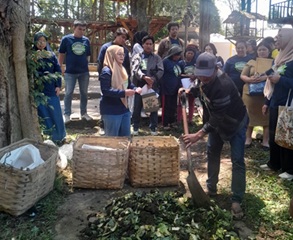
The community in Brastagi generates significant amounts of organic waste, which poses a threat to environmental quality and public health due to inadequate management. Black soldier fly (BSF) larvae effectively convert organic waste into compost and protein feed, but their use at the community level remains insufficient. This initiative aims to educate market traders and farmers in Berastagi about organic waste management using BSF maggots. The service consists of three stages: stakeholder coordination and needs assessment, education on waste sorting and sustainable organic waste management, and training in media manufacturing, maggot cultivation, and composting. The results showed participants' enthusiasm and engagement during the educational and practical sessions. Participants gained knowledge of distinguishing between waste types, the benefits of composting, and basic techniques for maggot maintenance and organic waste management. This initiative raised awareness of hygiene and environmental health, and of the potential to turn organic waste into a valuable resource near the Mejuah-juah Garden Market. Overall, the BSF maggot-based organic waste management education program is considered effective in promoting community empowerment and can serve as a model for sustainable waste management in Brastagi District.
Downloads
Article Details

This work is licensed under a Creative Commons Attribution-ShareAlike 4.0 International License.
Authors who publish with this journal agree to the following terms:
- Any article on the copyright is retained by the author(s).
- Author grant the journal, right of first publication with the work simultaneously licensed under a Creative Commons Attribution License that allows others to share work with acknowledgment of the work authors and initial publications in this journal.
- Authors are able to enter into a separate, additional contractual arrangements for non-exclusive distribution of published articles of work (eg, post-institutional repository) or publish it in a book, with acknowledgment of its initial publication in this journal.
- Authors are permitted and encouraged to post their work online (e.g., in institutional repositories or on their websites) prior to and during the submission process, as can lead to productive exchanges, as well as earlier and greater citation of published work.
- The article and any associated published material is distributed under the Creative Commons Attribution-ShareAlike 4.0 International License
References
Ali, A. M. T., Mandra, Moh. A. S., Yusuf, A. Z., Jumadin, J., & Suryana, S. (2024). PKM Pelatihan Pemanfaatan Sampah Organik Rumah Tangga Untuk Budidaya Maggot Bagi Urban Community. Jurnal Pengabdian Masyarakat. https://doi.org/10.59562/abdimas.v2i1.2311
Amelia, N. and Rafidah, R. (2021). Kemampuan Lalat Tentara Hitam (Hermetia Llucens) dalam Menguraikan Sampah Organik Menjadi Kompos. Sulolipu Media Komunikasi Sivitas Akademika Dan Masyarakat, 21(1), 90. https://doi.org/10.32382/sulolipu.v21i1.2043
Anggela, A. and Kurniawati, D. (2022). Pembuatan Pupuk Kompos dari Limbah Organik Rumah Tangga di Kelurahan Manggar, Balikpapan Timur. Sinar Sang Surya Jurnal Pusat Pengabdian Kepada Masyarakat, 6(2), 323. https://doi.org/10.24127/sss.v6i2.2189
Argarini, D., Rochsun, R., Sunuyeko, N., & Litik, B. (2023). Pelatihan pembuatan pupuk kompos dari daun kering. prosiding_pengabmas, 1(01), 14-21. https://doi.org/10.33503/prosiding_pengabmas.v1i01.3567
Bahri, S., Ambarwati, Y., Notiragayu, N., Marlina, L., & Setiawan, A. (2022). Training For The Production Of Organic Fertilizer From Kitchen Waste In Rukti Endah Village, Central Lampung Regency. Community Empowerment, 7(12), 2039-2048. https://doi.org/10.31603/ce.6985
Eliana, R., Hartanti, A., & Canti, M. (2019). Metode Komposting Takakura Untuk Pengolahan Sampah Organik Rumah Tangga Di Cisauk, Tangerang. Jurnal Perkotaan, 10(2), 76-90. https://doi.org/10.25170/perkotaan.v10i2.306
Hasna N., Juwana, I., & Satori, M. (2020). Studi Komparasi Komposter Berbasis Masyarakat. Jurnal Reka Lingkungan, 9(1), 34-44. https://doi.org/10.26760/rekalingkungan.v9i1.34-44
Haryanta, D., Sa’adah, T., & Wahestri, R. (2022). Kajian Kompos Limbah Black Soldier Fly (BSF) Sebagai Pupuk Organik Tanaman Tomat (Solanum lycopersicum). JAMP, 6(2), 9. https://doi.org/10.51213/jamp.v6i2.76
Heriani, I., Hamid, A., & Megasari, I. (2024). Pelatihan Pendampingan Pemanfaatan Dari Sampah Rumah Tangga Menjadi Pupuk Organik Di Kecamatan Banjarmasin Utara. IERJ, 2(3), 1479-1486. https://doi.org/10.62976/ierj.v2i3.728
Hilman, A., Nasution, T., Harahap, Z., Hakim, L., Sadeli, A., Juliati, T., … & Banurea, R. (2021). Pemanfaatan Penggunaan Maggot Lalat Tentara Hitam Sebagai Pakan Ternak Alternatif Tinggi Protein di Desa Sayur Matua. Talenta Conference Series Local Wisdom Social and Arts (Lwsa), 4(1). https://doi.org/10.32734/lwsa.v4i1.1163
Hudawiguna, S., Aat, A., & Rahayu, S. (2022). Perancangan Aplikasi Penjualan Online Daur Ulang Sampah Berbasis Android. Jurnal Algoritma, 19(2), 798-809. https://doi.org/10.33364/algoritma/v.19-2.1171
Karim, A., Rahman, A., & Suryawan, I. (2023). Analisa Faktor Yang Mempengaruhi Masyarakat Di Wilayah Berkembang Dalam Berpartisipasi Dalam Pengolahan Sampah Berbasis Black Soldier Fly (Studi Kasus: Kecamatan Pantai Labu, Sumatera Utara). Jurnal Permukiman, 18(2), 103-112. https://doi.org/10.31815/jp.2023.18.103-112
Kusmendar, K., Setyawan, A., Arief, A., Alkolid, Y., Purnomo, T., Istiqomah, N., … & Apriyanti, R. (2023). Socialization Of Composting Technology For Culinary Waste Management In Kampung Emas. Journal of Community and Development, 4(2), 120-129. https://doi.org/10.47134/comdev.v4i2.161
Manuputty, M., Jacob, A., & P, J. (2018). Pengaruh Effective Inoculant Promi Dan Em4 Terhadap Laju Dekomposisi Dan Kualitas Kompos Dari Sampah Kota Ambon. Agrologia, 1(2). https://doi.org/10.30598/a.v1i2.290
Masjud, Y., Sidjabat, F., Rahmiati, F., & Amin, G. (2022). Training On Making Composter Bins For Household Organic Waste Treatment. Abdimas Jurnal Pengabdian Masyarakat Universitas Merdeka Malang, 7(1), 21-29. https://doi.org/10.26905/abdimas.v7i1.6057
Muktiono, A., Pratiwi, S., Herawati, S., Loen, M., & Darmiyati, L. (2023). Pemberdayaan Masyarakat Dalam Pengurangan Sampah dengan CSR Bank BTN dan LPPM UNKRIS. SIKAMA, 1(2), 102-111. https://doi.org/10.61488/sikama.v1i2.17
Paputungan, M., Anggoro, V., Ramli, R., Awari, D., Azizah, E., Haikal, J., … & Octavia, A. (2022). Sosialisasi Pengelolaan Sampah Organik Melalui Budidaya Maggot BSF di Desa Jembayan Dalam, Kalimantan Timur. Jurnal Abdi Insani, 9(4), 1545-1554. https://doi.org/10.29303/abdiinsani.v9i4.774
Pasaribu, K. M., Damanik, W., Tampubolon, N. U., Parapat, A. L., & Purba, K. T. B. (2025). Edukasi Pengelolaan Sampah Organik Untuk Peningkatan Kesehatan Lingkungan Di Desa Bandar Tengah. Bhakti Nagori. https://doi.org/10.36378/bhakti_nagori.v5i1.4273
Pratama, N., Sutrisno, I., & Rinanto, N. (2024). Penerapan Logika Fuzzy Untuk Meningkatkan Efisiensi Pengembangbiakan Maggot Berbasis IoT. Jurnal Elektronika Dan Otomasi Industri, 11(1), 218-226. https://doi.org/10.33795/elkolind.v11i1.5195
Prihanta, W., Purwanti, E., Muizzudin, M., & Faizah, F. (2023). Pelatihan Pengolahan Sampah Dan Aplikasinya Pada Budidaya Sayuran Organik Bagi Siswa Sekolah Menengah Atas. Jurnal Pengabdian Undikma, 4(2), 480. https://doi.org/10.33394/jpu.v4i2.7017
Rafiqi, R. and Marsella, M. (2022). Pengelolaan Sampah Rumah Tangga An-Organik (Studi Ikatan Keluarga Besar Istri Pabrik Gula Sei Semayang PT. Nusantara 2. Prioritas Jurnal Pengabdian Kepada Masyarakat, 4(01), 21-25. https://doi.org/10.35447/prioritas.v4i01.425
Ramadhani, R., Abdullah, B., Fitria, F., Manaki, G., Antareja, G., Hidayat, J., … & Amalia, R. (2024). Pengolahan Sampah Organik Berbasis Maggot (Black Soldier Fly) Untuk Mendukung Keberlangsungan Zero Waste Di Desa Bilok Petung Kecamatan Sembalun Kabupaten Lombok Timur. Jurnal Wicara Desa, 2(3), 35-45. https://doi.org/10.29303/wicara.v2i3.4101
Rusli, R., Khaer, A., Budi, B., Andini, M., & Haerani, H. (2022). Pemanfaatan Lalat Tentara Hitam (Hermetia Illucens) Dalam Mengolah Sampah Menjadi Kompos. MIRK, 3(2), 73. https://doi.org/10.32382/mirk.v3i2.3151
Selomo, M., Birawida, A., Mallongi, A., & Muammar, M. (2017). Bank Sampah Sebagai Salah Satu Solusi Penanganan Sampah di Kota Makassar. Media Kesehatan Masyarakat Indonesia, 12(4), 232-240. https://doi.org/10.30597/mkmi.v12i4.1543
Suwondo, S., Darmadi, D., & Hendrizal, A. (2020). Pengembangan Sistem Komposting Melalui Bank Sampah Di Desa Petani, Kecamatan Bathin Solapan. UNRI Conference Series Community Engagement, 2, 445-453. https://doi.org/10.31258/unricsce.2.445-453
Syaifudin, A., Avitasari, R., Lestari, Y., Lutfi, J., Maula, I., Mauludi, A., … & Astuti, F. (2024). Pemberdayaan Masyarakat Desa Dalam Pemanfaatan Sampah Organik Melalui Pelatihan Pembuatan Pupuk Organik. Prima Abdika Jurnal Pengabdian Masyarakat, 4(1), 175-183. https://doi.org/10.37478/abdika.v4i1.3326
Tantalu, L., Supartini, N., Indawan, E., & Ahmadi, K. (2022). Pemanfaatan Maggot Untuk Pengolahan Sampah Organik Di Kecamatan Kedungkandang, Kota Malang. JAPI (Jurnal Akses Pengabdian Indonesia), 7(2), 171-178. https://doi.org/10.33366/japi.v7i2.3705
Ulfa, S. (2018). Pembuatan Pupuk Organik Cair Berbasis Limbah Padat Biogas Pada Peternak Sapi Perah Sekar Sari "Setia Kawan" Desa Tutur Kabupaten Pasuruan. Journal of Innovation and Applied Technology, 4(1), 708-712. https://doi.org/10.21776/ub.jiat.004.01.14
Utiningtyas, A., Nugroho, M., Anggoro, V., Ikhwanudin, M., Nurfuad, K., Wahyuningsih, A., … & Haris, M. (2023). Pemanfaatan Sampah Organik Menggunakan Metode Komposter Di Kelurahan Banyumanik Kota Semarang. Jurnal Inovasi Dan Pengabdian Masyarakat Indonesia, 2(3), 63-66. https://doi.org/10.26714/jipmi.v2i3.127