Edukasi Keuangan bagi Warga Desa Lemoh Uner: Investasi sebagai Gaya Hidup Financial Education for Rural Residents of Lemoh Uner: Investing as a Lifestyle
Article Sidebar
Main Article Content
Abstract
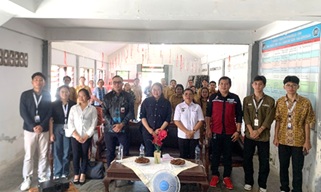
The gap in financial literacy and inclusion is occurring not only in urban areas but also in rural areas. This gap indicates that people who use financial products or services are still not well-literate. Financial problems found in the field suggested that high living expenses make it difficult to set aside or save money, especially for investment purposes. Community service activities in Lemoh Uner Village focused on providing financial literacy through financial education for villagers. Community service activities were implemented through the preparation, implementation, reporting, and publication stages. The increase in financial literacy resulting from the implemented education was indicated by a change from a pre-test score of 38.89 percent to a post-test score of 76.85 percent, suggesting that financial education in Lemoh Uner Village increased local villagers' financial knowledge and literacy, especially regarding a conscious investment lifestyle. By increasing financial knowledge or literacy, it is also expected that Lemoh Village residents will have wiser financial attitudes. Community service through financial education can build awareness among Lemoh Uner Village residents about planning for future funds and investing intelligently and safely.
Downloads
Article Details

This work is licensed under a Creative Commons Attribution-ShareAlike 4.0 International License.
Authors who publish with this journal agree to the following terms:
- Any article on the copyright is retained by the author(s).
- Author grant the journal, right of first publication with the work simultaneously licensed under a Creative Commons Attribution License that allows others to share work with acknowledgment of the work authors and initial publications in this journal.
- Authors are able to enter into a separate, additional contractual arrangements for non-exclusive distribution of published articles of work (eg, post-institutional repository) or publish it in a book, with acknowledgment of its initial publication in this journal.
- Authors are permitted and encouraged to post their work online (e.g., in institutional repositories or on their websites) prior to and during the submission process, as can lead to productive exchanges, as well as earlier and greater citation of published work.
- The article and any associated published material is distributed under the Creative Commons Attribution-ShareAlike 4.0 International License
References
Andarsari, P.R., Ningtyas, M.N. 2019. The Role of Financial Literacy on Financial Behavior. Journal of Accounting and Business Education, 4 (1), September 2019. http://dx.doi.org/10.26675/jabe.v4i1.8524
BEI. (2025, Edisi 36 November 2025). IDXBELL p. 16. https://www.idx.co.id/id/tentang-bei/idxbell-newsletter/
I G.A.N Alit SumantriI Gusti Agung Ayu Pramita Indraswari. 2024. Peran Literasi Keuangan dalam Meningkatkan Pembangunan Ekonomi Masyarakat Desa. Jurnal Akademik Pengabdian Masyarakat, 2(4) Juli 2024. https://doi.org/10.61722/japm.v2i4.2136
Kartini, K., Kismanti, S. T., Putri, F. C., Islami, R. N., Margaret, S., Rahmatullah, D., & Tobing, R. F. 2025. Pemberdayaan Ekonomi Melalui Edukasi Literasi Keuangan dan Investasi di Desa Lidung Kemenci Kabupaten Malinau. ARSY : Jurnal Aplikasi Riset Kepada Masyarakat, 6(1), 100-109. https://doi.org/10.55583/arsy.v6i1.1219
Kusumahadi, T. A., & Utami, N. 2024. Pentingnya Literasi Keuangan di Pedesaan: Studi Pada Desa Tegalsari, Kabupaten Magelang, Jawa Tengah. Jurnal Inovasi Penelitian Dan Pengabdian Masyarakat, 4(2), 240-254. https://doi.org/10.53621/jippmas.v4i2.371
Litamahuputty, J. V. ., & Sipakoly, S. . (2024). Peningkatan Literasi Keuangan Masyarakat Melalui Program Edukasi dan Pelatihan Keuangan. Community Development Journal : Jurnal Pengabdian Masyarakat, 5(2), 3640–3646. https://doi.org/10.31004/cdj.v5i2.27390
Lusardi, A., Mitchell, O. 2015. The Economic Importance of Financial Literacy: Theory and Evidence. Journal of Economic Literature 2014, 52(1), 5–44. http://dx.doi.org/10.1257/jel.52.1.5
Marwal, M. R. ., Amalo, F. ., Hasyim, A. M. ., Normansyah, N., & Suyatno, A. . (2023). STRATEGI PENINGKATAN LITERASI KEUANGAN UNTUK MASYARAKAT BERPENGHASILAN RENDAH. Community Development Journal: Jurnal Pengabdian Masyarakat, 4(5), 9769–9773. https://doi.org/10.31004/cdj.v4i5.20923
OJK. 2025. Buku Saku Pasar Modal. Departemen Pengaturan dan Pengembangan Pasar Modal. https://ojk.go.id/id/berita-dan-kegiatan/info-terkini/Pages/Buku-Saku-Pasar-Modal-2025.aspx Diakses 2 Februari 2026.
OJK, BPS. 2025. Siaran Pers Bersama: Indeks Literasi dan Inklusi Keuangan Masyarakat Meningkat. https://ojk.go.id/id/berita-dan-kegiatan/siaran-pers/Documents/Pages/OJK-dan-BPS-Umumkan-Hasil-Survei-Nasional-Literasi-Dan-Inklusi-Keuangan-SNLIK-Tahun-2025/
OJK. 2024. Edukasi Keuangan. https://ojk.go.id/id/kanal/edukasi-dan-perlindungan-konsumen/Pages/literasi-keuangan.aspx
Pangkey, I., Lengkong, F., & Tulusan, F. 2021. Dampak Kebijakan Penanganan Pandemi Covid-19 pada Perekonomian dan Kesehatan Masyarakat di Desa Lemoh Uner Kecamatan Tombariri Timur Kabupaten Minahasa. JURNAL ADMINISTRASI PUBLIK, 7(109). https://ejournal.unsrat.ac.id/v3/index.php/JAP/article/view/35346
Parwati, K.S., Putra, I.P. 2022. Kegiatan Literasi Keuangan Sebagai Upaya Peningkatan Pengetahuan Finansial bagi Masyarakat Desa Wisata Pinge. Publikasi Ilmiah Bidang Pengabdian Kepada Masyarakat (SIKEMAS), 1(1):9-16. https://doi.org/10.47353/sikemas.v1i1.220
Silvia Ekasari, Kholid Ansori, & Nurussama. (2024). Strategies for Improving Financial Literacy in Rural Communities: A Literature Review. Journal of Community Dedication, 4(2), 368–382. https://adisampublisher.org/index.php/pkm/article/view/706
ZHang, H., Xiong, X. 2020. Is Financial Education an Effective Means to Improve Financial Literacy? Evidence from Rural China. Agricultural Finance Review, 80(3), 2020 pp. 305-320. https://doi.org/10.1108/AFR-03-2019-0027