Penguatan Ketahanan Pangan Berbasis Sekolah melalui Edukasi Pupuk Organik Cair dan Analisis Kesadaran Lingkungan Siswa Berdasarkan NEP dan SDGs Strengthening School-Based Food Security through Liquid Organic Fertilizer Education and the Analysis of Students' Environmental Awareness Based on the NEP and SDGs
Article Sidebar
Main Article Content
Abstract
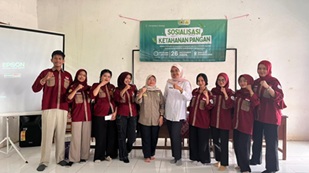
Food security is an integral component of sustainable development efforts and can be strengthened by leveraging vocational schools as spaces for learning and agricultural practice. This activity was conducted at SMK Negeri 15 Pandeglang, using the school garden as an educational medium to process organic waste into liquid organic fertilizer, accompanied by an assessment of students’ environmental awareness and understanding of food security. Data were collected through field observations, activity documentation, and questionnaires administered before and after the implementation. The use of the school garden demonstrated its potential as a contextual learning platform, although several limitations were identified, including constraints in facility management, pest disturbances, and limited utilization of harvest products. The educational and practical activities fostered a deeper understanding of natural resource limitations, ecosystem balance, and the importance of diversification and effective use of agricultural outputs. Overall, the activity helped strengthen students’ environmental awareness, motivation, and readiness to apply sustainable agricultural practices to support school-based food security.
Downloads
Article Details

This work is licensed under a Creative Commons Attribution-ShareAlike 4.0 International License.
Authors who publish with this journal agree to the following terms:
- Any article on the copyright is retained by the author(s).
- Author grant the journal, right of first publication with the work simultaneously licensed under a Creative Commons Attribution License that allows others to share work with acknowledgment of the work authors and initial publications in this journal.
- Authors are able to enter into a separate, additional contractual arrangements for non-exclusive distribution of published articles of work (eg, post-institutional repository) or publish it in a book, with acknowledgment of its initial publication in this journal.
- Authors are permitted and encouraged to post their work online (e.g., in institutional repositories or on their websites) prior to and during the submission process, as can lead to productive exchanges, as well as earlier and greater citation of published work.
- The article and any associated published material is distributed under the Creative Commons Attribution-ShareAlike 4.0 International License
References
Agustina, D. U., Rahman, F. A., Supriyadi, S., & Wasonowati, C. (2024). Evaluasi Pupuk Nitrogen Lepas Lambat Pada Tanaman Jagung (Zea mays L.) Evaluation of Slow Release Nitrogen Fertilizers for Corn (Zea mays L.). Jurnal Tanah Dan Sumberdaya Lahan, 11(1), 95–102. https://doi.org/10.21776/ub.jtsl.2024.011.1.11
Amirullah, G., Sintia, P., & Meitiyani. (2024). New Environmental Paradigm (NEP) Dan Perilaku Pro-Lingkungan Pencapaian Tujuan Ke 13 Sustainable Development Goals (SDGS). DE_JOURNAL (Dharmas Education Journal), 5(1), 668–674. http://ejournal.undhari.ac.id/index.php/de_journal
Astutik, R. P., Septian, P. D., Andini, I. N., Fitriya, N. I., & Radianto, D. O. (2024). Pengembangan Teknologi Ramah Lingkungan Untuk Pengolahan Limbah Padat Menuju Produksi Bebas Limbah. Venus: Jurnal Publikasi Rumpun Ilmu Teknik, 2(2), 83–96. https://doi.org/10.61132/venus.v2i2.250
Castro, J. E. Q., & Castro, M. D. P. Q. (2026). Global Research Trends in Environmental Education and Environmental Awareness : A Bibliometric Analysis. Jurnal Pendidikan IPA Indonesia, 15(1), 29–39. https://doi.org/10.15294/jpii.v15i1.40218
Cebri, G., Junyent, M., & Mul, I. (2020). Competencies in Education for Sustainable Development : Emerging Teaching and Research Developments. https://doi.org/10.3390/su12020579
Ferdiansyah, A., Mutiati, E., & Rukmana, S. (2025). Penanaman Sikap Kepedulian Lingkungan dalam Paradigma Pembelajaran Modern Melalui Analisis Pencemaran Lokal Berbasis Skala New Ecological Paradigm (NEP) pada Mata Kuliah Biomonitoring. Pendas : Jurnal Ilmiah Pendidikan Dasar, 10(4), 2548–6950. https://doi.org/10.23969/jp.v11i01.41203
Gulo, A., Lawolo, A. J., Zebua, O. Z., Laoli, D. A., Lase, N. K., Nias, U., Nias, U., Nias, U., Nias, U., & Nias, U. (2024). Inovasi pupuk organik untuk pertanian ramah lingkungan. 01, 68–73. https://doi.org/10.70134/penarik.v1i1.190
Haryanta, D., Zahro, F., Komprehensif, H. B., & Kelas, P. T. (2025). Peningkatan Hasil Belajar Komprehensif melalui Pendekatan Kontekstual pada Materi Pembiakan Generatif Tanaman di SMK. Pubmedia Jurnal Penelitian Tindakan Kelas Indonesia, 2(3), 1–14. https://doi.org/10.47134/ptk.v2i3.1563
Heryadi, D. Y., Rofatin, B., Tedjaningsih, T., & Nurcahya, I. (2024). Implementasi Diversifikasi Konsumsi Pangan Lokal dan Faktor-faktor yang Memengaruhinya dalam Menu Keluarga untuk Menunjang Ketahanan Pangan Implementation of Diversification of L. Mimbar Agribisnis: Jurnal Pemikiran Masyarakat Ilmiah Berwawasan Agribisnis, 10(1), 843–850. http://dx.doi.org/10.25157/ma.v10i1.12612
Husamah, H., Suwono, H., Nur, H., & Dharmawan, A. (2022). Environmental education research in Indonesian Scopus indexed journal: A systematic literature review. JPBI (Jurnal Pendidikan Biologi Indonesia), 8(2), 105–120. https://doi.org/10.22219/jpbi.v8i2.21041
Kopnina, H. (2020). Education for the future? Critical evaluation of education for sustainable development goals. The Journal of Environmental Education, 51(4), 280–291. https://doi.org/10.1080/00958964.2019.1710444
Ling, S., Landon, A., Tarrant, M., & Rubin, D. (2020). Sustainability Education and Environmental Worldviews : Shifting a Paradigm. Sustainability, 12(8258), 1–19. https://doi.org/10.3390/su12198258
Manurung, R. T., Saputra, N., Dumiyati, D., Putu, N., & Yuliartini, R. (2025). Empowering the Program of Sustainable Development Goals ( SDGs ) through Literacy in Improving the Quality of Education. 11(2), 649–659. https://doi.org/10.64252/frwvgb78
Melo, R. H., Moko, F., & Saleh, S. E. (2024). Tantangan Pembangunan Sumberdaya Alam di Indonesia: Dampak Lingkungan dan Ekonomi dalam Pencapaian Keberlanjutan. Jurnal Penelitian Geografi (GeoJPG), 3(2), 149–154. https://doi.org/10.37905/geojpg.v3i2.29544
Missleini. (2023). Kerusakan Lingkungan dan Jasa Ekosistem Akibat Perilaku Tekanan Manusia. Aladalah: Jurnal Politik, Sosial, Hukum Dan Humaniora, 1(3), 256–268. https://doi.org/10.59246/aladalah.v1i3.418
Musyafa, W., Pratama, R. A., Khotimah, S., Amriyah, C., & Mustofa, I. (2025). Membangun Kesadaran Lingkungan Dalam Penguatan Kurikulum Perguruan Tinggi Islam di Indonesia. Pendas : Jurnal Ilmiah Pendidikan Dasar, 10(4), 477–489. https://doi.org/10.23969/jp.v10i04.34897
Nasrullah, A., Fitriani, N., Maimunah, S., Nindia, S., Haris, M., Madura, U. T., & Indah, P. T. (2025). Penerapan Edukasi Suistanable Development Goals ( SDGS ) Dalam Meningkatkan Kualitas Pendidikan Peserta Didik Sdn Ba ’ Engas 1. JURNAL MEDIA AKADEMIK (JMA), 3(1), 1–13. https://doi.org/10.62281/v3i1.1533
Rahayu, Y., Indah, N. I. A., Ilmi, N., Asram, A., & Indirwan, D. (2026). Dari Pengetahuan ke Praktik : Edukasi Partisipatif Berbasis Herbal Lokal sebagai Strategi Perubahan Perilaku Kesehatan Masyarakat. JOMPA ABDI: Jurnal Pengabdian Masyarakat, 5(1), 89–95. https://jurnal.jomparnd.com/index.php/jpabdi%0AVol.
Rohmadi, M., Septiana, N., & Astuti, P. A. P. (2022). Pembuatan Pupuk Organik Cair dan Kompos dari Limbah Organik Rumah Tangga. Jurnal Ilmu Lingkungan, 20(4), 880–886. https://doi.org/10.14710/jil.20.4.880-886
Rumawas, V. V, Nayoan, H., & Kumayas, N. (2021). Peran Pemerintah Dalam Mewujudkan Ketahanan Pangan di Kabupaten Minahasa Selatan (Studi Dinas Ketahanan Pangan Minahasa Selatan). Jurnal Governance, 1(1), 1–12. https://ejournal.unsrat.ac.id/v3/index.php/governance/article/view/33652
Saefudin, Kusnadi, Suwandi, T., Najira, Baharudin, R., & Rachman, H. T. (2025). Integration of Permaculture To Reinvent Students’ Interest in Nature and Environmental Awareness for Quality Education Under Sdg-4. Jurnal Pendidikan IPA Indonesia, 14(1), 192–201. https://doi.org/10.15294/jpii.v14i1.22122
Sitanggang, Y., Sitinjak, E. M., Vita, N., Destty, M., Gideon, S., & Sitorus, F. (2022). Pembuatan Pupuk Organik Cair (POC) Berbahan Baku Limbah Sayuran/Buah di Lingkungan I, Kelurahan Namo Gajah Kecamatan Medan Tuntungan, Medan. Jurnal Pengabdian Ilmiah Dan Teknologi, 1(1), 17–20. https://akses.ptki.ac.id/jurnal/index.php/apitek/article/view/25
Sofwatillah, Risnita, M., Jailani, S., & Saksitha, D. A. (2024). Tehnik Analisis Data Kuantitatif Dan Kualitatif Dalam. Journal Genta Mulia, 15(2), 79–91. https://jurnal.jomparnd.com/index.php/jpabdi%0AVol.
Srifridayanti, Samkamaria, & Widana, A. R. (2025). Sustainable Development Goals: Analisis Kebijakan Diversifikasi Pangan untuk Mewujudkan Nol Kelaparan di Indonesia. Jurnal Kolaboratif Sains, 8(1), 812–818. https://doi.org/10.56338/jks.v8i1.6597
United Nation. (2021a). National strategies and SDG integration. Department of Economic and Social Affairs. https://sdgs.un.org/topics/national-sustainable-development-strategies
United Nation. (2021b). Sustainable consumption and production. Department of Economic and Social Affairs. https://sdgs.un.org/topics/sustainable-consumption-and-production
United Nation. (2023). End hunger, achieve food security and improved nutrition and promote sustainable agriculture. Department of Economic and Social Affairs Sustainable Development. https://sdgs.un.org/goals/goal2%0A
Wibowo, N. A., Sumarmi, S., Utaya, S., & Bachri, S. (2023). Students Environmental Care Attitude : A Study at Adiwiyata Public High School Based on the New Ecological Paradigm ( NEP ). Sustainability Article, 15(8651), 1–18. https://doi.org/10.3390/su15118651
Yuniwati, E. D. (2023). Pemanfaatan Kebun Pangan Universitas Sebagai Sarana Pengajaran Hortikultura: Belajar dari Pengalaman Proyek. Jurnal Penelitian Tindakan Kelas, 1(3), 135–143. https://doi.org/10.61650/jptk.v1i3.268