Pemberdayaan Jasa Pijat Penyandang Tuna Netra Berbasis Nilai Syariah Melalui Pendampingan Komunitas Empowerment of Sharia-Based Massage Services for Visually Impaired Persons Through Community Assistance
Article Sidebar
Main Article Content
Abstract
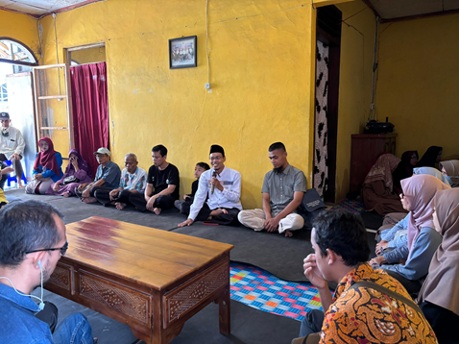
Visually impaired individuals who work as traditional massage therapists often face challenges related to professionalism, service standardization, and the integration of religious values into daily economic practices. This community engagement program developed a sharia-based empowerment model by strengthening literacy in Islamic contract law, internalizing Islamic professional ethics, and formulating a community-based Islamic service standard. A participatory approach was applied through an initial needs assessment, training on Islamic values and service contracts, mentoring in implementing service standards, and pre- and post-activity evaluations. The results indicate a substantial increase in participants’ average understanding from 53.6% to 94.6%, representing a 41-percentage-point improvement. Behavioral changes were also observed in the consistent agreement on service fees prior to treatment, adherence to sharia boundaries in service interactions, and more professional communication with clients. In addition, a collectively agreed Islamic massage service guideline was established, strengthening professional identity and social legitimacy. The empowerment model not only enhanced cognitive capacity but also reinforced awareness of values and professional dignity within an Islamic framework. The integration of sharia principles into informal service practices proved to be an effective, contextual, and sustainable strategy for inclusive economic empowerment.
Downloads
Article Details

This work is licensed under a Creative Commons Attribution-ShareAlike 4.0 International License.
Authors who publish with this journal agree to the following terms:
- Any article on the copyright is retained by the author(s).
- Author grant the journal, right of first publication with the work simultaneously licensed under a Creative Commons Attribution License that allows others to share work with acknowledgment of the work authors and initial publications in this journal.
- Authors are able to enter into a separate, additional contractual arrangements for non-exclusive distribution of published articles of work (eg, post-institutional repository) or publish it in a book, with acknowledgment of its initial publication in this journal.
- Authors are permitted and encouraged to post their work online (e.g., in institutional repositories or on their websites) prior to and during the submission process, as can lead to productive exchanges, as well as earlier and greater citation of published work.
- The article and any associated published material is distributed under the Creative Commons Attribution-ShareAlike 4.0 International License
References
Abida, F. N., & Fibrianto, A. S. (2023). Praktik Sosial Pemberdayaan Penyandang Disabilitas Netra Melalui Komunitas Tuna Netra (KTN) di Desa Babadan. Jurnal Socius: Journal of Sociology Research and Education, 10(2), 93–104. https://doi.org/10.24036/scs.v10i2.607
Al-Zuhaili, W. (2020). Fiqh al-Islām wa Adillatuhu. Dar al-Fikr: Damsyik.
Alfalisyado, Aryoko, Y. P., Firdaus, & Fauziridwan, M. (2023). Penguatan Bisnis Melalui Pelatihan Pengelolaan Keuangan Berbasis Digital Bagi Pelaku UMKM Di Kecamatan Wangon. JCSE: Journal of Community Service and Empowerment, 4(2), 148–155. https://jurnal.universitasputrabangsa.ac.id/index.php/jcse/article/view/453%0Ahttps://jurnal.universitasputrabangsa.ac.id/index.php/jcse/article/download/453/275
Atika, A R Iradianty, et all. (2024). Pengembangan Bisnis UMKM Santri Disabilitas Tuna Netra pada Bidang Inovasi dan Pemasaran di Cianjur Jawa Barat. Indonesian Journal of Humanities and Social Sciences, 5(1), 367–378. https://ejournal.uit-lirboyo.ac.id/index.php/IJHSS/article/view/4959
Auda, J. (2008). Maqasid al-Shariah as philosophy of Islamic law: A systems approach. International Institute of Islamic Thought (IIIT). https://iiit.org/wp-content/uploads/Maqasid-Al-Shariah-as-a-Philosophy-of-Islamic-Law-Combined.pdf
Ayudia, I. (2022). Studi Komparatif Terhadap Yayasan Kesejahteraan Tunanetra Islam (Yaketunis) Dan Yayasan Kristen Panti Asih Pakem. ICODIE, 2(1), 1–13. https://conference.uin-suka.ac.id/index.php/icodie/article/view/1240
Bilan, Y., Mishchuk, H., Roshchyk, I., & Kmecova, I. (2020). An Analysis Of Intellectual Potential And Its Impact On The Social And Economic Development Of European Countries. 12, 22–38. https://doi.org/10.7441/joc.2020.01.02
Cahyadi, N., & Yudiansyah, et all. (2025). Meningkatkan Mobilitas Siswa di SLB Kuntum Mekar Jakarta. Prosiding COSECANT Community Service and Engagement Seminar, 4(2), 53–57. https://doi.org/10.25124/cosecant.v4i2.8477
Dwi Khusnul Khotimah. (2025). Pemberdayaan Ekonomi Penyandang Disabilitas Fisik Melalui Kelompok Usaha Manisan Cabai Di Desa Pandansari Kecamatan Paguyangan Brebes. UIN Prof. K.H. Saifuddin Zuhri Purwokerto.
Fadhillah, L. F., & Tanjung, M. (2024). Implementasi Program Bantuan Asistensi Rehabilitas Sosial (ATENSI) Kepada Masyarakat Muslim Penyandang Disabilitas Di Kecamatan Binjai Kabupaten Langkat. Ganaya: Jurnal Ilmu Sosial Dan Humaniora, 7(2), 258–269. https://doi.org/10.37329/ganaya.v7i2.3231
Febriana, I. (2024). Pemberdayaan Penyandang Disabilitas Tunanetra Oleh Persatuan Tunanetra Indonesia (Pertuni) Di Kabupaten Banyumas. Universitas Islam Negeri Prof. K.H. Saifuddin Zuhri Purwokerto.
Firdaus, F. (2023). Pelatihan Muballigh Dakwah di Pimpinan Cabang Muhammadiyah Sokaraja. Jurnal Literasi Pengabdian dan Pemberdayaan Masyarakat, 2(1), 29–34. https://doi.org/10.61813/jlppm.v2i1.22
Firdaus, F., Azama, I. M., & Cahyono, B. D. (2024). Pelatihan kepemimpinan spiritual dan sosial bagi imam dan khatib di PCM sokaraja. Jurnal Literasi …, 3(2), 65–72. https://www.ejournal.literaaksara.com/index.php/JLPPM/article/view/128%0Ahttps://www.ejournal.literaaksara.com/index.php/JLPPM/article/download/128/110
Firdaus, F., & Makhful, M. (2023). Strengthening character education through Al-Islam and Kemuhammadiyahan based on merdeka curriculu. ATTARBIYAH: Journal of Islamic Culture and Education, 8(2), 189–202. https://doi.org/10.18326/attarbiyah.v8i2.189-202
Hanif Yulia Putri. (2022). Manajemen Pendidikan Inklusi dalam Pengembangan Bakat Siswa Tuna Netra. In IAIN Ponorogo (Vol. 1). IAIN Ponorogo. https://etheses.iainponorogo.ac.id/19955/1/206180020_HANIF%20YULIA%20PUTRI_MPI.pdf
Hendra Jaya. (2017). Keterampilan Vokasional Bagi Anak Berkebutuhan Khusus. Fakultas MIPA Universitas Negeri Makassar. https://eprints.unm.ac.id/4503/
Hermawan, H., & Firdaus, F. (2025). Development of Qur’an memorization model in shaping religious character based on integrative AIK. ATTARBIYAH: Journal of Islamic Culture and Education, 10(2), 125–140. https://doi.org/10.18326/attarbiyah.v10i2.125-140
Isnaeni, S. N. (2023). Pemberdayaan Penyandang Difabel Melalui Pengolahan Limbah Kain Perca (Studi Kasus Pada Mutiara Handycraft Karangsari Buayan Kebumen Jawa Tengah). UIN Prof. KH. Saifudin Zuhri. https://www.studocu.id/id/document/universitas-islam-negeri-prof-kh-saifuddin-zuhri-purwokerto/media-dan-sumber-belajar/septarea-nur-isnaeni-pemberdayaan-penyandang-difabel-melalui-pengolahan-limbah-kain-perca/61583458
Khoiriyah, N., & Siswanto, S. (2025). Masyarakat Sebagai System Blame Approach Penguatan Mental Penyandang Disabilitas Di Kabupaten Pati. Share: Social Work Journal, 14(2), 156–165. https://doi.org/10.24198/share.v14i2.59402
Liza Rifdatus Salma. (2025). Pemberdayaan Difabel Tunanetra Dalam Pemanfaatan Instagram @Sahabat_Mata Sebagai Media Dakwah Digital. UIN KH. Abdurrahman Wahid. https://etheses.uingusdur.ac.id/16680/
Masda, T. (2018). Dampak Pemberian Bantuan Stimulan Terhadap Pemberdayaan Ekonomi Penyandang Disabilitas Alumni Balai Rehabilitasi Terpadu Penyandang Disabilitas Yogyakarta Perspektif Maqāşid Syarī’Ah. 13, 2018. https://dspace.uii.ac.id/handle/123456789/6178
Maulana, I. R. (2024). Sejarah Dan Perkembangan Yayasan Raudlatul Makfufin Dalam Membina Literasi Al-Qur’an Braille Bagi Tunanetra (1983-2023). UIN Prof.KH. Saifudin Zuhri.
Muhammad Fiqram Albasir. (2025). Komunikasi Pemberdayaan Teman Disabilitas Cupable Coffe. Universitas Islam Indonesia.
Muhammad Sobrun Jamil. (2025). Analisis ketahanan Keluarga dengan Orang Tua Disabilitas Sensorik Netra dalam Perspektif Maqashid Syariah; Studi Kasus di Lembaga Sosial Al-Hikmah Umbulharjo Yogyakarta. Universitas Islam Indonesia. https://dspace.uii.ac.id/handle/123456789/dspace.uii.ac.id/123456789/59129
Nur Wulandani, Martiman S. Sarumaha, et all. (2025). Pendidikan Inklusif dan Pemberdayaan Siswa Berkebutuhan Khusus: Analisis Dampaknya terhadap Kemandirian dan Partisipasi Sosial. Journal of Artificial Intelligence and Digital Business (RIGGS), 4(4), 1416–1424. https://doi.org/10.31004/riggs.v4i4.3441
Pelangi Aurora Oksiyana, S. (2024). Strategi Komunikasi Sentra Advokasi Perempuan Difabel Dan Anak (SAPDA) Yogyakarta dalam Mengadvokasi Hak Anak Disabilitas di Yogyakarta. Ilmu Komunikasi, 2(1), 1–31. https://ejournal3.undip.ac.id/index.php/interaksi-online/article/view/51281
Rahayu Wulandari. (2019). Penerapan Islamic Social Entrepreneurship Bagi Penyandang Disabilitas di Tiara Handicraft Surabaya. UIN Sunan Ampel. http://digilib.uinsa.ac.id/31266/
Rasmitadila Rachmadtullah, et all. (2023). Program Pendampingan Sekolah Dasar Inklusif Dengan Pendekatan University-School Collaborative Partnership (USCP). Insight Mediatama. https://repository.unida.ac.id/4128/1/PIM313%20%281%29.pdf
Sari, L. P. (2023). Analisis Social Return on Investment (SROI) pada Program Creating Shared Value dengan Tema Daya Sinergi Airlangga 2023. Bhakti Persada, 9(2), 88–99. https://doi.org/10.31940/bp.v9i2.88-99
Setyawati, N., Mulyanah, M., Pamuningtyas, A., Arda Nugroho, S. P., & Firdaus, F. (2025). Implementation of Merdeka Curriculum: P5 Theme Build the Soul and Body Using Project-Based Learning. ISTIFHAM: Journal Of Islamic Studies, 03(April), 13–27. https://doi.org/10.71039/istifham.v3i1.87
Sholikhan, M., Yulianto, S., Prasetyo, J., & Hartomo, K. D. (2018). Pemetaan Lokasi UMKM Kaligrafi Kabupaten Kudus dengan Metode. https://ejournal.uksw.edu/icm/article/view/2535
Simamora, K. A., & Sinaga, L. (2022). Teologi Diakonia dalam Merespon Kemiskinan dan Penyandang Disabilitas. Jurnal Diakonia, 2(2), 76–88. https://doi.org/10.55199/jd.v2i2.65
St. Hajrah Mansyur, Lutfi Budi Ilmawan, et all. (2025). Pemberdayaan Difabel melalui Digital Multisensory Learning HarakaTouch pada Pembelajaran Hijaiyah di SLBN 1 Makassar. Jurnal Pengabdian kepada Masyarakat Nusantara (JPkMN), 6(4), 5316–5324. http://ejournal.sisfokomtek.org/index.php/jpkm/article/view/7197%0Ahttp://ejournal.sisfokomtek.org/index.php/jpkm/article/download/7197/4232
Sukmana, O. (2020). Program Peningkatan Ketrampilan Bagi Penyandang Disabilitas Netra (Studi di Panti Rehabilitasi Bina Netra Malang, Jawa Timur). Sosio Konsepsia, 9(2), 132–146. https://doi.org/10.33007/ska.v9i2.1799
Wawan Herry Setyawan, et all. (2025). Asset Based Community Development (ABCD) Penulis: (W. H. Setyawan (ed.); 1 ed., Vol. 6). PT. Gaptek Media Pustaka. https://www.researchgate.net/publication/362727728_Asset_Based_Community_Development_ABCD
Winarso, D., & Asnawi, M. (2025). Inovasi Pemberdayaan Komunitas Disabilitas : Penguatan Ekonomi dan Inklusi Sosial melalui HIDIMU Riau. Jurnal Pengabdian Untuk Mu NegeRI, 9(3), 449–455. https://doi.org/10.37859/jpumri.v9i3.10262
Yoga Putra Bintara. (2025). Dampak Inovasi Sosial Terhadap Kemandirian Ekonomi Penyandang Tunanetra. Sanskara Ekonomi dan Kewirausahaan, 3(02), 112–122. https://doi.org/10.58812/sek.v3i02
Zayyan, M. (2024). Implementasi Nilai-Nilai Kemanusiaan Dalam Pendidikan Islam (Kajian Surat Al-Insan). HAWARI : Jurnal Pendidikan Agama dan Keagamaan Islam, 4(2), 131–140. https://doi.org/10.35706/hw.v4i2.10506