Pelatihan Penggunaan Kuesioner Usability untuk Pengukuran Kualitas Perangkat Lunak bagi Mahasiswa dan Masyarakat Umum Training on the Use of Usability Questionnaire for Measuring Software Quality for Students and the General Public
Article Sidebar
Main Article Content
Abstract
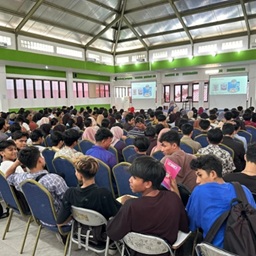
Agile development ensures quality software is on time and according to user expectations. Therefore, software testing is essential before launch, including usability testing as part of the user experience. However, the many choices of questionnaires in usability testing make it difficult for developers to determine the appropriate method. This community service is a training activity that aims to improve the understanding of students and the general public, especially those involved in software development related to usability testing. The training is conducted face-to-face with counseling, namely interactive lectures, discussions, case studies, and quizzes. The training materials include an introduction to software quality and usability evaluation, respondent selection techniques, an introduction to types of usability questionnaires, and exercises in calculating and interpreting usability scores using the Usability Metric for User Experience (UMUX-Lite) questionnaire. The training results showed that the level of understanding was still low (31.07%); this result was due to several obstacles, namely the imbalance in the number of participants and facilitators, the relatively short discussion time, and not all participants being active in the activities. The strategy for future improvements is to conduct remedial sessions, re-evaluate learning methods and media, and divide participants into small groups with adequate training facilitators.
Downloads
Article Details

This work is licensed under a Creative Commons Attribution-ShareAlike 4.0 International License.
Authors who publish with this journal agree to the following terms:
- Any article on the copyright is retained by the author(s).
- Author grant the journal, right of first publication with the work simultaneously licensed under a Creative Commons Attribution License that allows others to share work with acknowledgment of the work authors and initial publications in this journal.
- Authors are able to enter into a separate, additional contractual arrangements for non-exclusive distribution of published articles of work (eg, post-institutional repository) or publish it in a book, with acknowledgment of its initial publication in this journal.
- Authors are permitted and encouraged to post their work online (e.g., in institutional repositories or on their websites) prior to and during the submission process, as can lead to productive exchanges, as well as earlier and greater citation of published work.
- The article and any associated published material is distributed under the Creative Commons Attribution-ShareAlike 4.0 International License
References
Bachtiar, A. M., Dharmayanti, D., & Ramadhan, E. G. (2020). Analysis of interaction design model in content marketing domain using design sprint method. Journal of Engineering Science and Technology, 15, 1–8. https://jestec.taylors.edu.my/Special%20Issue%20INCITEST2019/INCITEST2019_01.pdf
Bahi, A., Gharib, J., & Gahi, Y. (2024). Integrating Generative AI for Advancing Agile Software Development and Mitigating Project Management Challenges. International Journal of Advanced Computer Science and Applications, 15(3), 54–61. https://doi.org/10.14569/IJACSA.2024.0150306
Borsci, S., Buckle, P., & Walne, S. (2020). Is the LITE version of the usability metric for user experience (UMUX-LITE) a reliable tool to support rapid assessment of new healthcare technology? Applied Ergonomics, 84(September 2018), 103007. https://doi.org/10.1016/j.apergo.2019.103007
Faradina, H. R., Wahyuningrum, T., Prasetyo, N. A., & A, I. K. (2022). User experience Analysis on e-Wallet Using a Combination of Heuristic Evaluation and UMUX. IEEE International Conference on Cybernetics and Computational Intelligence (CyberneticsCom), 46–51. http://dx.doi.org/10.1109/CyberneticsCom55287.2022.9865427
Hani, M., Kurniaawan, Y., & Yuhana, U. L. (2015). Pemetaan Secara Sistematis Pada Metrik Kualitas Perangkat Lunak. Jurnal Buana Informatika, 6(4), 311–320. https://doi.org/10.24002/jbi.v6i4.463
Ikhsanuddin, N., Santi, R., & Putri, U. M. (2022). Usability Analysis of Higher Education Information Systems (SIDIKTI) at Sjakhyakirti University Using Post-Study System Usability Questionnaire (PSSUQ). Matics, 14(1), 22–25. https://doi.org/10.18860/mat.v14i1.13385
Mahmud, I., Sadia, F., Rahman, M., Ahmed, S., & Islam, D. (2019). Web usability test in 60 seconds: A theoretical foundation and empirical test. Indonesian Journal of Electrical Engineering and Computer Science, 17(1), 398–403. https://doi.org/10.11591/ijeecs.v17.i1.pp398-403
Prawita, Wayan Gede Suka Parwita and Putri, L. A. A. R. (2012). Komponen Penilaian Kualitas Perangkat Lunak berdasarkan Software Quality Models. Seminar Nasional Teknologi Informasi & Komunikasi Terapan 2012 (Semantik 2012), 2012(Semantik), 89–94. https://publikasi.dinus.ac.id/index.php/semantik/article/view/79
Shen, X., Yao, C., Song, L., Xu, J., & Mao, M. (2024). Coevolutionary scheduling of dynamic software project considering the new skill learning. In Automated Software Engineering (Vol. 31, Issue 1). Springer US. https://doi.org/10.1007/s10515-023-00411-y
Sufandi, U. U., & Aprijani, D. A. (2022). Usability Testing Aplikasi Web Menggunakan Metode PSSUQ. 11(2), 249–256. https://doi.org/10.23887/jstundiksha.v11i2.43534
Suharjito, & Zia Ul Haq, M. (2018). Usability analysis of business intelligence tool based table virtualization. Indonesian Journal of Electrical Engineering and Computer Science, 9(2), 431–437. https://doi.org/10.11591/ijeecs.v9.i2.pp431-437
Suwandy, R., & Marpaung, S. H. (2022). Evaluasi Pengalaman Pengguna dengan Menggunakan Post Study System Usability Questionnaire ( PSSUQ ) Perpustakaan Digital Universitas Mikroskil. Jurnal Pendidikan Tambusai, 6(1), 4190–4206. https://doi.org/10.31004/jptam.v6i1.3521
Wahyuningrum, T. (2021). Mengukur Usability Perangkat Lunak (1st ed.). Deepublish.
Wahyuningrum, T. (2023). Buku referensi kuesioner dalam pengukuran usability. Deepublish.
Weichbroth, P. (2024). Usability Testing of Mobile Applications: A Methodological Framework. Applied Sciences, 14(1792), 2–27. https://doi.org/10.3390/app14051792
Zheng, J., Gresham, M., Phillipson, L., Hall, D., Jeon, Y. H., Brodaty, H., & Low, L. F. (2024). Exploring the usability, user experience and usefulness of a supportive website for people with dementia and carers. Disability and Rehabilitation: Assistive Technology, 19(4), 1369–1381. https://doi.org/10.1080/17483107.2023.2180546