Audit Kinerja dan Peningkatan Akuntabilitas Publik: Lampiran ISSAI 3100
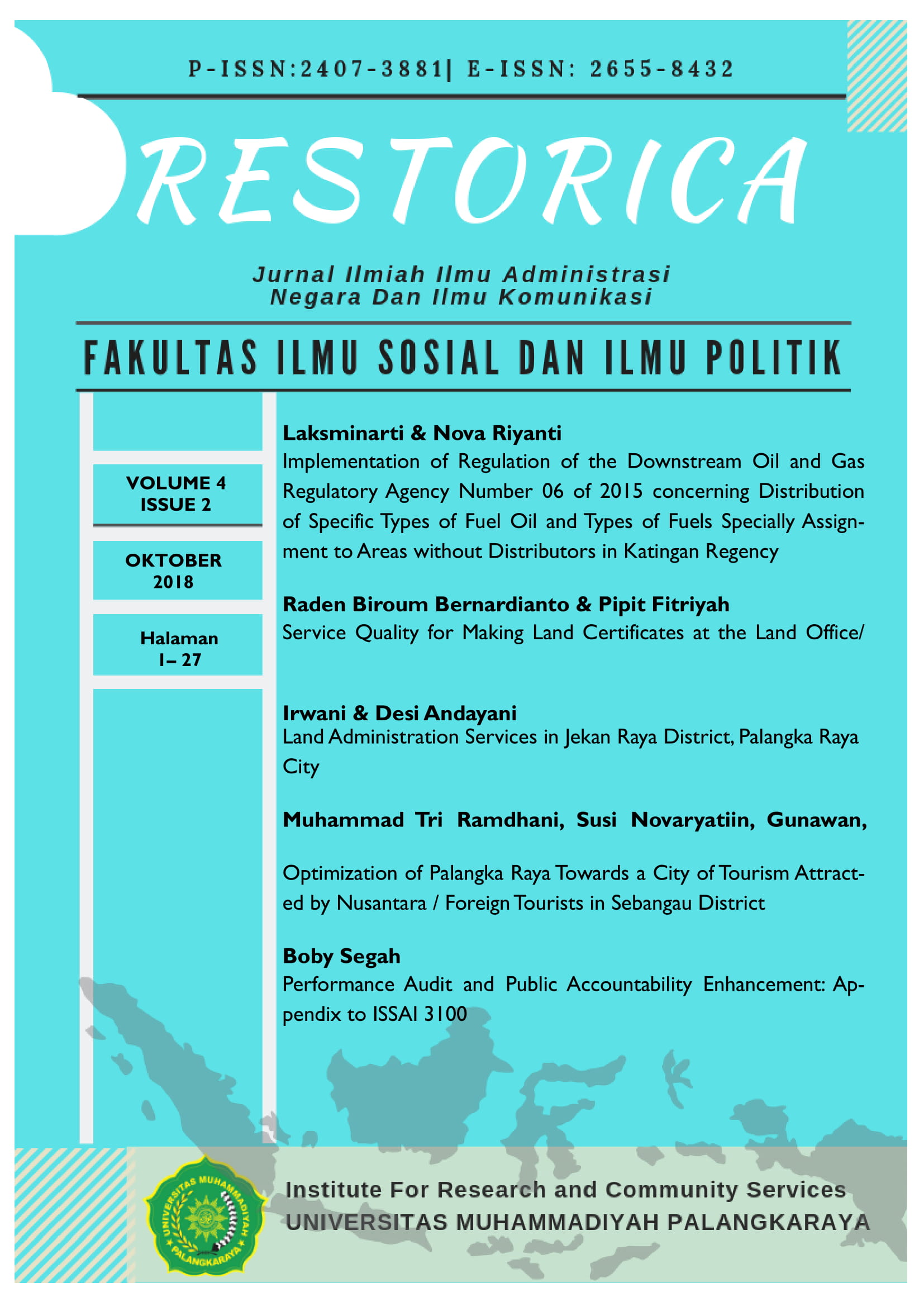
Performance Audit and Public Accountability Enhancement: Appendix to ISSAI 3100
DOI:
https://doi.org/10.33084/restorica.v4i2.444Keywords:
Audit, Public Accountability, PerformanceAbstract
The existence of a Performance Audit can increase public accountability and provide opportunities for Audit Institutions (in Indonesia: the Supreme Audit Agency) to make a real contribution to improving efficiency and effectiveness in the implementation of public administration. This guide aims to create things that can benefit Audit Institutions that carry out Performance Audit as well as important issues that need to be considered in implementing and establishing a joint implementation of a Performance Audit at an Audit Agency. This concept is primarily aimed at Senior Managers and Employees in Audit Institutions, so that they understand the requirements and challenges faced. Directing the strategies needed and the impacts that arise due to the implementation or functioning of a Performance Audit that is carried out on an ongoing basis. Audit institutions carry out different forms and authorities. The size and organizational culture also vary. Therefore it is not possible to produce detailed guidelines that apply to all Audit Institutions; then this document focuses on the challenges of the strategy relating to the resources needed and the process of implementing Performance Audit. Also highlighted are the main features of Performance Audit and their benefits for Audit Institutions, public administration processes and society as a whole.
Downloads
Downloads
Published
Issue
Section
License
Authors who publish with this journal agree to the following terms:
- Any article on the copyright is retained by the author(s).
- Author grant the journal, right of first publication with the work simultaneously licensed under a Creative Commons Attribution License that allows others to share work with acknowledgment of the work authors and initial publications in this journal.
- Authors are able to enter into a separate, additional contractual arrangements for non-exclusive distribution of published articles of work (eg, post-institutional repository) or publish it in a book, with acknowledgment of its initial publication in this journal.
- Authors are permitted and encouraged to post their work online (e.g., in institutional repositories or on their websites) prior to and during the submission process, as can lead to productive exchanges, as well as earlier and greater citation of published work.
- The article and any associated published material is distributed under the Creative Commons Attribution-ShareAlike 4.0 International License