Pembentukan Tim Mom’s Care dan Peningkatan Pengetahuan Kader melalui Pelatihan Edukasi Postpartum Mom's Care Team Establishment and Cadre Knowledge Improvement through Postpartum Education Training
Article Sidebar
Main Article Content
Abstract
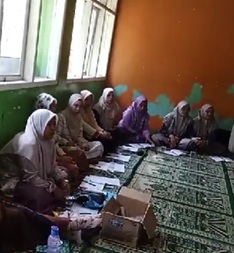
The postpartum period is a crucial time characterized by significant physical and psychological changes in the mother, as well as the risk of serious complications such as life-threatening bleeding. The high mortality rate of mothers and newborns, including in Sucinaraja District, Garut, is influenced by the lack of knowledge and skills of mothers in performing postpartum self-care. This activity aims to improve the knowledge and skills of 'Aisyiyah cadres in providing education related to postpartum care to pregnant women and postpartum mothers. The focus of the service activities is on empowering cadres through intensive training that includes material on postpartum danger signs, postpartum physical and psychological changes, perineal and cesarean wound care, oxytocin massage, breast care, breastfeeding practices, and baby attachment. The activity method consisted of a pre-test, an interactive lecture, a hands-on demonstration, and a post-test to evaluate learning outcomes. The activity results showed a significant increase in cadres' understanding, as well as the formation of the "Mom's Care" team, a health care group for postpartum mothers in PCM Sucinaraja.
Downloads
Article Details

This work is licensed under a Creative Commons Attribution-ShareAlike 4.0 International License.
Authors who publish with this journal agree to the following terms:
- Any article on the copyright is retained by the author(s).
- Author grant the journal, right of first publication with the work simultaneously licensed under a Creative Commons Attribution License that allows others to share work with acknowledgment of the work authors and initial publications in this journal.
- Authors are able to enter into a separate, additional contractual arrangements for non-exclusive distribution of published articles of work (eg, post-institutional repository) or publish it in a book, with acknowledgment of its initial publication in this journal.
- Authors are permitted and encouraged to post their work online (e.g., in institutional repositories or on their websites) prior to and during the submission process, as can lead to productive exchanges, as well as earlier and greater citation of published work.
- The article and any associated published material is distributed under the Creative Commons Attribution-ShareAlike 4.0 International License
References
Ahmadinezhad, M., Vizeshfar, F., & Pakniat, A. (2022). Mothers’ perceptions of the quality of postnatal care provided in health centers and the associated factors: A cross-sectional study. International Journal of Community Based Nursing and Midwifery, 10(2), 110–119. https://doi.org/10.30476/IJCBNM.2021.90057.1663
Aminah, A., Fatmawati, A., & Gartika, N. (2019). Hubungan kejadian postpartum blues dengan motivasi ibu dalam menyusui. Jurnal Keperawatan Aisyiyah, 6(2), 35–40. https://doi.org/10.33867/jka.v6i2.134
Busroh, K., & Purwati, Y. (2025). Pengaruh vulva hygiene terhadap pencegahan risiko infeksi luka ruptur perineum. NERSMID: Jurnal Keperawatan dan Kebidanan, 8(2), 111–124. https://doi.org/10.55173/nersmid.v8i2.243
Chembe, B. C., & Siziya, S. (2017). Level of knowledge on postnatal care and its associated factors in Ndola, Zambia. Health Press Zambia, 1(4), 1–18.
Fadhilah, A. N., & White, I. P. F. I. (2023). Pendarahan paskasalin. Jurnal Medical Profession (MedPro), 5(1), 27–32.
Fatmawati, A., & Gartika, N. (2021). Hubungan kondisi psikologis dan paritas dengan kejadian depresi postpartum pada ibu remaja. Faletehan Health Journal, 8(1), 36–41. https://doi.org/10.33746/fhj.v8i01.145
Furtado, M., Chow, C. H. T., Owais, S., Frey, B. N., & Van Lieshout, R. J. (2018). Risk factors of new onset anxiety and anxiety exacerbation in the perinatal period: A systematic review and meta-analysis. Journal of Affective Disorders, 238, 626–635. https://doi.org/10.1016/j.jad.2018.05.073
Gartika, N., & Fatmawati, A. (2024). Analysis of factors related to the incidence of postpartum blues in adolescent mothers. Open Access Macedonian Journal of Medical Sciences, 12(1), 1–5. https://doi.org/10.3889/oamjms.2024.8511
Herlina, Virgia, V., & Wardani, R. A. (2018). Hubungan teknik vulva hygiene dengan penyembuhan luka perineum pada ibu postpartum. Jurnal Kebidanan, 4(1), 5–10. https://doi.org/10.33024/jkm.v4i1.636
Lasanuddin, Hamna, V., Ilham, R., & Arfiani. (2022). Penyuluhan kesehatan dan pendampingan perawatan payudara pada ibu nifas di Kelurahan Oluhuta Kecamatan Kabila Kabupaten Bonebolango. JCS, 4(2). https://doi.org/10.57170/jcs.v4i2.40
McCauley, H., Lowe, K., Furtado, N., Mangiaterra, V., & Van Den Broek, N. (2022). Essential components of postnatal care: A systematic literature review and development of signal functions to guide monitoring and evaluation. BMC Pregnancy and Childbirth, 22(1), 1–16. https://doi.org/10.1186/s12884-022-04752-6
Mewally, A. M., et al. (2020). Strengths of community- and health facilities-based intervention in improving women and adolescents’ care-seeking behaviors as approaches for reducing maternal mortality and improving birth outcome among low-income communities of Egypt. BMC Health Services Research, 20, 592. https://doi.org/10.1186/s12913-020-05412-1
Naharani, A., Rifki, A., Pamuji, S. E. B., & Hadiningsih, T. A. (2021). Pendidikan kesehatan tanda bahaya masa nifas di Desa Kalisapu Kecamatan Slawi Kabupaten Tegal. JABI: Jurnal Abdimas Bhakti Indonesia, 2(1), 99–105. http://dx.doi.org/10.36308/jabi.v2i1.296
Noviyani, F., & Listiyaningsih, M. D. (2024). Pijat oksitosin pada ibu postpartum sebagai upaya meningkatkan produksi ASI. Indonesian Journal of Community Empowerment, 6(1), 30–34. https://doi.org/10.35473/ijce.v6i1.3140
Paladine, H. L., Blenning, M. D., & Strongas, Y. (2019). Postpartum care: An approach to the fourth trimester. American Family Physician, 100(8), 485–491.
Purnamawati, W. W., Fatmawati, A., & Imansari, B. (2022). Analisis hubungan kecemasan terhadap produksi ASI pada ibu postpartum: Literature review. Jurnal Keperawatan Muhammadiyah, 7(2), 188–194. https://doi.org/10.30651/jkm.v7i2.9382
Suseno, M., Rachmawati, M., & Putri, M. S. D. (2021). Pengaruh metode demonstrasi terhadap keterampilan perawatan payudara pada ibu nifas di Kelurahan Karang Pule. Jurnal Ilmu Kesehatan, 10(1). https://doi.org/10.32831/jik.v10i1.348
Yustiawan, T. (2018). Literasi informasi kesehatan nifas ibu hamil berstatus sosial menengah ke bawah. Indonesian Journal of Health Administration, 6(12), 122–128. https://doi.org/10.20473/jaki.v6i2.2018.122-128