Pelatihan Fiqih Praktis dan Menyenangkan bagi Mahasiswa Universitas Pendidikan Indonesia dengan Metode MUDAH Melalui Pendekatan MENARI Practical and Enjoyable Fiqh Training for Students of Universitas Pendidikan Indonesia Using the MUDAH Method through the MENARI Approach
Article Sidebar
Main Article Content
Abstract
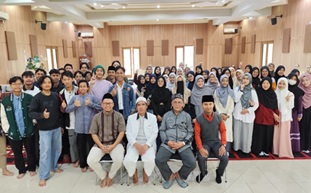
Fiqh instruction in higher education often encounters challenges related to students' low levels of interest and understanding, particularly among those with general education backgrounds. The conceptual nature of fiqh content, when delivered through conventional methods, is frequently perceived as rigid and less relevant to the learning needs of today's generation. To address this issue, the Community Service Program (PkM) implemented the MUDAH Method through the MENARI Approach (Enjoyable, Educational, Structured verse, Active, Rhythmic, and Interactive) as an innovative model for practical fiqh training. The program aimed to enhance students' comprehension of fiqh in an enjoyable and applicable manner, while also equipping them with pedagogical skills relevant to their roles as future Islamic education teachers. The training was conducted intensively over two days and structured into five stages: preparation, orientation, interactive training, guided practice, and evaluation with reflection. The materials were delivered in rhythmic nadzam (verse) form, performed and practiced collaboratively. Evaluation results indicated significant positive outcomes, including a 92% improvement in comprehension, 95% active participation, and 96% overall satisfaction. The training also helped bridge the pedagogical gap between students from pesantren and non-pesantren backgrounds. In conclusion, the MENARI approach is proven to be an innovative, effective, and contextually appropriate strategy for teaching fiqh, offering substantial potential for broader application in Islamic higher education in Indonesia.
Downloads
Article Details

This work is licensed under a Creative Commons Attribution-ShareAlike 4.0 International License.
Authors who publish with this journal agree to the following terms:
- Any article on the copyright is retained by the author(s).
- Author grant the journal, right of first publication with the work simultaneously licensed under a Creative Commons Attribution License that allows others to share work with acknowledgment of the work authors and initial publications in this journal.
- Authors are able to enter into a separate, additional contractual arrangements for non-exclusive distribution of published articles of work (eg, post-institutional repository) or publish it in a book, with acknowledgment of its initial publication in this journal.
- Authors are permitted and encouraged to post their work online (e.g., in institutional repositories or on their websites) prior to and during the submission process, as can lead to productive exchanges, as well as earlier and greater citation of published work.
- The article and any associated published material is distributed under the Creative Commons Attribution-ShareAlike 4.0 International License
References
Adadi, N., Andini, E. A., & Faqihuddin, A. (2025). Analisis Persepsi Mahasiswa Terhadap Penggunaan Bahasa Kasar dalam Perspektif Islam di Lingkungan Sosial Kampus. MAUIZOH: Jurnal Ilmu Dakwah Dan Komunikasi, 9(2), 110–127. https://doi.org/10.30631/mauizoh.v9i2.100
Anom, S. N. (2024). Fiqih Mudah dari Kitab Safinatunnajah. Pesantren Miftahul Jannah An-Nuriyyah.
Azzahra, A. A., Syahidin, S., & Budiyanti, N. (2025). Implementasi Metode Bernyanyi Dalam Pembelajaran Fiqih Di Pesantren Miftahul Jannah An-Nuriyyah. Ulumuddin: Jurnal Ilmu-Ilmu Keislaman, 14(2), 413–432. https://doi.org/10.47200/ulumuddin.v14i2.2685
Batula, A. W., Faqihuddin, A., Munandar, H., & Zakaria. (2024). Analysis Use Motivation Study Student in Islamic Religious Education Learning Using the PAKEM Method in Senior High Schools. Medina-Te : Jurnal Studi Islam, 20(2), 152–166. https://doi.org/10.19109/medinate.v20i2.25223
Chand Dayal, H., & Alpana, R. (2020). Secondary pre-service teachers’ reflections on their microteaching: Feedback and self-evaluation. Waikato Journal of Education, 25(1), 73–83. https://doi.org/10.15663/wje.v25i0.686
Faqihuddin, A. (2024a). Desain Pembelajaran PAI Berbasis Digital Dengan Pendekatan Flipped Classroom. In Inovasi Pendidikan & Pembelajaran Multi Perspektif (pp. 86–103). Alifba Media. https://www.researchgate.net/publication/381707034
Faqihuddin, A. (2024b). Media Pembelajaran PAI: Definisi, Sejarah, Ragam dan Model Pengembangan. IDAROTUNA: Jurnal Manajemen Pendidikan Islam, 1(1), 1–15. https://doi.org/10.29313/idarotuna.v1i1
Faqihuddin, A. (2024c). Metamorfosis Ruang Belajar PAI Era Society 5.0: Dari Kelas Konvensional Menuju Kelas Digital. In Pendidikan & Pembelajaran Era Society 5.0 (pp. 13–17). Alifba Media. https://www.researchgate.net/publication/380069575
Faqihuddin, A., Ilyasa, F. F., Muflih, A., Syarifudin, I., Al-Ayyubi, S., & Romadhon, F. (2024). The Rice Alms Movement in Strengthening Harmony Among Religious Communities in the Village of Tolerance. Al-Madinah: Journal of Islamic Civilization, 1(1), 13–26. https://almadinah-jic.id/index.php/jic/article/view/9
Faqihuddin, A., & Muflih, A. (2024). Digital-Based Islamic Religious Education Learning Media: Analysis of Implementation, Challenges and Opportunities in Junior High Schools. TAKLIM: Jurnal Pendidikan Agama Islam, 22(2), 93–108. https://doi.org/https://doi.org/10.17509/tk.v22i2.75489
Faqihuddin, A., & Sinta, D. (2024). Peningkatan Kompetensi Digital di Perguruan Tinggi : Pengaruh Mata Kuliah Desain Digital Pendidikan Agama Islam Terhadap Pengembangan. Wawasan: Jurnal Kediklatan Balai Diklat Keagamaan Jakarta, 5(1), 85–101. https://doi.org/https://doi.org/10.53800/wawasan.v5i1.279
Faqihuddin, A., & Subakti, G. E. (2022). Realizing Interactive And Fun PAI Learning In The New Normal Era Through The Masquerade Party Method. International Conference on General Education International Conference on General Education (ICOGEN), 58–68. https://www.researchgate.net/publication/366846894
Hermawan, W., Nugraha, R. H., & Faqihuddin, A. (2024). Studi Islam Kaaffah: Studi Islam Komprehensif-Integratif. UPI Press. https://www.researchgate.net/publication/379248256
Ilmi, M. N., Rahmani, R. A., Yanti, T. D., & Faqihuddin, A. (2024). The Challenges Faced by Muslim Female Students in Maintaining Appearance and Validity of Wudhu: A Study on the Use of Waterproof Makeup. EL-HIKMAH: Jurnal Kajian Dan Penelitian Pendidikan Islam, 18(2), 123–143. https://doi.org/10.20414/elhikmah.v18i2.11575
Ilyasa, F. F., Fakhruddin, A., Faqihuddin, A., Mubarok, M. R., & Muflih, A. (2024). The role of the mosque as a medium of da’wah in building religious tolerance in the community: An analysis of Kampung Toleransi. Islamic Communication Journal, 9(2), 267–286. https://doi.org/https://doi.org/10.21580/icj.2024.9.2.22620
Ivanova, V. I., Efimova, A. D., & Vinokurova, N. E. (2014). Rhythmomelodic aspect of the organisation of the speech. Journal of Language and Literature, 5(3), 246–247. https://doi.org/10.7813/jll.2014/5-3/41
Jenuri, J., Darmawan, D., & Faqihuddin, A. (2024). Promoting Moral and Spiritual Transformation: The Role of Pesantren Ramadan Programs in Preventing and Addressing Bullying in Educational Settings. AL-ISHLAH: Jurnal Pendidikan, 16(4), 4613–4629. https://doi.org/https://doi.org/10.35445/alishlah.v16i4.5875
Khaerunnisa, D. Z., Azzahro, L. K., Wardana, M. R. T., Fauziah, N., Alginani, M. W., & Faqihuddin, A. (2024). Embracing Digital Generation: Analysis of Hanan Attaki’s Podcast Media as a Da’wah Medium. Al-Hikmah: Jurnal Ilmu Dakwah Dan Pengembangan Masyarakat, 22(1), 53–62. https://doi.org/https://doi.org/10.35719/hygwz966
Kusdi, N. A. (2022). Analisis Behavioristik Santri Terhadap Hafalan Nadzam Imrithi. Jurnal Ilmiah Mandala Education, 8(1). https://doi.org/10.58258/jime.v8i1.2755
L. S. Vygotsky. (2020). Mind in society: The development of higher psychological processes. Accounting in Australia (RLE Accounting), 503–503. https://books.google.com/books/about/Mind_in_Society.html?hl=id&id=RxjjUefze_oC
Mohanakrishnan, J., & Brindha, G. (2016). Training needs and identification. International Journal of Pharmacy and Technology, 8(4), 23508–23511. https://www.researchgate.net/publication/316887463_Training_needs_and_identification
Pathilaiya, H. La, Sinurat, J., Sarasati, B., Jumiati, S., Supriatna, A., Harto, B., Urhuhe, Siburian, D., Mahaza, Maesarini, I., & Hapsar, T. (2022). Pemberdayaan Masyarakat. 6, 96. www.globaleksekutifteknologi.co.id
Poerana, A. F., Hariyanto, F., Oxygentri, O., & Lubis, F. M. (2022). Peningkatan kapasitas pembelajaran santri melalui pelatihan pemanfaatan media sosial di Pondok Pesantren An-Nihayah Kabupaten Karawang. Transformasi: Jurnal Pengabdian Masyarakat, 18(2), 287–297. https://doi.org/10.20414/transformasi.v18i2.5052
Putra, A. D., Ferdian, R., & Hidayat, H. A. (2021). Silabel Ritmis dalam Pembelajaran Musik. Tonika: Jurnal Penelitian Dan Pengkajian Seni, 4(2), 161–170. https://doi.org/10.37368/tonika.v4i2.299
Rahmawati, D. L., Handayani, O. W. K., & Indriyanti, D. R. (2022). Keefektivan Metode Penyuluhan Keliling dan Metode Penyuluhan Individu Terhadap Perilaku Kepatuhan Protokol Kesehatan di Kelurahan Sekayu. Jurnal Sehat Mandiri, 17(1), 57–66. https://doi.org/10.33761/jsm.v17i1.599
Saputra, R. T., Effendi, L. Z., & Faqihuddin, A. (2024). Muslim Society Response and Indonesian Clerics’ Views Towards Transgender Beauty Contests: Between Belief and Reality. Jurnal Penelitian Keislaman, 20(2), 193–205. https://doi.org/10.20414/jpk.v20i2.11550
Schumann Scheel, L., Kjaer, N. K., Marnie, C., & Peters, M. D. J. (2023). Reflection in the training of general practitioners in clinical practice settings: A scoping review protocol. JBI Evidence Synthesis, 21(7), 1501–1508. https://doi.org/10.11124/JBIES-22-00210
Scott, V. C., Chagnon, E., & Wandersman, A. (2024). The Technical Assistance (TA) Effectiveness Logic Model: A Tool for Systematically Planning, Delivering, and Evaluating TA. Evaluation & the Health Professions, 47(4), 369–385. https://doi.org/10.1177/01632787241285561
Shobirin, T. I., Rahman, A. A., Zakaria, M. H., Faqihuddin, A., & Orwela, C. (2024). The Influence of Islamic Identity Politics on Thought Patterns and Social Life in the Perception of Gen Z. Edudeena: Journal of Islamic Religious Education, 8(2), 193–205. https://doi.org/10.30762/edudeena.v8i2.3843
Subakti, G. E., Faqihuddin, A., Ilyasa, F. F., & Muflih, A. (2024). Meningkatkan Student Engagement dalam Pembelajaran Sejarah pada Mata Pelajaran PAI melalui Pesta Topeng. Pendekar : Jurnal Pendidikan Berkarakter, 7(2), 121–130. https://doi.org/10.31764/pendekar.v7i2.23290
Vygotsky, L. S. (1980). Mind in Society (M. Cole, V. Jolm-Steiner, S. Scribner, & E. Souberman (eds.)). Harvard University Press. https://doi.org/10.2307/j.ctvjf9vz4
Yarida, A., Anwar, S., & Faqihuddin, A. (2024). Implementasi Model Pembelajaran Game Based Learning Untuk Meningkatkan Hasil Belajar Siswa Pada Pembelajaran PAI Kelas V SDN 21 Kota Pagar Alam. Kuttab : Jurnal Ilmu Pendidikan Islam, 8(2), 438–453. https://doi.org/https://doi.org/10.30736/ktb.v8i2.2187