Penguatan Etika Seksualitas Berbasis Al-Islam dan Kemuhammadiyahan di Perguruan Muhammadiyah Kota Bekasi Strengthening Sexual Ethics Based on Al-Islam and Muhammadiyah Values in Muhammadiyah Educational Institutions of Bekasi City
Article Sidebar
Main Article Content
Abstract
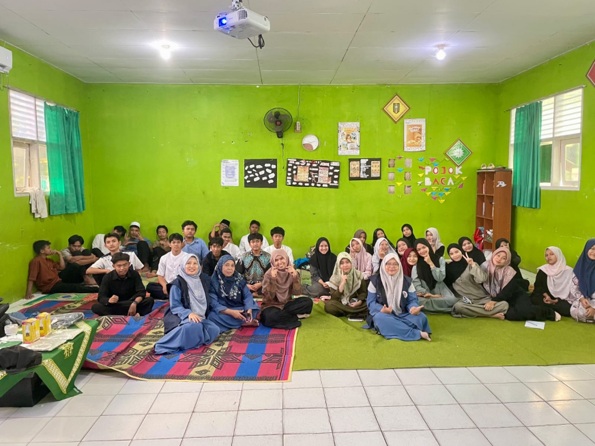
Violence and issues related to sexual orientation among children and adolescents constitute significant public health concerns, affecting mental health, social well-being, and family resilience. National data indicate that sexual violence remains the most prevalent form of violence against children in Indonesia. At the same time, there has been a notable increase in new HIV infections among same-sex–oriented populations. Schools, as spaces for character formation, play a strategic role in promotive and preventive efforts. This community engagement program aimed to enhance sexuality ethics literacy and raise awareness of sexual violence prevention among students at Muhammadiyah schools in Bekasi City through a participatory approach grounded in Al-Islam and Muhammadiyah values. The methods employed included interactive educational sessions, small group discussions, and brainstorming activities. The program was implemented at the elementary (SD), vocational high school (SMK), and Islamic senior high school (Madrasah Aliyah) levels, involving 245 students and 15 teachers. The results indicated improved conceptual understanding of healthy interaction boundaries, the importance of consent, and awareness of the risks of gender-based violence in digital spaces. Participatory discussions also revealed the need for safe spaces where students can openly address issues related to relationships and adolescent mental health. The findings demonstrate that integrating Islamic values with a health promotion approach can strengthen a safe school culture and support students’ psychosocial well-being.
Downloads
Article Details

This work is licensed under a Creative Commons Attribution-ShareAlike 4.0 International License.
Authors who publish with this journal agree to the following terms:
- Any article on the copyright is retained by the author(s).
- Author grant the journal, right of first publication with the work simultaneously licensed under a Creative Commons Attribution License that allows others to share work with acknowledgment of the work authors and initial publications in this journal.
- Authors are able to enter into a separate, additional contractual arrangements for non-exclusive distribution of published articles of work (eg, post-institutional repository) or publish it in a book, with acknowledgment of its initial publication in this journal.
- Authors are permitted and encouraged to post their work online (e.g., in institutional repositories or on their websites) prior to and during the submission process, as can lead to productive exchanges, as well as earlier and greater citation of published work.
- The article and any associated published material is distributed under the Creative Commons Attribution-ShareAlike 4.0 International License
References
Alawiyah, A., Sudarmin, A., Putri, A. N., Sadiyah, R., & Nurfadhilah. (2023). Webinar manusia di ambang kepunahan untuk pengetahuan komprehensif HIV dan AIDS. Prosiding Seminar Nasional Pengabdian Masyarakat LPPM UMJ, 1(1). https://jurnal.umj.ac.id/index.php/semnaskat/article/view/19575
Hannah, N. (2017). Seksualitas dalam Alquran, hadis, dan fikih: Mengimbangi wacana patriarki. Wawasan: Jurnal Ilmiah Agama dan Sosial Budaya, 2(1), 45–60. https://doi.org/10.15575/jw.v2i1.795
Jewkes, R., Willan, S., Heise, L., Washington, L., Shai, N., Kerr-Wilson, A., & Christofides, N. (2020). Effective design and implementation elements in interventions to prevent violence against women and girls. South African Medical Research Council. https://prevention-collaborative.org/wp-content/uploads/2021/08/What_Works_2020_Effective-design-and-implementation.pdf
Kementerian Pemberdayaan Perempuan dan Perlindungan Anak Republik Indonesia. (2024). Survei Nasional Pengalaman Hidup Anak dan Remaja tahun 2024. https://ppid.kemenpppa.go.id/uploads/informasi/publik/1747211993.pdf
Lailani, D., Nurfadhilah, & Utomo, E. (2019). Pendidikan seks pada anak oleh ibu: Survei di Kelurahan Pondok Betung tahun 2019. Wahana Sekolah Dasar, 7.
Mundhiro, N., Fauzi, R., Maruf, M. A., & Nurfadhilah. (2021). Determinants of premarital sexual behavior amongst adolescents in Indonesia. Jurnal Biometrika dan Kependudukan, 10(1), 86–93. https://doi.org/10.20473/jbk.v10i1.2021.86-93
Noer, K. U., Kusmawati, A., & Nurfadhilah. (2025). Do not ask, do not tell: The dark path of sexual and reproductive health education in Indonesia. Multidisciplinary Science Journal, 7(6), Article 2025311. https://doi.org/10.31893/multiscience.2025311
Nurfadhilah. (2022). Dampak buruk friends with benefit. Majalah BINGKAI, 4, 44–47. http://www.badankebijakan.kemkes.go.id/majalah-bingkai-volume-4-tahun-2022/
Nurfadhilah. (2025). Nulis buat waras: Jurnal harian untuk terapi mental. Kompasiana. https://www.kompasiana.com/nurfadhilahrauf5000/681a00c3ed64157358727272/nulis-buat-waras-jurnal-harian-untuk-terapi-mental
Nurfadhilah, & Alawiyah, A. (2023). Pengalaman pelecehan seksual mahasiswa dan pencegahannya. Rausyan Fikr: Jurnal Pemikiran dan Pencerahan, 19(2). https://doi.org/10.31000/rf.v19i2.9293
Nurfadhilah, & Auliah, A. (2023). Pengetahuan agama, gaya hidup, dan menarche dini pada pelajar sekolah dasar. Rausyan Fikr: Jurnal Pemikiran dan Pencerahan, 19(1), 1–10. https://doi.org/10.31000/rf.v19i1.7999
Nurfadhilah, Sa’diyah, R., Achmad, N., & Hilowle, S. S. (2022). Pengetahuan pelajar sekolah dasar tentang pubertas di Jakarta dan sekitarnya. Jurnal Kesehatan Reproduksi, 13(2), 99–106. https://doi.org/10.58185/jkr.v13i2.41
Purnamawati, D., & Aritonang, V. (2017). Kehamilan yang tidak diinginkan pada remaja: Kekerasan dalam berpacaran, peran orang tua, dan sekolah. Jurnal IAKMI, 25–26.
Shibuya, F., Usami, M., Santillan, M. D., Warnaini, C., Gregorio, E., Satake, N., Estrada, C. A., Gunawan, G., Balderrama, N., Fernandez de Leon, J., Ancheta, J. F., Kadriyan, H., Garcia, F., Jr., & Kobayashi, J. (2025). Comparative study on school-based mental health literacy in three Asian countries. Tropical Medicine and Health, 53, Article 35. https://doi.org/10.1186/s41182-025-00697-6
Suandana, I. A., Hermanto, B., & Agnesia, L. (2020). Dampak pendidikan kesehatan reproduksi dan seksualitas yang komprehensif (SETARA) pada tiga wilayah di Indonesia. IAKMI Jurnal Kesehatan Masyarakat Indonesia, 1(2), 51–58. https://doi.org/10.46366/ijkmi.1.2.51-58
United Nations Children’s Fund. (2021). The State of the World’s Children 2021: On my mind—Promoting, protecting and caring for children’s mental health. https://www.unicef.org/reports/state-worlds-children-2021
World Health Organization. (2022). World mental health report: Transforming mental health for all. https://www.who.int/publications/i/item/9789240049338