Edukasi Keamanan Kosmetik bagi Remaja di Wilayah Harapan Baru Kota Samarinda Cosmetic Safety Education for Adolescents in Harapan Baru, Samarinda City
Article Sidebar
Main Article Content
Abstract
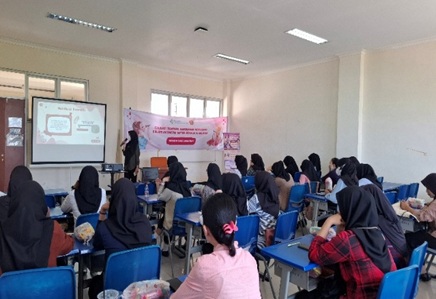
The increase in cosmetic use among adolescents is supported by the development of social media and the ease of purchasing cosmetic products online. A wide range of information on beauty trends is readily accessible to adolescents, encouraging them to experiment with various cosmetic products. However, not all adolescents fully understand the safety aspects and potential risks of contamination, including heavy metals and microbes, associated with the cosmetics they use, especially with long-term use. This situation underscores the importance of providing educational interventions to enable adolescents to make informed decisions and use cosmetic products safely and legally. The purpose of this community service program was to enhance adolescents’ knowledge and awareness of cosmetic safety, particularly among adolescents in Harapan Baru, Samarinda City. The education was conducted face-to-face through interactive lectures and discussions, followed by pretest and posttest evaluations involving 25 participants. The results showed an increase in the average score from 7.24 to 17.12 after the intervention, with a mean improvement of 9.88 points. The Wilcoxon test indicated a statistically significant difference between pretest and posttest scores (p < 0.001). Communicative and contextual education has proven effective in improving adolescents’ understanding of cosmetic safety.
Downloads
Article Details

This work is licensed under a Creative Commons Attribution-ShareAlike 4.0 International License.
Authors who publish with this journal agree to the following terms:
- Any article on the copyright is retained by the author(s).
- Author grant the journal, right of first publication with the work simultaneously licensed under a Creative Commons Attribution License that allows others to share work with acknowledgment of the work authors and initial publications in this journal.
- Authors are able to enter into a separate, additional contractual arrangements for non-exclusive distribution of published articles of work (eg, post-institutional repository) or publish it in a book, with acknowledgment of its initial publication in this journal.
- Authors are permitted and encouraged to post their work online (e.g., in institutional repositories or on their websites) prior to and during the submission process, as can lead to productive exchanges, as well as earlier and greater citation of published work.
- The article and any associated published material is distributed under the Creative Commons Attribution-ShareAlike 4.0 International License
References
Aina, G. Q., Yusran, D. I., Harlita, T. D., Hasanah, P. U., & Saputra, M. I. (2023). Analisis Cemaran Logam Berat Timbal dan Kadmium pada Produk Kosmetika BB Cream. Sains Medisina, 1(3), 159–165. https://wpcpublisher.com/jurnal/index.php/sainsmedisina/article/view/103
Arshad, H., Mehmood, M. Z., Shah, M. H., & Abbasi, A. M. (2020). Evaluation of Heavy Metals in Cosmetic Products and Their Health Risk Assessment. Saudi Pharmaceutical Journal, 28(7), 779–790. https://doi.org/10.1016/j.jsps.2020.05.006
Badan Pengawas Obat dan Makanan Republik Indonesia. (2023). Peraturan Badan Pengawas Obat dan Makanan Nomor 12 Tahun 2023 Tentang Pengawasan Pembuatan dan Peredaran Kosmetik (Nomor 12 Tahun 2023). https://peraturan.bpk.go.id/Details/263241/peraturan-bpom-no-12-tahun-2023
Badan Pengawasan Obat dan Makanan Republik Indonesia. (2022). Laporan Tahunan Direktorat Pengawasan Kosmetik Tahun 2022. https://www.pom.go.id/storage/sakip/Laporan%20Tahunan%202022%20Direktorat%20Pengawasan%20Kosmetik.pdf
Batool, M., Khan, U., Mehwish, K., Batool, R., Nazir, M., Shakoor, A., Ahmad, E., Hafiz, M. F. H., Bokhari, S. A. R., Hamad, A., Khan, N., Ullah, N., Ali, A., Kalsoom, U., Ahmad, F., Afzal, S., & Aslam, A. (2025). Heavy Metal Contamination in Cosmetics : An Analysis of Lead and Mercury Levels in Commonly Used Products and Associated Health Risks. International Journal of NeuroOncology and Therapeutics, 1(2), 25–36. https://ijnot.com/index.php/IJNOT/article/view/12
da Silva, J. D., Silva, F. A. M., & Rodrigues, C. F. (2025). Microbial Contamination in Cosmetic Products. Cosmetics, 12(5), 1–19. https://doi.org/10.3390/cosmetics12050198
Harlita, T. D., Aina, G. Q., & Azahra, S. (2023). Deteksi Cemaran Jamur Pada Liquid Foundation. Sains Medisina, 2(1), 13–18. https://doi.org/10.63004/snsmed.v2i1.269
Jităreanu, A., Trifan, A., Caba, I. C., Mârțu, I., & Agoroaei, L. (2025). An Overview of Heavy Metals in Cosmetic Products and Their Toxicological Impact. Applied Sciences, 15(24), 1–42. https://doi.org/10.3390/app152412883
Kicińska, A., & Kowalczyk, M. (2025). Health Risks from Heavy Metals in Cosmetic Products Available in The Online Consumer Market. Scientific Reports, 15, 1–13. https://doi.org/10.1038/s41598-024-83477-2
Notoatmodjo, S. (2018). Promosi Kesehatan dan Perilaku Kesehatan. Jakarta: Rineka Cipta.
Vieri, C., & Sarah, S. (2024). Pengaruh Penggunaan Sosial Media, Influencer dan Konten Visual Terhadap Keputusan Pembelian Skincare Kahf di Tiktok. Jurnal Ilmu Sosial, Manajemen, Akuntansi, & Bisnis, 5(3), 506–525. https://doi.org/10.47747/jismab.v5i3.1928