Family Link: Inovasi Edukasi Digital bagi Orang Tua dan Guru dalam Mengawasi Aktivitas Online Anak
Family Link: Digital Education Innovation for Parents and Teachers in Monitoring Children's Online Activities
DOI:
https://doi.org/10.33084/pengabdianmu.v11i5.12154Keywords:
Digital Literacy, Google Family Link, Parental Mediation, Early childhood, Bangbayang VillageAbstract
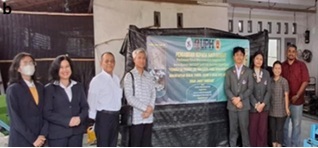
The increase in internet access among early childhood in rural areas is often not accompanied by adequate parental supervision skills, thereby increasing the risk of gadget addiction and exposure to negative content. This community service program aims to improve the digital literacy of parents and teachers at RA Al Manshur, Bangbayang Village, by optimizing parental mediation. The implementation method includes socialization on the urgency of digital supervision, technical training on using the Google Family Link application, and direct practical simulations guided by a team of lecturers and students. Participants consisted of 27 parents and 3 teachers. Evaluation results showed an average increase in participants' understanding of 35%, with 85% feeling more confident in monitoring their children's online activities. The program has reached 60% completion and has proven effective in equipping parents with the tools to create a safe, healthy digital environment for children.Downloads
References
Ginting, R. V. B., Arindani, D., Lubis, C. M. W., & Shella, A. P. (2021). Literasi digital sebagai wujud pemberdayaan masyarakat di era globalisasi. Jurnal Pasopati, 3(2). https://doi.org/10.14710/pasopati.2021.10869
Livingstone, S., & Helsper, E. J. (2018). Parental mediation of children's internet use. Journal of Broadcasting & Electronic Media, 62(3), 305–321. https://doi.org/10.1080/08838150802437396
UNICEF Indonesia. (2021). Digital literacy and child online protection. Jakarta: UNICEF.
Kementerian Pendidikan, Kebudayaan, Riset, dan Teknologi. (2023). Panduan Program Kreativitas Mahasiswa. Jakarta: Ditjen Dikti. https://simbelmawa.kemdiktisaintek.go.id/portal/pedoman-pkm-tahun-2023-diktiridtek/
Wijaya, C, dkk. (2025). Pendekatan Komunikasi Persuasif Orangtua dalam Mengontrol Durasi Penggunaan Ponsel Anak, 1(1), 13–26. https://jurnal.muaraedukasi.id/index.php/murabah/article/view/95
Google Families. (n.d.). (2025) Google Family Link: Manual and Safety Tools for Parents. Google. https://families.google.com/familylink/ (Referensi teknis aplikasi yang digunakan). diambil pada tanggal 16 Juli 2025 pukul 16.15 WIB
Nasrullah, R., dkk. (2017). Materi Pendukung Literasi Digital. Kementerian Pendidikan dan Kebudayaan. (Referensi pendukung penguatan literasi digital di Indonesia). https://repositori.kemendikdasmen.go.id/11635/
Pitaloka, P.S. (2025). Family Link: Fungsi dan Fitur untuk Memantau Aktivitas Digital Anak. Jakarta: Tempo https://www.tempo.co/digital/family-link-fungsi-dan-fitur-untuk-memantau-aktivitas-digital-anak-1194682 diambil pada tanggal 16 Januari 2025 pukul 01.16 WIB.
Sari, P. K., & Prasetio, A. (2020). Efektivitas Pendampingan Orang Tua terhadap Penggunaan Gawai pada Anak Usia Dini. Jurnal Obsesi: Jurnal Pendidikan Anak Usia Dini, 4(1), 215-225. https://doi.org/10.31004/obsesi.v7i1.3004
Pratama, L. D., & Azizah, N. (2021). Pelatihan Penggunaan Aplikasi Family Link sebagai Upaya Pengawasan Aktivitas Anak dalam Penggunaan Gadget. Jurnal Pengabdian Masyarakat (JPM), 2(1), 45-52. https://jurnalilmiah.id/index.php/abdimas/article/view/57/73
Valkenburg, P. M., Krcmar, M., Peeters, A. L., & Marseille, N. M. (1999). Developing a Scale to Assess Three Styles of Television Mediation: Instructive, Restrictive, and Social Coviewing. Journal of Broadcasting & Electronic Media, 43(1), 52-66. https://doi.org/10.1080/08838159909364474
Setiawan, W., & Anggraini, T. (2022). Dampak Penggunaan Gadget Terhadap Perkembangan Sosial Anak Usia Dini di Desa Pedesaan. Jurnal Pendidikan Anak, 11(2), 120-134. https://doi.org/10.56872/elathfal.v1i01.273
Zaman, B., dkk. (2016). A Qualitative Inquiry into Determinants of Parental Mediation of Children’s Digital Media Use. Cyberpsychology: Journal of Psychosocial Research on Cyberspace, 10(3). https://doi.org/10.5817/CP2017-3-xx
Downloads
Published
Issue
Section
License
Copyright (c) 2026 Yuniarti Lestari, Tresna Yudha Prawira, Umar Ghoni, Nur Wahyu Hidayat, Hidayatur Rakhmawati

This work is licensed under a Creative Commons Attribution-ShareAlike 4.0 International License.
Authors who publish with this journal agree to the following terms:
- Any article on the copyright is retained by the author(s).
- Author grant the journal, right of first publication with the work simultaneously licensed under a Creative Commons Attribution License that allows others to share work with acknowledgment of the work authors and initial publications in this journal.
- Authors are able to enter into a separate, additional contractual arrangements for non-exclusive distribution of published articles of work (eg, post-institutional repository) or publish it in a book, with acknowledgment of its initial publication in this journal.
- Authors are permitted and encouraged to post their work online (e.g., in institutional repositories or on their websites) prior to and during the submission process, as can lead to productive exchanges, as well as earlier and greater citation of published work.
- The article and any associated published material is distributed under the Creative Commons Attribution-ShareAlike 4.0 International License