Optimalisasi Peran BUMDes dan Kolaborasi Stakeholders dalam Meningkatkan Ketahanan Pangan melalui Diversifikasi Usaha Terpadu di Desa Pandau Jaya
Optimizing the Role of Village-Owned Enterprises and Stakeholder Collaboration in Improving Food Security through Integrated Business Diversification in Pandau Jaya Village
DOI:
https://doi.org/10.33084/pengabdianmu.v11i10.12858Keywords:
Food security, Agricultural business diversification, Village-owned enterprisesAbstract
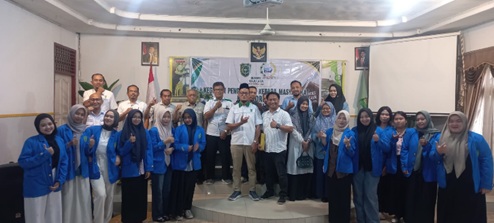
Village food security requires strengthening economic institutions, diversifying agricultural businesses, and fostering collaboration among stakeholders. This community service activity aimed to optimize the role of the Maju Jaya Village-Owned Enterprise (BUMDes) in enhancing food security through integrated business diversification in Pandau Jaya Village. The implementation method employed a collaborative approach through the collection of primary and secondary data, field observations, in-depth interviews, PESTEL-based regional condition analysis, panel discussions, training, and mentoring. The activities involved the village government, BUMDes management, farmers, local communities, and academics. The results revealed that the village's main challenges included dependence on certain commodities, low agricultural diversification, limited access to appropriate technology, and suboptimal managerial and marketing capacities of the Village-Owned Enterprise. Through this program, participants gained a better understanding of alternative commodity development, agricultural product processing, water-efficient irrigation systems, drying technologies, digital agricultural applications, and product marketing through social media and digital platforms. Discussions and mentoring activities also strengthened the Village-Owned Enterprise's position as a product aggregator, partnership facilitator, and driver of the local economy. This activity confirms that village food security can be strengthened by integrating production, technology, institutions, and markets. The implication is that this collaboration-based community service model can be replicated in other villages to support food self-sufficiency, increase farmers' incomes, and promote sustainable rural economic development.Downloads
References
Achmad, B., Sanudin, B., Siarudin, M., Widiyanto, A., Diniyati, D., Sudomo, A., Hani, A., Fauziyah, E., Suhaendah, E., Widyaningsih, T. S., Handayani, W., Maharani, D., Suhartono, D., Palmolina, M., Swestiani, D., Budi Santoso Sulistiadi, H., Winara, A., Nur, Y. H., Diana, M., … Ruswandi, A. (2022). Traditional Subsistence Farming of Smallholder Agroforestry Systems in Indonesia: A Review. Sustainability (Switzerland), 14(14). https://doi.org/10.3390/su14148631
Adam, L., Jin, J., & Khan, A. (2022). Does the Indonesian Farmer Empowerment Policy Enhance the Professional Farmer? Empirical Evidence Based on the Difference-in-Difference Approach. Technology in Society, 68(February), 101924. https://doi.org/10.1016/j.techsoc.2022.101924
Ariska, M., Akhsan, H., Muslim, M., & Romadoni, M. (2022). Prediksi Perubahan Iklim Ekstrem di Kota Palembang dan Kaitannya dengan Fenomena El Niño-Southern Oscillation (ENSO) Berbasis Machine Learning. JIPFRI (Jurnal Inovasi Pendidikan Fisika Dan Riset Ilmiah), 6(2), 79–86. https://doi.org/10.30599/jipfri.v6i2.1611
Djokoto, J. G., Agyei Henaku, K. A. A. O., & Badu-Prah, C. (2022). Welfare Effects of Agricultural Foreign Direct Investment in Developing Countries. Frontiers in Sustainable Food Systems, 6(July), 1–11. https://doi.org/10.3389/fsufs.2022.748796
Haggart, B., Tusikov, N., & Scholte, J. A. (Eds.). (2021). Power and Authority in Internet Governance : Return of the State? Taylor & Francis PP - Oxford. https://doi.org/10.4324/9781003008309
Hilmawan, R., Aprianti, Y., Thi, D., Vo, H., Yudaruddin, R., & Fenty, R. (2023). Rural development from village funds , village-owned enterprises , and village original income. Journal of Open Innovation: Technology, Market, and Complexity, 9(4), 100159. https://doi.org/10.1016/j.joitmc.2023.100159
Li, W., Yuan, K., Yue, M., Zhang, L., & Huang, F. (2021). Climate Change Risk Perceptions, Facilitating Conditions and Health Risk Management Intentions: Evidence from Farmers in Rural China. Climate Risk Management, 32(June 2020), 100283. https://doi.org/10.1016/j.crm.2021.100283
Ndulu, B., Stuart, E., Dercon, S., & Knaack, P. (2023). Driving Digital Transformation : Lessons from Seven Developing Countries. Oxford University Press PP - Oxford, UK. https://doi.org/10.1093/oso/9780192872845.001.0001
Qadir, A., Suhartanto, M. R., Widajati, E., Budiman, C., Zamzami, A., Rosyad, A., & Diaguna, R. (2024). Commercial rice seed production and distribution in Indonesia. Heliyon, 10(3). https://doi.org/10.1016/j.heliyon.2024.e25110
Qutbi, A. A., Sarjan, M., & Sjah, T. (2024). Dampak Perubahan Iklim terhadap Keanekaragaman Hayati dan Kesehatan Lingkungan. Lambda: Jurnal Pendidikan MIPA Dan Aplikasinya Lembaga Bale Literasi, 4(2), 113–119. https://doi.org/10.58218/lambda.v4i2.883
Rose, D. C., Sutherland, W. J., Barnes, A. P., Borthwick, F., Ffoulkes, C., Hall, C., Moorby, J. M., Nicholas-Davies, P., Twining, S., & Dicks, L. V. (2019). Integrated Farm Management for Sustainable Agriculture: Lessons for Knowledge Exchange and Policy. Land Use Policy, 81, 834–842. https://doi.org/10.1016/j.landusepol.2018.11.001
Wijaya, M. (2026). Revitalisasi Pembangunan Daerah: Inovasi, Kolaborasi dan Efisiensi Dalam Manajemen Pemerintahan Daerah (Edisi I). Penerbit CV. Eureka Media Aksara. https://doi.org/10.70609/i-com.v6i2.9816
Wijaya, M., Syafhendry, & Ramawulan, N. S. (2023). Kebijakan Ketahanan Pangan Pemerintah Daerah Kabupaten Lingga. Ganaya : Jurnal Ilmu Sosial Dan Humaniora, 6(3), 557–567. https://doi.org/10.37329/ganaya.v6i3.2534
Downloads
Published
Issue
Section
License
Copyright (c) 2026 Nurman Nurman, Indra Safri, Hendry Andry, Yendri Nazir, Irwan Gesmi

This work is licensed under a Creative Commons Attribution-ShareAlike 4.0 International License.
Authors who publish with this journal agree to the following terms:
- Any article on the copyright is retained by the author(s).
- Author grant the journal, right of first publication with the work simultaneously licensed under a Creative Commons Attribution License that allows others to share work with acknowledgment of the work authors and initial publications in this journal.
- Authors are able to enter into a separate, additional contractual arrangements for non-exclusive distribution of published articles of work (eg, post-institutional repository) or publish it in a book, with acknowledgment of its initial publication in this journal.
- Authors are permitted and encouraged to post their work online (e.g., in institutional repositories or on their websites) prior to and during the submission process, as can lead to productive exchanges, as well as earlier and greater citation of published work.
- The article and any associated published material is distributed under the Creative Commons Attribution-ShareAlike 4.0 International License