Pelatihan Pembuatan Pupuk berbasis Ekonomi Sirkuler dari Limbah Tanaman Kedelai di Desa Tarub, Kecamatan Tawangharjo, Grobogan Training on Circular Economy-Based Fertilizer Production from Soybean Plant Waste in Tarub Village, Tawangharjo Sub District, Grobogan District
Article Sidebar
Main Article Content
Abstract
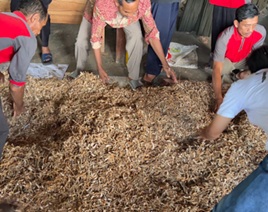
This community service program addresses the challenges of limited farmer knowledge of agricultural waste management and the limited adoption of environmentally friendly technologies to support sustainable agriculture in Tarub Village, Grobogan. Historically, soybean residues, including hulls, stems, and pomace, have not been optimally utilized and are frequently burned, leading to environmental pollution. The Rural Development Economics Research Group from the Faculty of Agriculture at UNS conducted comprehensive training and mentoring for the Margo Husodo Farmer Group, focusing on the production of organic fertilizer from soybean waste. The methodology encompassed socialization, material delivery, practical demonstration of fertilizer production, and post-activity monitoring. The results confirm a significant enhancement in farmers' capacity and skills, with over 80% of participants successfully demonstrating the ability to produce the organic fertilizer independently. The resulting organic fertilizer is confirmed to have adequate macronutrient content (N, P, K), making it a viable alternative to chemical fertilizers to reduce production costs and improve soil fertility. Overall, the program yielded dual positive impacts: increased crop productivity and reduced environmental pollution through the implementation of circular economy practices, while simultaneously strengthening stakeholder synergy to realize sustainable agriculture.
Downloads
Article Details

This work is licensed under a Creative Commons Attribution-ShareAlike 4.0 International License.
Authors who publish with this journal agree to the following terms:
- Any article on the copyright is retained by the author(s).
- Author grant the journal, right of first publication with the work simultaneously licensed under a Creative Commons Attribution License that allows others to share work with acknowledgment of the work authors and initial publications in this journal.
- Authors are able to enter into a separate, additional contractual arrangements for non-exclusive distribution of published articles of work (eg, post-institutional repository) or publish it in a book, with acknowledgment of its initial publication in this journal.
- Authors are permitted and encouraged to post their work online (e.g., in institutional repositories or on their websites) prior to and during the submission process, as can lead to productive exchanges, as well as earlier and greater citation of published work.
- The article and any associated published material is distributed under the Creative Commons Attribution-ShareAlike 4.0 International License
References
Alfidyah, M. 2025. Analisis Efisiensi Produksi dan Pendapatan Petani Padi di Era Pertanian Modern. Jurnal Agribisnis Dan Teknologi Pertanian, 1(1), 1–9.
Aprylasari, D., Nurmasytha, A., Wibowo, A. 2025. Peningkatan Kapasitas Petani melalui Pelatihan Pembuatan Pupuk Kompos di Agrobetapus Farm, Lempake: Solusi Berkelanjutan untuk Pertanian dan Lingkungan. Jurnal Widya Laksmi: Jurnal Pengabdian Kepada Masyarakat, 5(1), 237-242. https://doi.org/10.59458/jwl.v5i1.158
Awogbemi, O., Von Kallon, D.V. 2022. Pretreatment Techniques for Agricultural Waste. Case Studies in Chemical and Environmental Engineering, 6, 1-9. https://doi.org/10.1016/j.cscee.2022.100229
Ayu, I.W., Siswanto, H.T., Kusumawardani, W., Prihantari, E.Y. 2023. Strengthening the capacity of upland farmers through socialization and training on shallot farming in Sumbawa Regency. Mattawang: Jurnal Pengabdian Masyarakat, 4(2), 183–189. https://doi.org/10.35877/454RI.mattawang1578
Barkah, F.N., Pratama, A.O.S., Lestari, L.D. 2025. Optimalisasi Limbah Bonggol Jagung untuk Pangan: Kontribusi terhadap Zero Waste dan Keberlanjutan. SAKALIMA: Pilar Pemberdayaan Masyarakat Pendidikan, 2(1), 25–35. https://doi.org/10.70211/sakalima.v2i1.204
Chew, K.W., Chia, S.R., Yen, H.W., Nomanbhay, S., Ho, Y.C., Show, P.L. 2019. Transformation of Biomass Waste into Sustainable Organic Fertilizers. Sustainability (Switzerland), 11(8). https://doi.org/10.3390/su11082266
Djafara, A., Mozin, N., Djaafar, L. 2025. Pemanfaatan Limbah Kotoran Sapi sebagai Solusi Sosial dan Lingkungan dalam Pembuatan Pupuk Organik Padat. Civic Education Law And Humaniora (CELARA) : Jurnal Pengabdian Kepada Masyarakat Terintegrasi, 3(1), 193–199. https://doi.org/10.37905/celara.v3i1.32549
Dwicahya, N., Lifianthi, Wartono. 2024. Dampak Pembakaran Terbuka Jerami Padi terhadap Karakteristik Lahan Persawahan. AGRIENVI, 18(1), 1–9. https://doi.org/10.36873/aev.v18i1.14765
Emilia, H. 2022. Bentuk dan Sifat Pengabdian Masyarakat yang Diterapkan oleh Perguruan Tinggi. Jurnal Pengabdian Kepada Masyarakat, 2(3), 122-130. https://doi.org/10.37567/pkm.v2i3.1127
Gunawan, I., Rambe, R.D.H., Saputra, W., Ritonga, S.H. 2025. Comparative Effectiveness of Organic Fertilizer Types on Soybean Growth, Yield, and Soil Health in Sustainable Cultivation Systems. Jurnal Teknik Pertanian Lampung (Journal of Agricultural Engineering), 14(6), 2338-2347.
Gusti, R.E., Nelvia, Hamzah, A. 2021. Micro Nutrient Content and Growth of Oil Palm (Elaeis guineensis Jacq) Applied to Oil Palm Liquid Waste Using the Biopori Method. Jurnal Agronomi Tanaman Tropika (Juatika), 3(1), 1–11. https://doi.org/10.36378/juatika.v3i1.895
Kusmiati, A., Ibanah, I., Widjayanthi, L., Kurnianto, A.S., Wulanjari, D., Prastowo, S., Wijayanto, Y. 2023. Pendampingan Petani untuk Mendorong Perubahan Menuju Praktek Pertanian Berkelanjutan. INTEGRITAS: Jurnal Pengabdian, 7(2), 501-512. https://doi.org/10.36841/integritas.v7i2.3629
Muliarta, I.N., Sukmadewi, D.K.T., Selangga, D.G.W., Kariasa, I.G., Prawerti, D.A.D., Parwata, I.K.A., Landra, I.W. 2023. Perbaikan Kesuburan Tanah melalui Pengolahan Limbah Pertanian di Subak Telun Ayah, Bali. LOGISTA-Jurnal Ilmiah Pengabdian Kepada Masyarakat, 7(1), 7-15. https://doi.org/10.25077/logista.7.1.7-15.2023
Munarti, M., Kurniasih, S., Prasaja, D., Kurniawan, A. 2025. Aplikasi Pupuk Organik Cair Limbah Kulit Ari Kedelai terhadap Pertumbuhan dan Produksi Pakcoy (Brassica rapa L.). Cassowary, 8(1), 31-39. https://doi.org/10.30862/casssowary.cs.v8.i1.319
Nada, D.H., Abi, F.D.Y.P., Nadut, A. 2025. Pengaruh Waktu dan Metode Fermentasi terhadap Kandungan C, N, P, K dalam Pupuk Organik Cair dari Limbah Air Kelapa Tua, Limbah Buah-Buahan dan Molase. Agroteknika, 8(1), 54–64. https://doi.org/10.55043/agroteknika.v8i1.498
Putra, G.A., Wiraguna, D., Saputra, Z.H., Azhari, D., Nur’aini, H., Fariadi, H. 2025. Pengembangan Desain Kemasan Pupuk untuk Meningkatkan Daya Saing di Desa Mekar Sari. Jurnal Dehasen Mengabdi, 4(1), 71–74. https://doi.org/10.37676/jdm.v4i1.7903.
Rafsanjani, M.Z., Fatimatuzzahro, S., Azizah, W.N., Arifin, S., Lestari, U.P., Hariani, M., & Putra, A.R. 2025. Pendampingan dan Pembuatan Pupuk Organik dalam Mengurangi Biaya Pupuk Petani Desa Rowo Gempol. ASPIRASI: Publikasi Hasil Pengabdian dan Kegiatan Masyarakat, 3(1), 254-265. https://doi.org/10.61132/aspirasi.v3i1.1452
Rosada, A.N. 2025. Pelatihan Pembuatan Pupuk Organik Cair dari Limbah Organik untuk Mewujudkan Pertanian Berkelanjutan di Desa Blungun. Jurnal Ilmiah Nusantara (JINU), 2(6), 45–52. https://doi.org/10.61722/jinu.v2i6.6538
Santoso, N., Hartono, G., Nuswantara, B. 2012. Analisis Komparasi Usahatani Padi Organik dan Anorganik di Kecamatan Sambirejo Kabupaten Sragen. Agric, 24(1), 63.
Septiani, R., Sundari, S., Indrawan, B. 2022. Program Pemberantasan Nyamuk Penyebar Dbd Dengan Metode Community Based Research (Cbr) Di Desa Rejomulyo Lampung Selatan. Al-Khidmat, 5(2), 103–109. https://doi.org/10.15575/jak.v5i2.17373.
Setiawati, M.R., Putri, I.S., Hidersah, R., Suryatmana, P. 2022. Pemanfaatan Pupuk Organik Cair dari Limbah Pertanian untuk Meningkatkan Hasil Tanaman Sayuran di Desa Cileles, Jatinangor, Kabupaten Sumedang. Dharmakarya: Jurnal Aplikasi Ipteks Untuk Masyarakat, 11(1), 40-45. https://doi.org/10.24198/dharmakarya.v11i1.36834
Sukayat, Y., Setiawan, I., Suharfaputra, U., Kurnia, G. 2023. Determining Factors for Farmers to Engage in Sustainable Agricultural Practices: A Case From Indonesia. Sustainability, 15(13), 10548. https://doi.org/10.3390/su151310548
Widijanto, H., Putri, A., Raharja, C.K.E., Vitasari, E.N., Nur, F.R., Wibisono, N.A. 2025. Sosialisasi dan Pelatihan Pengolahan Limbah Kotoran Sapi menjadi Pupuk Organik di Desa Gemawang, Ngadirojo, Wonogiri. Inisiasi, 14(1), 25–34. https://doi.org/10.59344/inisiasi.vi.286
Zakaria, Martunis, M.R., Taslim, M., Syifa Fadlia Ramadhani, D. 2025. Pemberdayaan Petani dalam Produksi Pupuk Organik sebagai Upaya Mewujudkan Pertanian Berkelanjutan di Desa Ujong Mesjid Lampanah Kecamatan Seulimeum Kabupaten Aceh Besar. Jurnal Ikhlas Mengabdi (JIM), 2(1), 184-188.
Zikria, V., Nasrullah, N. 2024. Transformasi Limbah Pertanian menjadi Pupuk Organik: Peluang Ekonomi Berbasis Inovasi Pertanian Berkelanjutan di Kabupaten Aceh Besar. Jurnal Agrisep, 25 (2), 45-51. https://doi.org/10.17969/agrisep.v25i2.43688
Zulkifli, L., Setyaningrum, A., Budiyoko, B., Rachmah, M.A. 2025. Membangun Kompetensi Petani Padi melalui Pelatihan Partisipatif dalam Produksi Pupuk Organik. Jurnal Pengabdian Masyarakat: Pemberdayaan, Inovasi dan Perubahan, 5(5), 1–9. https://doi.org/10.59818/jpm.v5i5.2036