Integration of Chitosan and Ageratum conyzoides Extract in Hydrogel Patches for Enhanced Wound Closure Kinetics under the TIME Framework

Article Sidebar
Submitted
21 October 2025
Published
30 June 2026
Keywords:
-
Chitosan, Patch hydrogel, Ageratum conyzoides, Wound management
Abstract
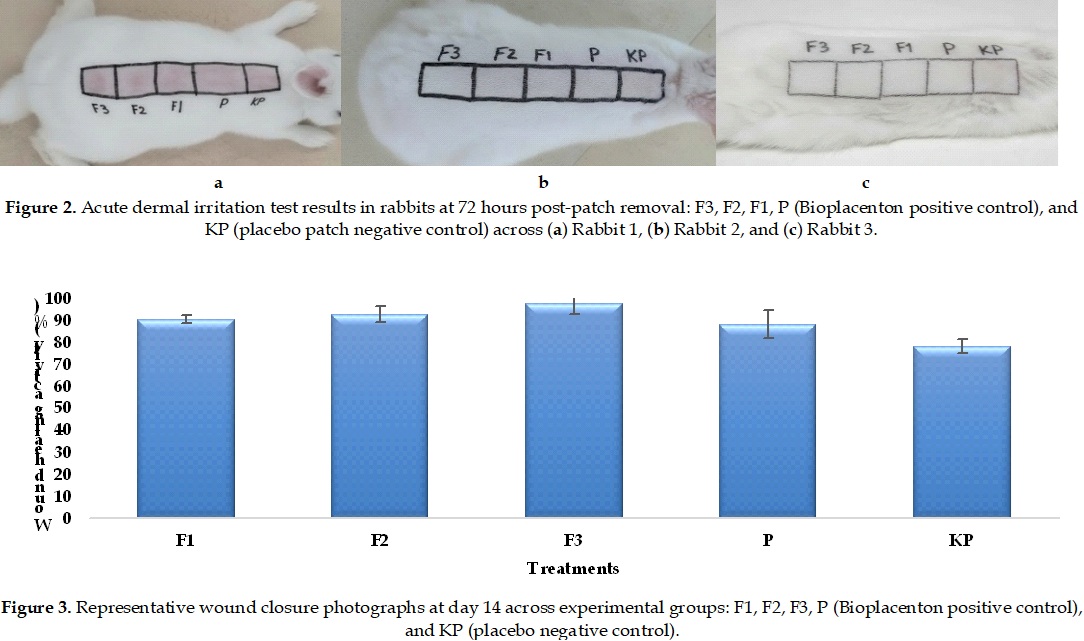
Chronic wounds pose a significant healthcare challenge in Southeast Asia, with prevalence rates reaching 50.8%. Conventional systemic therapies often fail due to persistent inflammation and bacterial biofilm formation. This study presents a novel approach that combines chitosan, a hydrophilic scaffold that maintains optimal moisture and prevents microbial contamination, with Ageratum conyzoides, which is rich in flavonoids with anti-inflammatory and pro-proliferative properties. This study aimed to evaluate the impact of chitosan combined with A. conyzoides in a hydrogel patch formulation on wound healing as a comprehensive approach to the TIME (Tissue, Inflammation, Moisture, Epithelization) concept. The standardized plant material was formulated into patches by a solvent‐casting method using three extract‐to‐chitosan ratios: F1 (2:0), F2 (1:1), and F3 (2:1). Evaluation encompassed physical characterization, acute dermal irritation, and wound‐healing activity assessment. Plant material met the Indonesian Herbal Pharmacopeia standards, yielding 9.96 ± 0.10% total flavonoid content, with phytochemical screening confirming flavonoids, phenolics, and quinones. All formulations demonstrated favorable physical characteristics: thickness of 0.08–0.11 mm, folding endurance of 64–479 folds, and moisture absorption of 6.12–9.39%, with no acute dermal irritation observed in rabbits. In a 14-day linear incision wound model using male Wistar rats, F3 achieved superior healing efficacy (97% closure, rate constant 0.2972 day⁻¹), reaching 90% closure by day 7.75, significantly outperforming the positive control (Bioplacenton®, 89%) and negative control (79%). These results highlight F3's synergistic effects via anti-inflammatory and proliferative mechanisms, following first-order kinetics and comprehensively addressing the TIME framework to enhance wound healing.
Full text article
Generated from XML file
References
1. Burhan A, Syafiqah N, Ruangdet K, Oanh LTK, MacLeod ER, Roy AD, et al. Hidden Wounds: Prevalence of Chronic Wounds in Asia, A Systematic Review and Meta‑Analysis. Java Nurs J. 2025;3(3):221-35. DOI: 10.61716/jnj.v3i3.117.
2. Budirahmadina NA, Perdanakusuma DS, Ervianti E, Saputra ID. The Clinical Profile of Patients with Chronic Wounds at Dr. Soetomo General Hospital 2015-2020. Berkala Ilmu Kesehatan Kulit Kelamin. 2023;35(1):57-66. DOI: 10.20473/bikk.V35.1.2023.57-66.
3. Fakher S, Westenberg D. A Comprehensive Overview of Chronic Wound Infections and Current Treatment Methods. Wound Repair Regen. 2025;33(6):e70115. DOI: 10.1111/wrr.70115; PMID: 41292174.
4. Hosseini SA, Noruzi S, Kesharwani P, Sahebkar A. Hydrogel-based dressing for wound healing: A systematic review of clinical trials. Int J Biol Macromol. 2025;308(Pt 1):142322. DOI: 10.1016/j.ijbiomac.2025.142322; PMID: 40118421.
5. Feng L, Shi Y, Wang Z, Wang C, Fan Y, Wang N, et al. A review of biomimetic hydrogel wound dressings: Design inspiration, construction strategies, multifunctionality and applications. Int J Biol Macromol. 2025;328(Pt 1):147475. DOI: 10.1016/j.ijbiomac.2025.147475; PMID: 40915457.
6. Feng P, Luo Y, Ke C, Qiu H, Wang W, Zhu Y, et al. Chitosan-Based Functional Materials for Skin Wound Repair: Mechanisms and Applications. Front Bioeng Biotechnol. 2021;9:650598. DOI: 10.3389/fbioe.2021.650598; PMID: 33681176; PMCID: PMC7931995.
7. Arulprakash K, Murugan R, Ponrasu T, Iyappan K, Gayathri VS, Suguna L. Efficacy of Ageratum conyzoides on tissue repair and collagen formation in rats. Clin Exp Dermatol. 2012;37(4):418-24. DOI: 10.1111/j.1365-2230.2011.04285.x; PMID: 22452483.
8. Negi B, Khatri K, Bargali SS, Bargali K. Invasive Ageratina adenophora (Asteraceae) in Agroecosystems of Kumaun Himalaya, India: A Threat to Plant Diversity and Sustainable Crop Yield. Sustainability. 2023;15(14):10748. DOI: 10.3390/su151410748.
9. Lobot R, Datu O, Maarisit W, Tumbel S. Uji Efektivitas Ekstrak Etanol Daun Bandotan A. conyzoides L Sebagai Hemostatis Terhadap Luka Potong Pada Tikus Putih. Biofarmasetikal Trop Trop J Biopharm. 2019;1(1):13-7. DOI: 10.55724/jbiofartrop.v1i1.30.
10. Saputri MP, Utami R, Fadila J, Handayani SN. Anti-inflammation Activity of A. conyzoides Leaf Ethanol Extract on Rattus Norvegicus. Walisongo J Chem. 2020;3(1):46-51. DOI: 10.21580/wjc.v3i1.6136.
11. Chahal R, Nanda A, Akkol EK, Sobarzo-Sánchez E, Arya A, Kaushik D, et al. Ageratum conyzoides L. and Its Secondary Metabolites in the Management of Different Fungal Pathogens. Molecules. 2021;26(10):2933. DOI: 10.3390/molecules26102933; PMID: 34069197; PMCID: PMC8156077.
12. Lin Z, Lin Y, Shen J, Jiang M, Hou Y. Flavonoids in Ageratum conyzoides L. Exert Potent Antitumor Effects on Human Cervical Adenocarcinoma HeLa Cells In Vitro and In Vivo. Biomed Res Int. 2020;2020:2696350. DOI: 10.1155/2020/2696350; PMID: 32461974; PMCID: PMC7218960.
13. Sukmawan YP, Alifiar I, Nurdianti L, Ningsih WR. Wound Healing Effectivity of the Ethanolic Extracts of Ageratum conyzoides L. Leaf (White and Purple Flower Type) and Centella asiatica and Astaxanthin Combination Gel Preparation in Animal Model. Turk J Pharm Sci. 2021;18(5):609-15. DOI: 10.4274/tjps.galenos.2021.34676; PMID: 34719189; PMCID: PMC8562118.
14. Mutingatun S, Fachriyah E, Kusrini D. Isolation, Identification, and Antioxidant Activity of Flavonoid Compounds in the Ethanol Extract in Bandotan Leaves (A. conyzoides). J Kimia Sains Aplikasi. 2022;25(12):456-66. DOI: 10.14710/jksa.25.12.456-466.
15. Jan R, Khan M, Asaf S, Lubna, Asif S, Kim KM. Bioactivity and Therapeutic Potential of Kaempferol and Quercetin: New Insights for Plant and Human Health. Plants. 2022;11(19):2623. DOI: 10.3390/plants11192623; PMID: 36235488; PMCID: PMC9571405.
16. Jeong WY, Kwon M, Choi HE, Kim KS. Recent advances in transdermal drug delivery systems: a review. Biomater Res. 2021;25(1):24. DOI: 10.1186/s40824-021-00226-6; PMID: 34321111; PMCID: PMC8317283.
17. Kementerian Kesehatan Republik Indonesia. Farmakope Herbal Indonesia Edisi II. Jakarta: Kementerian Kesehatan Republik Indonesia; 2017.
18. Tiranakwit T, Puangpun W, Tamprasit K, Wichai N, Siriamornpun S, Srisongkram T, et al. Phytochemical Screening on Phenolic, Flavonoid Contents, and Antioxidant Activities of Six Indigenous Plants Used in Traditional Thai Medicine. Int J Mol Sci. 2023;24(17):13425. DOI: 10.3390/ijms241713425; PMID: 37686230; PMCID: PMC10487580.
19. Suwandecha T, Changklang P. Formulation development and characterization of a transdermal patch containing Crinum asiaticum leaves extract. J Appl Pharm Sci. 2023;13(12):207-13. DOI: 10.7324/japs.2023.151643.
20. Kongkwamcharoen C, Itharat A, Ketjinda W, Lee HY, Moon GS, Davies NM. Formulation design and physicochemical evaluation of an anti-inflammatory hydrogel patch containing Crinum asiaticum L. extract. Res Pharm Sci. 2023;18(3):244-61. DOI: 10.4103/1735-5362.371581; PMID: 37593159; PMCID: PMC10427795.
21. Al-Farhan W, Abusara OH, Abu-Sini M, Hikmat S, Tarawneh O, Al-Kouz S, et al. Development, Characterization, and Biological Evaluation of a Self-Healing Hydrogel Patch Loaded with Ciprofloxacin for Wound Dressings. Polymers. 2025;17(19):2686. DOI: 10.3390/polym17192686; PMID: 41096331; PMCID: PMC12527037.
22. Wang J, Li Z, Sun F, Tang S, Zhang S, Lv P, et al. Evaluation of dermal irritation and skin sensitization due to vitacoxib. Toxicol Rep. 2017;4:287-90. DOI: 10.1016/j.toxrep.2017.06.003; PMID: 28959651; PMCID: PMC5615138.
23. Rusnedy R, Febrina M, Sari CP. Uji Aktivitas Wound Healing Ekstrak Etanol Buah Averrhoa bilimbiL. (Belimbing Wuluh) pada Mencit Putih Jantan (Mus musculus). Pharmacon J Farmasi Indones. 2023;20(1):50-60. DOI: 10.23917/pharmacon.v20i1.22677.
24. Chiangnoon R, Samee W, Uttayarat P, Jittachai W, Ruksiriwanich W, Sommano SR, et al. Phytochemical Analysis, Antioxidant, and Wound Healing Activity of Pluchea indica L. (Less) Branch Extract Nanoparticles. Molecules. 2022;27(3):635. DOI: 10.3390/molecules27030635; PMID: 35163900; PMCID: PMC8839647.
25. Oliveira-Alves SC, Andrade F, Prazeres I, Silva AB, Capelo J, Duarte B, et al. Impact of Drying Processes on the Nutritional Composition, Volatile Profile, Phytochemical Content and Bioactivity of Salicornia ramosissima J. Woods. Antioxidants. 2021;10(8):1312. DOI: 10.3390/antiox10081312. PMID: 34439560; PMCID: PMC8389250.
26. Warsinah, Baroroh HN. Pharmacognostic Profile of A. conyzoides L Plant and Simplicia. Pharmacogn J. 2020;12(5):1072-6. DOI: 10.5530/pj.2020.12.151.
27. Shailajan S, Wadke P, Joshi H, Tiwari B. Evaluation of quality and efficacy of an ethnomedicinal plant Ageratum conyzoides L. in the management of pediculosis. J Young Pharm. 2013;5(4):139-43. DOI: 10.1016/j.jyp.2013.10.005; PMID: 24563592; PMCID: PMC3930115.
28. Maulidya SAI, Nuari DA, Suryana S, Almarifah S. Antibacterial Activity of Bandotan (A. conyzoides L) Leaves Extracts Against Methicillin-Resistant Staphylococcus aureus. Borneo J Pharm. 2020;3(4):243-8. DOI: 10.33084/bjop.v3i4.1552.
29. Bafadal M. Potensi Daun Bandotan (Ageratum conyzoides L.) Terhadap Biofilm Streptococcus pyogenes. J Sains Kes. 2025;6(1):32-40. DOI: 10.30872/jsk.v6i1.653.
30. Labarrere B, Prinzing A, Dorey T, Chesneau E, Hennion F. Variations of Secondary Metabolites among Natural Populations of Sub-Antarctic Ranunculus Species Suggest Functional Redundancy and Versatility. Plants. 2019;8(7):234. DOI: 10.3390/plants8070234; PMID: 31331007; PMCID: PMC6681328.
31. Dores RG, Guimarães SF, Braga TV, Fonseca MC, Martins PM, Ferreira TC. Phenolic compounds, flavonoids and antioxidant activity of leaves, flowers and roots of goat weed. Hortic Bras. 2014;32(4):486-90. DOI: 10.1590/S0102-053620140000400019.
32. Zahra M, Abrahamse H, George BP. Flavonoids: Antioxidant Powerhouses and Their Role in Nanomedicine. Antioxidants. 2024;13(8):922. DOI: 10.3390/antiox13080922; PMID: 39199168; PMCID: PMC11351814.
33. Chopra H, Bibi S, Kumar S, Khan MS, Kumar P, Singh I. Preparation and Evaluation of Chitosan/PVA Based Hydrogel Films Loaded with Honey for Wound Healing Application. Gels. 2022;8(2):111. DOI: 10.3390/gels8020111; PMID: 35200493; PMCID: PMC8871709.
34. Chen X, Taguchi T. Enhanced Skin Adhesive Property of Hydrophobically Modified Poly(vinyl alcohol) Films. ACS Omega. 2020;5(3):1519-27. DOI: 10.1021/acsomega.9b03305; PMID: 32010825; PMCID: PMC6990645.
35. Huang Y, Zheng J, Zeng G, Xu H, Lv Y, Liang X, et al. Chitosan-crosslinked polyvinyl alcohol anti-swelling hydrogel designed to prevent abdominal wall adhesion. Mater Today Bio. 2023;24:100931. DOI: 10.1016/j.mtbio.2023.100931; PMID: 38234460; PMCID: PMC10792486.
36. Sahila S, Suhendy H, Sukmawan YP. Wound Healing Effectivity of A. conyzoides L. Leaf Ethanolic Extract (Purple Flower Type), Centella asiatica (L.) Urban Leaf Ethanolic Extract, and Astaxanthin Combination Gel Preparation in Diabetic Animal Model. J Farmasi Sains Komunitas J Pharm Sci Community. 2023;20(1):78-83. DOI: 10.24071/jpsc.003319.
37. Huang W, Zhong Y, Gao B, Zheng B, Liu Y. Nrf2-mediated therapeutic effects of dietary flavones in different diseases. Front Pharmacol. 2023;14:1240433. DOI: 10.3389/fphar.2023.1240433; PMID: 37767395; PMCID: PMC10520786.
38. Huang HC, Chen Y, Hu J, Guo XT, Zhou SR, Yang QQ, et al. Quercetin and its derivatives for wound healing in rats/mice: Evidence from animal studies and insight into molecular mechanisms. Int Wound J. 2024;21(2):e14389. DOI: 10.1111/iwj.14389; PMID: 37818786; PMCID: PMC10828129.
39. Naseeb M, Albajri E, Almasaudi A, Alamri T, Niyazi HA, Aljaouni S, et al. Rutin Promotes Wound Healing by Inhibiting Oxidative Stress and Inflammation in Metformin-Controlled Diabetes in Rats. ACS Omega. 2024;9(30):32394-406. DOI: 10.1021/acsomega.3c05595; PMID: 39100330; PMCID: PMC11292823.
40. Watson SI, Gkini E, Bishop J, Scandrett K, Napit I, Lilford RJ. Modelling wound area in studies of wound healing interventions. BMC Med Res Methodol. 2024;24(1):206. DOI: 10.1186/s12874-024-02326-y; PMID: 39285279; PMCID: PMC11403831.
41. Zulkefli N, Zahari CNMC, Sayuti NH, Kamarudin AA, Saad N, Hamezah HS, et al. Flavonoids as Potential Wound-Healing Molecules: Emphasis on Pathways Perspective. Int J Mol Sci. 2023;24(5):4607. DOI: 10.3390/ijms24054607; PMID: 36902038; PMCID: PMC10003005.
42. Arif J, Nasution AN, Nasution SW, Widowati W, Dewi NSM, Kusuma HSW. Antioxidant Activities and Potential Wound Healing Effects of Meniran (Phyllanthus niruri) Extract Gel. Folia Med Indones. 2024;60(1):69-77. DOI: 10.20473/fmi.v60i1.42396.
43. Ukaegbu K, Allen E, Svoboda KKH. Reactive Oxygen Species and Antioxidants in Wound Healing: Mechanisms and Therapeutic Potential. Int Wound J. 2025;22(5):e70330. DOI: 10.1111/iwj.70330. PMID: 40288766; PMCID: PMC12034374.
44. Jomova K, Alomar SY, Valko R, Liska J, Nepovimova E, Kuca K, et al. Flavonoids and their role in oxidative stress, inflammation, and human diseases. Chem Biol Interact. 2025;413:111489. DOI: 10.1016/j.cbi.2025.111489; PMID: 40147618.
2. Budirahmadina NA, Perdanakusuma DS, Ervianti E, Saputra ID. The Clinical Profile of Patients with Chronic Wounds at Dr. Soetomo General Hospital 2015-2020. Berkala Ilmu Kesehatan Kulit Kelamin. 2023;35(1):57-66. DOI: 10.20473/bikk.V35.1.2023.57-66.
3. Fakher S, Westenberg D. A Comprehensive Overview of Chronic Wound Infections and Current Treatment Methods. Wound Repair Regen. 2025;33(6):e70115. DOI: 10.1111/wrr.70115; PMID: 41292174.
4. Hosseini SA, Noruzi S, Kesharwani P, Sahebkar A. Hydrogel-based dressing for wound healing: A systematic review of clinical trials. Int J Biol Macromol. 2025;308(Pt 1):142322. DOI: 10.1016/j.ijbiomac.2025.142322; PMID: 40118421.
5. Feng L, Shi Y, Wang Z, Wang C, Fan Y, Wang N, et al. A review of biomimetic hydrogel wound dressings: Design inspiration, construction strategies, multifunctionality and applications. Int J Biol Macromol. 2025;328(Pt 1):147475. DOI: 10.1016/j.ijbiomac.2025.147475; PMID: 40915457.
6. Feng P, Luo Y, Ke C, Qiu H, Wang W, Zhu Y, et al. Chitosan-Based Functional Materials for Skin Wound Repair: Mechanisms and Applications. Front Bioeng Biotechnol. 2021;9:650598. DOI: 10.3389/fbioe.2021.650598; PMID: 33681176; PMCID: PMC7931995.
7. Arulprakash K, Murugan R, Ponrasu T, Iyappan K, Gayathri VS, Suguna L. Efficacy of Ageratum conyzoides on tissue repair and collagen formation in rats. Clin Exp Dermatol. 2012;37(4):418-24. DOI: 10.1111/j.1365-2230.2011.04285.x; PMID: 22452483.
8. Negi B, Khatri K, Bargali SS, Bargali K. Invasive Ageratina adenophora (Asteraceae) in Agroecosystems of Kumaun Himalaya, India: A Threat to Plant Diversity and Sustainable Crop Yield. Sustainability. 2023;15(14):10748. DOI: 10.3390/su151410748.
9. Lobot R, Datu O, Maarisit W, Tumbel S. Uji Efektivitas Ekstrak Etanol Daun Bandotan A. conyzoides L Sebagai Hemostatis Terhadap Luka Potong Pada Tikus Putih. Biofarmasetikal Trop Trop J Biopharm. 2019;1(1):13-7. DOI: 10.55724/jbiofartrop.v1i1.30.
10. Saputri MP, Utami R, Fadila J, Handayani SN. Anti-inflammation Activity of A. conyzoides Leaf Ethanol Extract on Rattus Norvegicus. Walisongo J Chem. 2020;3(1):46-51. DOI: 10.21580/wjc.v3i1.6136.
11. Chahal R, Nanda A, Akkol EK, Sobarzo-Sánchez E, Arya A, Kaushik D, et al. Ageratum conyzoides L. and Its Secondary Metabolites in the Management of Different Fungal Pathogens. Molecules. 2021;26(10):2933. DOI: 10.3390/molecules26102933; PMID: 34069197; PMCID: PMC8156077.
12. Lin Z, Lin Y, Shen J, Jiang M, Hou Y. Flavonoids in Ageratum conyzoides L. Exert Potent Antitumor Effects on Human Cervical Adenocarcinoma HeLa Cells In Vitro and In Vivo. Biomed Res Int. 2020;2020:2696350. DOI: 10.1155/2020/2696350; PMID: 32461974; PMCID: PMC7218960.
13. Sukmawan YP, Alifiar I, Nurdianti L, Ningsih WR. Wound Healing Effectivity of the Ethanolic Extracts of Ageratum conyzoides L. Leaf (White and Purple Flower Type) and Centella asiatica and Astaxanthin Combination Gel Preparation in Animal Model. Turk J Pharm Sci. 2021;18(5):609-15. DOI: 10.4274/tjps.galenos.2021.34676; PMID: 34719189; PMCID: PMC8562118.
14. Mutingatun S, Fachriyah E, Kusrini D. Isolation, Identification, and Antioxidant Activity of Flavonoid Compounds in the Ethanol Extract in Bandotan Leaves (A. conyzoides). J Kimia Sains Aplikasi. 2022;25(12):456-66. DOI: 10.14710/jksa.25.12.456-466.
15. Jan R, Khan M, Asaf S, Lubna, Asif S, Kim KM. Bioactivity and Therapeutic Potential of Kaempferol and Quercetin: New Insights for Plant and Human Health. Plants. 2022;11(19):2623. DOI: 10.3390/plants11192623; PMID: 36235488; PMCID: PMC9571405.
16. Jeong WY, Kwon M, Choi HE, Kim KS. Recent advances in transdermal drug delivery systems: a review. Biomater Res. 2021;25(1):24. DOI: 10.1186/s40824-021-00226-6; PMID: 34321111; PMCID: PMC8317283.
17. Kementerian Kesehatan Republik Indonesia. Farmakope Herbal Indonesia Edisi II. Jakarta: Kementerian Kesehatan Republik Indonesia; 2017.
18. Tiranakwit T, Puangpun W, Tamprasit K, Wichai N, Siriamornpun S, Srisongkram T, et al. Phytochemical Screening on Phenolic, Flavonoid Contents, and Antioxidant Activities of Six Indigenous Plants Used in Traditional Thai Medicine. Int J Mol Sci. 2023;24(17):13425. DOI: 10.3390/ijms241713425; PMID: 37686230; PMCID: PMC10487580.
19. Suwandecha T, Changklang P. Formulation development and characterization of a transdermal patch containing Crinum asiaticum leaves extract. J Appl Pharm Sci. 2023;13(12):207-13. DOI: 10.7324/japs.2023.151643.
20. Kongkwamcharoen C, Itharat A, Ketjinda W, Lee HY, Moon GS, Davies NM. Formulation design and physicochemical evaluation of an anti-inflammatory hydrogel patch containing Crinum asiaticum L. extract. Res Pharm Sci. 2023;18(3):244-61. DOI: 10.4103/1735-5362.371581; PMID: 37593159; PMCID: PMC10427795.
21. Al-Farhan W, Abusara OH, Abu-Sini M, Hikmat S, Tarawneh O, Al-Kouz S, et al. Development, Characterization, and Biological Evaluation of a Self-Healing Hydrogel Patch Loaded with Ciprofloxacin for Wound Dressings. Polymers. 2025;17(19):2686. DOI: 10.3390/polym17192686; PMID: 41096331; PMCID: PMC12527037.
22. Wang J, Li Z, Sun F, Tang S, Zhang S, Lv P, et al. Evaluation of dermal irritation and skin sensitization due to vitacoxib. Toxicol Rep. 2017;4:287-90. DOI: 10.1016/j.toxrep.2017.06.003; PMID: 28959651; PMCID: PMC5615138.
23. Rusnedy R, Febrina M, Sari CP. Uji Aktivitas Wound Healing Ekstrak Etanol Buah Averrhoa bilimbiL. (Belimbing Wuluh) pada Mencit Putih Jantan (Mus musculus). Pharmacon J Farmasi Indones. 2023;20(1):50-60. DOI: 10.23917/pharmacon.v20i1.22677.
24. Chiangnoon R, Samee W, Uttayarat P, Jittachai W, Ruksiriwanich W, Sommano SR, et al. Phytochemical Analysis, Antioxidant, and Wound Healing Activity of Pluchea indica L. (Less) Branch Extract Nanoparticles. Molecules. 2022;27(3):635. DOI: 10.3390/molecules27030635; PMID: 35163900; PMCID: PMC8839647.
25. Oliveira-Alves SC, Andrade F, Prazeres I, Silva AB, Capelo J, Duarte B, et al. Impact of Drying Processes on the Nutritional Composition, Volatile Profile, Phytochemical Content and Bioactivity of Salicornia ramosissima J. Woods. Antioxidants. 2021;10(8):1312. DOI: 10.3390/antiox10081312. PMID: 34439560; PMCID: PMC8389250.
26. Warsinah, Baroroh HN. Pharmacognostic Profile of A. conyzoides L Plant and Simplicia. Pharmacogn J. 2020;12(5):1072-6. DOI: 10.5530/pj.2020.12.151.
27. Shailajan S, Wadke P, Joshi H, Tiwari B. Evaluation of quality and efficacy of an ethnomedicinal plant Ageratum conyzoides L. in the management of pediculosis. J Young Pharm. 2013;5(4):139-43. DOI: 10.1016/j.jyp.2013.10.005; PMID: 24563592; PMCID: PMC3930115.
28. Maulidya SAI, Nuari DA, Suryana S, Almarifah S. Antibacterial Activity of Bandotan (A. conyzoides L) Leaves Extracts Against Methicillin-Resistant Staphylococcus aureus. Borneo J Pharm. 2020;3(4):243-8. DOI: 10.33084/bjop.v3i4.1552.
29. Bafadal M. Potensi Daun Bandotan (Ageratum conyzoides L.) Terhadap Biofilm Streptococcus pyogenes. J Sains Kes. 2025;6(1):32-40. DOI: 10.30872/jsk.v6i1.653.
30. Labarrere B, Prinzing A, Dorey T, Chesneau E, Hennion F. Variations of Secondary Metabolites among Natural Populations of Sub-Antarctic Ranunculus Species Suggest Functional Redundancy and Versatility. Plants. 2019;8(7):234. DOI: 10.3390/plants8070234; PMID: 31331007; PMCID: PMC6681328.
31. Dores RG, Guimarães SF, Braga TV, Fonseca MC, Martins PM, Ferreira TC. Phenolic compounds, flavonoids and antioxidant activity of leaves, flowers and roots of goat weed. Hortic Bras. 2014;32(4):486-90. DOI: 10.1590/S0102-053620140000400019.
32. Zahra M, Abrahamse H, George BP. Flavonoids: Antioxidant Powerhouses and Their Role in Nanomedicine. Antioxidants. 2024;13(8):922. DOI: 10.3390/antiox13080922; PMID: 39199168; PMCID: PMC11351814.
33. Chopra H, Bibi S, Kumar S, Khan MS, Kumar P, Singh I. Preparation and Evaluation of Chitosan/PVA Based Hydrogel Films Loaded with Honey for Wound Healing Application. Gels. 2022;8(2):111. DOI: 10.3390/gels8020111; PMID: 35200493; PMCID: PMC8871709.
34. Chen X, Taguchi T. Enhanced Skin Adhesive Property of Hydrophobically Modified Poly(vinyl alcohol) Films. ACS Omega. 2020;5(3):1519-27. DOI: 10.1021/acsomega.9b03305; PMID: 32010825; PMCID: PMC6990645.
35. Huang Y, Zheng J, Zeng G, Xu H, Lv Y, Liang X, et al. Chitosan-crosslinked polyvinyl alcohol anti-swelling hydrogel designed to prevent abdominal wall adhesion. Mater Today Bio. 2023;24:100931. DOI: 10.1016/j.mtbio.2023.100931; PMID: 38234460; PMCID: PMC10792486.
36. Sahila S, Suhendy H, Sukmawan YP. Wound Healing Effectivity of A. conyzoides L. Leaf Ethanolic Extract (Purple Flower Type), Centella asiatica (L.) Urban Leaf Ethanolic Extract, and Astaxanthin Combination Gel Preparation in Diabetic Animal Model. J Farmasi Sains Komunitas J Pharm Sci Community. 2023;20(1):78-83. DOI: 10.24071/jpsc.003319.
37. Huang W, Zhong Y, Gao B, Zheng B, Liu Y. Nrf2-mediated therapeutic effects of dietary flavones in different diseases. Front Pharmacol. 2023;14:1240433. DOI: 10.3389/fphar.2023.1240433; PMID: 37767395; PMCID: PMC10520786.
38. Huang HC, Chen Y, Hu J, Guo XT, Zhou SR, Yang QQ, et al. Quercetin and its derivatives for wound healing in rats/mice: Evidence from animal studies and insight into molecular mechanisms. Int Wound J. 2024;21(2):e14389. DOI: 10.1111/iwj.14389; PMID: 37818786; PMCID: PMC10828129.
39. Naseeb M, Albajri E, Almasaudi A, Alamri T, Niyazi HA, Aljaouni S, et al. Rutin Promotes Wound Healing by Inhibiting Oxidative Stress and Inflammation in Metformin-Controlled Diabetes in Rats. ACS Omega. 2024;9(30):32394-406. DOI: 10.1021/acsomega.3c05595; PMID: 39100330; PMCID: PMC11292823.
40. Watson SI, Gkini E, Bishop J, Scandrett K, Napit I, Lilford RJ. Modelling wound area in studies of wound healing interventions. BMC Med Res Methodol. 2024;24(1):206. DOI: 10.1186/s12874-024-02326-y; PMID: 39285279; PMCID: PMC11403831.
41. Zulkefli N, Zahari CNMC, Sayuti NH, Kamarudin AA, Saad N, Hamezah HS, et al. Flavonoids as Potential Wound-Healing Molecules: Emphasis on Pathways Perspective. Int J Mol Sci. 2023;24(5):4607. DOI: 10.3390/ijms24054607; PMID: 36902038; PMCID: PMC10003005.
42. Arif J, Nasution AN, Nasution SW, Widowati W, Dewi NSM, Kusuma HSW. Antioxidant Activities and Potential Wound Healing Effects of Meniran (Phyllanthus niruri) Extract Gel. Folia Med Indones. 2024;60(1):69-77. DOI: 10.20473/fmi.v60i1.42396.
43. Ukaegbu K, Allen E, Svoboda KKH. Reactive Oxygen Species and Antioxidants in Wound Healing: Mechanisms and Therapeutic Potential. Int Wound J. 2025;22(5):e70330. DOI: 10.1111/iwj.70330. PMID: 40288766; PMCID: PMC12034374.
44. Jomova K, Alomar SY, Valko R, Liska J, Nepovimova E, Kuca K, et al. Flavonoids and their role in oxidative stress, inflammation, and human diseases. Chem Biol Interact. 2025;413:111489. DOI: 10.1016/j.cbi.2025.111489; PMID: 40147618.
Authors
1.
Prihantini M, Anas Y, Heroweti J, Mulangsri DAK, Jamaludin WB, Nahla LM, Mahadika RR, Hawa F, Azkya N, Fassadila RS. Integration of Chitosan and Ageratum conyzoides Extract in Hydrogel Patches for Enhanced Wound Closure Kinetics under the TIME Framework. Borneo J Pharm [Internet]. 2026Jun.30 [cited 2026Oct.19];9(2):213-24. Available from: https://journal.umpr.ac.id/index.php/bjop/article/view/11198
Copyright (c) 2026 Malinda Prihantini, Yance Anas, Junvidya Heroweti, Dewi Andini Kunti Mulangsri, Wahyudin Bin Jamaludin, Luthfia Mufaridhotun Nahla, Reyhan Raka Mahadika, Fazdilatul Hawa, Nayla Azkya, Rifka Sephia Fassadila

This work is licensed under a Creative Commons Attribution-ShareAlike 4.0 International License.
This work is licensed under a Creative Commons Attribution-ShareAlike 4.0 International License.
Authors continue to retain the copyright to the article if the article is published in the Borneo Journal of Pharmacy. They will also retain the publishing rights to the article without any restrictions.
Authors who publish in this journal agree to the following terms:
- Any article on the copyright is retained by the author(s).
- The author grants the journal the right of first publication with the work simultaneously licensed under a Creative Commons Attribution License that allows others to share work with an acknowledgment of the work authors and initial publications in this journal.
- Authors can enter into separate, additional contractual arrangements for the non-exclusive distribution of published articles (e.g., post-institutional repository) or publish them in a book, with acknowledgment of their initial publication in this journal.
- Authors are permitted and encouraged to post their work online (e.g., in institutional repositories or on their websites) prior to and during the submission process. This can lead to productive exchanges and earlier and greater citations of published work.
- The article and any associated published material are distributed under the Creative Commons Attribution-ShareAlike 4.0 International License.
Article Details