Synthesis of 4-Hydroxycinnamic Acid from Malonic Acid and 4-Hydroxybenzaldehyde as Starting Materials with the Variation of the Reflux Time

Article Sidebar
-
Condensation, Knoevenagel-Doebner, 4-hydroxycinnamic acid, Reflux time variation
Abstract
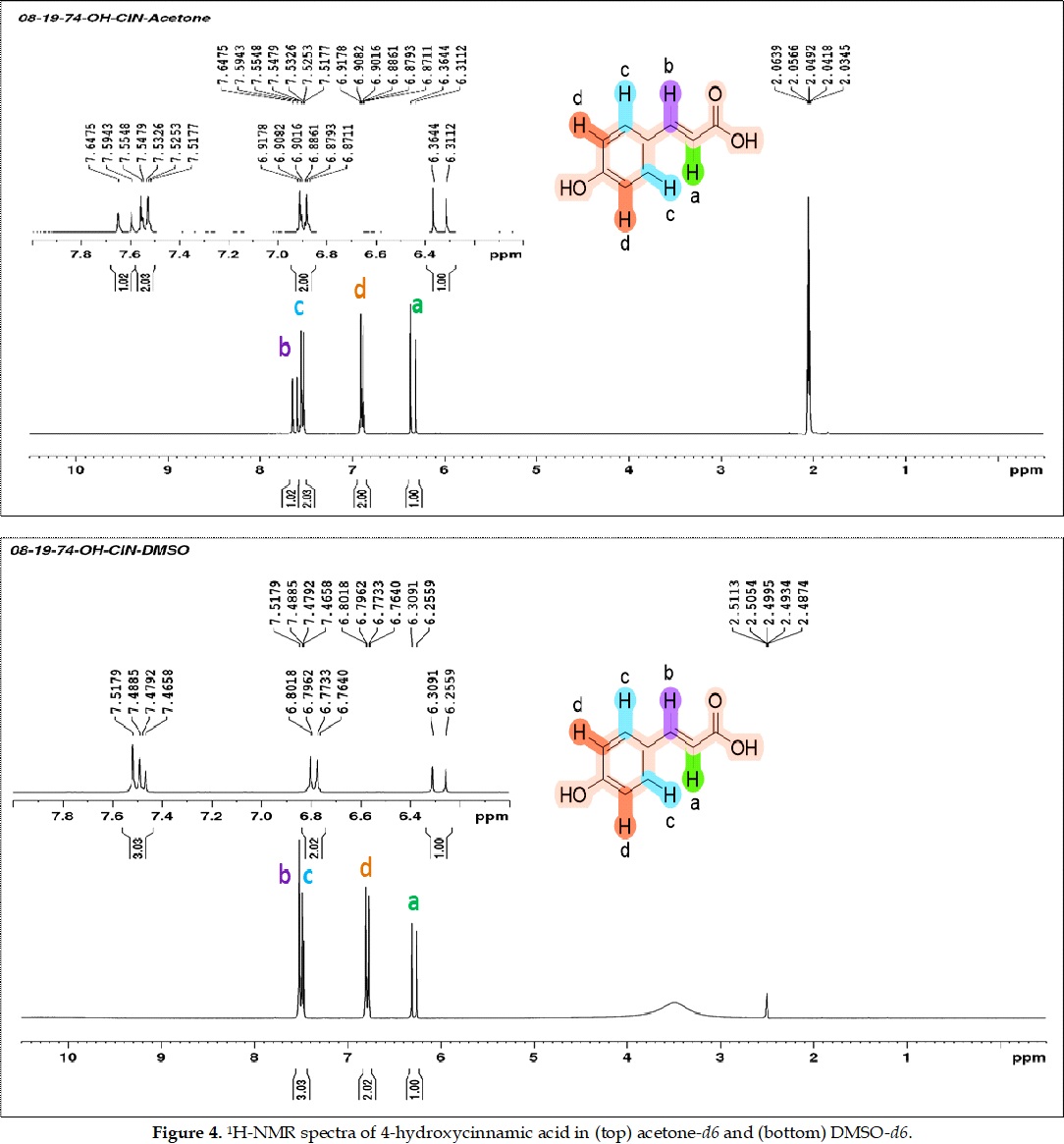
Cinnamic acid derivatives, naturally occurring compounds found in plants and also synthetically produced, exhibit diverse biological activities, including antioxidant, antiplasmodial, tyrosinase-inhibitory, antibacterial, anti-inflammatory, antitumor, and anticancer properties, with 4-hydroxycinnamic acid representing a particularly valuable derivative for pharmaceutical development. However, the successful synthesis of these compounds requires careful optimization of reaction conditions, particularly the reflux time, which must balance complete reactant conversion against product degradation that may occur with excessive heating to achieve maximum yield and purity. This study aimed to optimize the reaction yield in the synthesis of 4-hydroxycinnamic acid by varying the reflux time. 4-Hydroxycinnamic acid was synthesized via a reaction between malonic acid and 4-hydroxybenzaldehyde using pyridine-piperidine as a catalyst. The reflux time was varied at 3, 5, and 7 hours. The mixture was refluxed at 70–80°C with constant stirring at 900 rpm. After the reaction, the crude product was recrystallized and dried, and the yield was calculated. TLC was employed to compare the product's Rf value with that of the starting material using various eluents. Furthermore, the synthesized product was characterized by Fourier-Transform Infrared and Nuclear Magnetic Resonance spectroscopy to elucidate its structure. The results revealed that the average yields at reflux times of 3, 5, and 7 hours were 58.6, 66.78, and 63.87%, respectively, with the optimal yield achieved at 5 hours. Physicochemical and spectral data confirmed that the obtained product was 4-hydroxycinnamic acid. Purity analysis showed that the synthesized compound had a purity level of 95%.
Full text article
References
2. Gunia-Krzyżak A, Słoczyńska K, Popiół J, Koczurkiewicz P, Marona H, Pękala E. Cinnamic acid derivatives in cosmetics: current use and future prospects. Int J Cosmet Sci. 2018;40(4):356-66. DOI: 10.1111/ics.12471; PMID: 29870052.
3. Mohammadabadi T, Jain R. Cinnamon: a nutraceutical supplement for the cardiovascular system. Arch Med Sci Atheroscler Dis. 2024;9:e72-81. DOI: 10.5114/amsad/184245; PMID: 38846056; PMCID: PMC11155465.
4. Letizia CS, Cocchiara J, Lapczynski A, Lalko J, Api AM. Fragrance material review on cinnamic acid. Food Chem Toxicol. 2005;43(6):925-43. DOI: 10.1016/j.fct.2004.09.015; PMID: 15811573.
5. Nouni C, Theodosis-Nobelos P, Rekka EA. Antioxidant and Hypolipidemic Activities of Cinnamic Acid Derivatives. Molecules. 2023;28(18):6732. DOI: 10.3390/molecules28186732; PMID: 37764507; PMCID: PMC10535275.
6. dos Santos DM, Sanches MP, Poffo CM, Parize AL, Darelli GJS, de Lima VR. Syringic and cinnamic acids antiradical/antioxidant activities as R. ferruginea extract components and membrane physico-chemical influence. J Mol Struct. 2020;1220:128749. DOI: 10.1016/j.molstruc.2020.128749.
7. Perković I, Raić-Malić S, Fontinha D, Prudêncio M, de Carvalho LP, Held J, et al. Harmicines - harmine and cinnamic acid hybrids as novel antiplasmodial hits. Eur J Med Chem. 2020;187:111927. DOI: 10.1016/j.ejmech.2019.111927; PMID: 31812035.
8. Romagnoli R, Oliva P, Prencipe F, Manfredini S, Germanò MP, De Luca L, et al. Cinnamic acid derivatives linked to arylpiperazines as novel potent inhibitors of tyrosinase activity and melanin synthesis. Eur J Med Chem. 2022;231:114147. DOI: 10.1016/j.ejmech.2022.114147; PMID: 35114540.
9. Rodrigues MP, Tomaz DC, de Souza LA, Onofre TS, de Menezes WA, Almeida-Silva J, et al. Synthesis of cinnamic acid derivatives and leishmanicidal activity against Leishmania braziliensis. Eur J Med Chem. 2019;183:111688. DOI: 10.1016/j.ejmech.2019.111688; PMID: 31542714.
10. Huang S, Liu W, Li Y, Zhang K, Zheng X, Wu H, et al. Design, Synthesis, and Activity Study of Cinnamic Acid Derivatives as Potent Antineuroinflammatory Agents. ACS Chem Neurosci. 2021;12(3):419-29. DOI: 10.1021/acschemneuro.0c00578; PMID: 33439002.
11. Liang C, Pei S, Ju W, Jia M, Tian D, Tang Y, et al. Synthesis and in vitro and in vivo antitumour activity study of 11-hydroxyl esterified bergenin/cinnamic acid hybrids. Eur J Med Chem. 2017;133:319-28. DOI: 10.1016/j.ejmech.2017.03.053; PMID: 28395218.
12. Xu CC, Deng T, Fan ML, Lv WB, Liu JH, Yu BY. Synthesis and in vitro antitumor evaluation of dihydroartemisinin-cinnamic acid ester derivatives. Eur J Med Chem. 2016;107:192-203. DOI: 10.1016/j.ejmech.2015.11.003; PMID: 26595184.
13. Almeer RS, Alnasser M, Aljarba N, AlBasher GI. Effects of Green cardamom (Elettaria cardamomum Maton) and its combination with cyclophosphamide on Ehrlich solid tumors. BMC Complement Med Ther. 2021;21(1):133. DOI: 10.1186/s12906-021-03305-2; PMID: 33926427; PMCID: PMC8086365.
14. Indriyanti E, Prahasiwi MS. Synthesis of cinnamic acid based on perkin reaction using sonochemical method and its potential as photoprotective agent. JKPK J Kimia Pendidikan Kimia. 2020;5(1):54-61. DOI: 10.20961/jkpk.v5i1.38136.
15. Hatsuda M, Kuroda T, Seki M. An improved synthesis of (E)-cinnamic acid derivatives via the Claisen–Schmidt condensation. Synth Commun. 2003;33(3):427-34. DOI: 10.1081/SCC-120015773.
16. van Schijndel J, Canalle LA, Molendijk D, Meuldijk J. The green Knoevenagel condensation: solvent-free condensation of benzaldehydes. Green Chem Lett Rev. 2017;10(4):404-11. DOI: 10.1080/17518253.2017.1391881.
17. Nagalakshmi K, Diwakar BS, Govindh B, Reddy PG, Venu R, Bhargavi I, et al. A simple and straightforward synthesis of cinnamic acids and ylidene malononitriles via knoevenagel condensation employing DABCO as catalyst. Asian J Chem. 2017;29(7):1561-4. DOI: 10.14233/ajchem.2017.20575.
18. Lee GS, Widjaja A, Ju YH. Enzymatic synthesis of cinnamic acid derivatives. Biotechnol Lett. 2006;28(8):581-5. DOI: 10.1007/s10529-006-0019-2; PMID: 16614896.
19. Lin CI, McCarty RM, Liu HW. The Enzymology of Organic Transformations: A Survey of Name Reactions in Biological Systems. Angew Chem Int Ed Engl. 2017;56(13):3446-89. DOI: 10.1002/anie.201603291; PMID: 27505692; PMCID: PMC5477795.
20. Chiriac CI, Tanasa F, Onciu M. A novel approach in cinnamic acid synthesis: direct synthesis of cinnamic acids from aromatic aldehydes and aliphatic carboxylic acids in the presence of boron tribromide. Molecules. 2005;10(2):481-7. DOI: 10.3390/10020481; PMID: 18007319; PMCID: PMC6147640.
21. van Beurden K, de Koning S, Molendijk D, van Schijndel J. The Knoevenagel reaction: a review of the unfinished treasure map to forming carbon–carbon bonds. Green Chem Lett Rev. 2020;13(4):349-64. DOI: 10.1080/17518253.2020.1851398.
22. Rioux B, Peyrot C, Mention MM, Brunissen F, Allais F. Sustainable Synthesis of p-Hydroxycinnamic Diacids through Proline-Mediated Knoevenagel Condensation in Ethanol: An Access to Potent Phenolic UV Filters and Radical Scavengers. Antioxidants. 2020;9(4):331. DOI: 10.3390/antiox9040331; PMID: 32325641; PMCID: PMC7222392.
23. Julianus J, Luckyvano E. Sintesis asam sinamat dari benzaldehida dan asam malonat dengan katalis dietilamina. J Farm Sains Komunitas. 2014;11(1):1-6. DOI: 10.24071/jpsc.0061
24. Mouterde LMM, Allais F. Corrigendum: Microwave-Assisted Knoevenagel-Doebner Reaction: An Efficient Method for Naturally Occurring Phenolic Acids Synthesis. Front Chem. 2018;6:568. DOI: 10.3389/fchem.2018.00568; PMID: 30519557; PMCID: PMC6256712.
25. Fang X, Hu Y, Yang G, Shi W, Lu S, Cao Y. Improving physicochemical properties and pharmacological activities of ternary co-amorphous systems. Eur J Pharm Biopharm. 2022;181:22-35. DOI: 10.1016/j.ejpb.2022.10.008; PMID: 36283631.
26. Oladipo SD, Yusuf TL, Zamisa SJ, Shapi M, Ajayi TJ. Synthesis, crystal structure, Hirshfeld surface analysis and DFT studies of N-(2,6-diisopropylphenyl)-1-(4-methoxyphenyl) methanimine. J Mol Struct. 2021;1241:130620. DOI: 10.1016/j.molstruc.2021.130620.
27. Aiswarya P, Jayavarthanan T, Periandy S, Suresh S, Soundhariya S. Molecular structural analysis, conformers and spectral (FT-IR, FT-Raman, NMR and UV-Visible), Importance of solvent role in molecular, ADME and molecular docking investigation on alpha-cyano-4-hydroxycinnamic acid. Chem Phys Impact. 2023;7:100353. DOI: 10.1016/j.chphi.2023.100353.
28. Narwanti I, Yu ZY, Sethy B, Zheng PL, Cheng LH, Tsai KK, et al. Quinoline-5,8-dione CDC25 inhibitors: Potent anti-cancer agents in leukemia and patient-derived colorectal organoids. Eur J Med Chem. 2026;301:118215. DOI: 10.1016/j.ejmech.2025.118215; PMID: 41045697.
Authors
Copyright (c) 2026 Iin Narwanti, Fahmi Humaidi Abdillah

This work is licensed under a Creative Commons Attribution-ShareAlike 4.0 International License.
This work is licensed under a Creative Commons Attribution-ShareAlike 4.0 International License.
Authors continue to retain the copyright to the article if the article is published in the Borneo Journal of Pharmacy. They will also retain the publishing rights to the article without any restrictions.
Authors who publish in this journal agree to the following terms:
- Any article on the copyright is retained by the author(s).
- The author grants the journal the right of first publication with the work simultaneously licensed under a Creative Commons Attribution License that allows others to share work with an acknowledgment of the work authors and initial publications in this journal.
- Authors can enter into separate, additional contractual arrangements for the non-exclusive distribution of published articles (e.g., post-institutional repository) or publish them in a book, with acknowledgment of their initial publication in this journal.
- Authors are permitted and encouraged to post their work online (e.g., in institutional repositories or on their websites) prior to and during the submission process. This can lead to productive exchanges and earlier and greater citations of published work.
- The article and any associated published material are distributed under the Creative Commons Attribution-ShareAlike 4.0 International License.
Article Details