Molecular Docking Analysis of Flavonoids from Syzygium cumini (L.) Skeels: Proapoptotic Potential as an Anticancer Mechanism

Article Sidebar
-
NSCLC, Syzigium cumini (L.) Skeels, In silico
Abstract
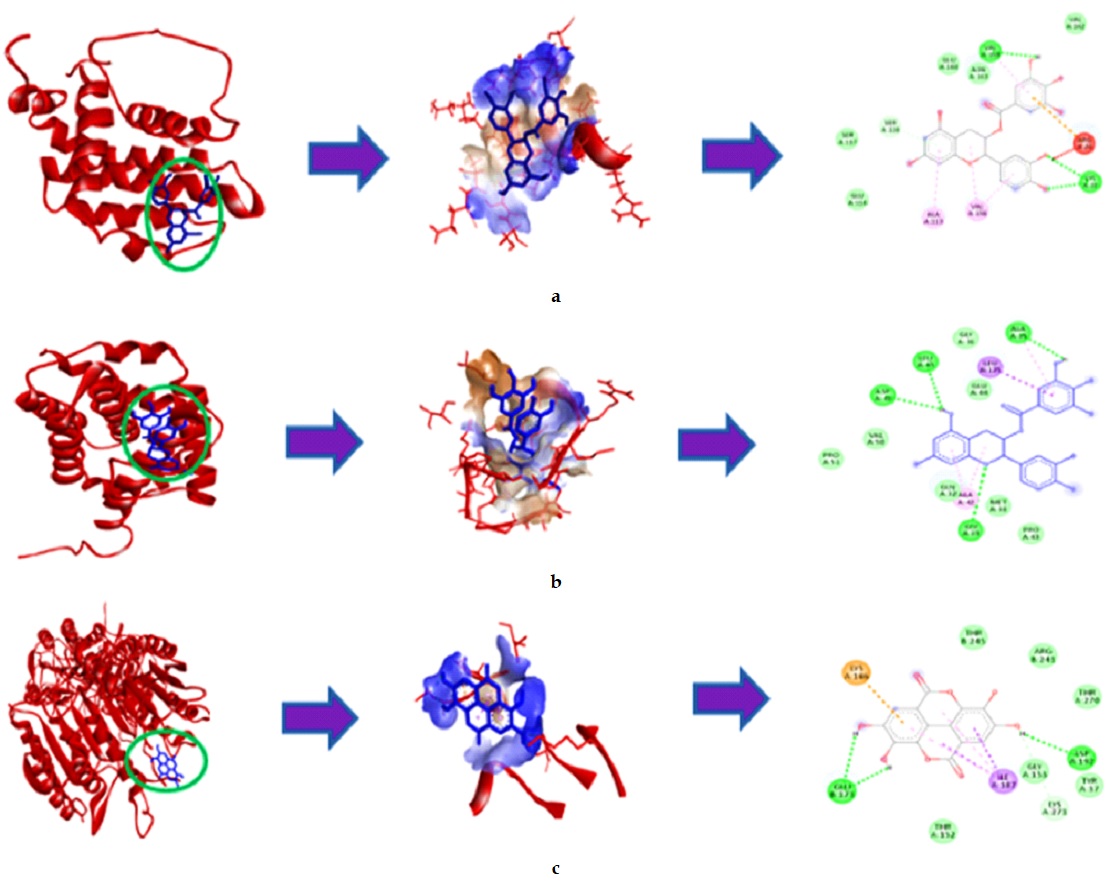
Non-small cell lung cancer (NSCLC) presents a significant global health challenge, with its prevalence and mortality rates rising steadily. In Indonesia, Syzygium cumini (L.) Skeels, known for its flavonoid richness, has a long history in traditional medicine. However, its specific mechanisms of action against cancer, particularly in inducing apoptosis in NSCLC, have not been fully elucidated. This study utilized an in silico approach to evaluate the pro-apoptotic potential of S. cumini flavonoids against NSCLC by targeting key proteins: Bcl-2, Bax, and Caspase-3. We retrieved flavonoid structures from PubChem and protein data from the Research Collaboratory for Structural Bioinformatics Protein Data Bank (RCSB PDB). The drug-likeness of these compounds was assessed using Swiss ADME, adhering to Lipinski's rule of five, while their anti-NSCLC probability was predicted using PASS Online. Molecular docking and screening were performed with PyRx, and the results were visualized using Discovery Studio. Our findings identified epigallocatechin 3-O-gallate and ellagic acid as the most promising anti-NSCLC candidates. Ellagic acid demonstrated the strongest binding affinity to Caspase-3, suggesting a potent pro-apoptotic effect. Epigallocatechin 3-O-gallate, on the other hand, exhibited the lowest binding energy across multiple target proteins, particularly Bcl-2 and Bax, indicating its broad pro-apoptotic potential. These results collectively suggest that flavonoids from S. cumini may hold significant promise as a source of novel anti-NSCLC agents, warranting further in vitro and in vivo investigations.
Full text article
References
2. Wild CP, Weiderpass E, Stewart BW, editors. World Cancer Report: Cancer research for cancer prevention. Lyon (FR): International Agency for Research on Cancer; 2020. NBKID: NBK606484
3. Sharma R. Mapping of global, regional and national incidence, mortality and mortality-to-incidence ratio of lung cancer in 2020 and 2050. Int J Clin Oncol. 2022;27(4):665-75. DOI: 10.1007/s10147-021-02108-2; PMCID: PMC8753949; PMID: 35020103
4. Akbulut H, Ïncendayı S, Atasoy Ö. Non-small cell lung cancer and its treatment. Demiroglu Sci Univ Florence Nightingale J Transplant. 2020;4(1-2):23-40. DOI: 10.5606/dsufnjt.2019.004
5. Widyananda MH, Pratama SK, Samoedra RS, Sari FN, Kharisma VD, Ansori ANM, et al. Molecular docking study of sea urchin (Arbacia lixula) peptides as multi-target inhibitor for non-small cell lung cancer (NSCLC) associated proteins. J Pharm Pharmacogn Res. 2021;9(4):484-96. DOI: 10.56499/jppres21.1047_9.4.484
6. Oser MG, Niederst MJ, Sequist LV, Engelman JA. Transformation from non-small-cell lung cancer to small-cell lung cancer: molecular drivers and cells of origin. Lancet Oncol. 2015;16(4):165-72. DOI: 10.1016/s1470-2045(14)71180-5; PMCID: PMC4470698; PMID: 25846096
7. Tang FH, Wong HYT, Tsang PSW, Yau M, Tam SY, Law L, et al. Recent advancements in lung cancer research: a narrative review. Transl Lung Cancer Res. 2025;14(3):975-90. DOI: 10.21037/tlcr-24-979; PMCID: PMC12000946; PMID: 40248731
8. Shaik NA, Al-Kreathy HM, Ajabnoor GM, Verma PK, Banaganapalli B. Molecular designing, virtual screening and docking study of novel curcumin analogue as mutation (S769L and K846R) selective inhibitor for EGFR. Saudi J Biol Sci. 2019;26(3):439-48. DOI: 10.1016/j.sjbs.201805.026; PMCID: PMC6408711; PMID: 30899155
9. Sun L, Yim WS, Fahey P, Wang S, Zhu X, Qiao J, et al. Investigation on advanced non-small cell lung cancer among elderly patients treated with Chinese herbal medicine versus chemotherapy: A pooled analysis of individual data. Evid Based Complement Alternat Med. 2019;2019:1898345. DOI: 10.1155/2019/1898345; PMCID: PMC6334362; PMID: 30719055
10. Ye Z, Huang Y, Ke J, Zhu X, Leng S, Luo H. Breakthrough in targeted theraphy for non-small cell lung cancer. Biomed Pharmacother. 20121;133:111079. DOI: 10.1016/j.biopha.2020.111079; PMID: 33378976
11. Tahayneh K, Idkedek M, Akar FA. NSCLC: Current Evidence on Its Pathogenesis, Integrated Treatment, and Future Perspectives. J Clin Med. 2025;14(3):1025. DOI: 10.3390/jcm14031025; PMCID: PMC11818267; PMID: 39941694
12. Colapietro A, Mancini A, D’Alessandro AM, Festuccia C. Rocetin and crocin from saffron in cancer chemotherapy and chemoprevention. Anticancer Agents Med Chem. 2019;19(1):38-47. DOI: 10.2174/1871520619666181231112453; PMID: 30599111
13. Araghi M, Mannani R, Maleki AH, Hamidi A, Rostami S, Safa SH, et al. Recent advances in non-small cell lung cancer targeted therapy; an update review. Cancer Cell Int. 2023;23(1):162. DOI: 10.1186/s12935-023-02990-y; PMCID: PMC10416536; PMID: 37568193
14. Nafisah W, Pinanti HN, Christina YI, Rifa’i M, Djati MS. Computational biological activity and pharmacological properties analysis for anticancer Cyperus rotundus bioactive compounds. AIP Conf Proceed. 2021;2353:030118. DOI: 10.1063/5.0052746
15. Zheng C, Liu T, Liu H, Wang J. Role of BCL-2 family proteins in apoptosis and its regulation by nutrients. Curr Protein Pept Sci. 2020;21(8):799-806. DOI: 10.2174/1389203721666191227122252; PMID: 31880257
16. Ichim G, Tait SW. A fate worse than death: Apoptosis as an oncogenic process. Nat Rev Cancer. 2016;16(8):539-48. DOI: 10.1038/nrc.2016.58; PMID: 27364482
17. Christina YI, Nafisah W, Atho’illah MF, Rifa’i M, Widodo N, et al. Anti-breast cancer potential activity of Phaleria macrocarpa (Scheff.) Boerl. leaf extract through in silico studies. J Pharm Pharmacogn Res. 2021;9(6):824-45. DOI: 10.56499/jppres21.1092_9.6.824
18. Li Y, Wang Y, Yu X, Yu T, Zheng X, Chu Q. Radix tetrastigma inhibits the non-small cell lung cancer via Bax/Bcl-2/Caspase-9/Caspase-3 pathway. Nutr Cancer. 2021;74(1):320-32. DOI: 10.1080/01635581.2021.1881569; PMID: 33586527
19. Gibbert L, Sereno AB, de Andrade MTP, Miguel MD, Montrucchio DP, de Messias-Reason IJ, et al. Nutritional caomposition, antioxidant activity and anticancer potential of Syzygium cumini (L.) and Syzygium malaccense (L.) fruits. Res Soc Dev. 2021;10(4):e5210413743. DOI: 10.33448/rsd-v10i4.13743
20. Putri EBP, Rozaki RD. A comparative assessment of chemical characteristics of goat’s milk yoghurt after the addition of Syzygium cumini L. Bali Med J. 2022; 11(2): 692–6. DOI: 10.15562/bmj.v11i2.3138
21. Qamar M, Akhtar S, Ismail T, Wahid M, Abbas MW, Mubarak MS, et al. Phytochemical profile, biological properties, and food applications of the medicinal plant Syzygium cumini. Foods. 2022;11(3):378. DOI: 10.3390/foods11030378; PMCID: PMC8834268; PMID; 35159528
22. Baliga MS, Fernandes S, Thilakchand KR, D’souza P, Rao S. Scientific validation of the antidiabetic effects of Syzygium jambolanum DC (black plum), a traditional medicinal plant of India. J Altern Complement Med. 2013;191(3):191-7. DOI: 10.1089/acm.2011.0752; PMID: 23030429
23. Tavares IMdC, Lago-Vanzela ES, Rebello LPG, Ramos AM, Gomez-Alonso S, García-Romero E, et al. Comprehensive study of the phenolic composition of the edible parts of jambolan fruit (Syzygium cumini (L.) Skeels). Food Res Int. 2016;82:1-13. DOI: 10.1016/j.foodres.2016.01.014
24. Ghosh P, Radha NRC, Mishra S, Patel AS, Kar A. Physicochemical and nutritional characterization of jamun (Syzygium cumini). Curr Res Nutr Food Sci J. 2017;5(1):25-35. DOI: 10.12944/CRNFSJ.5.1.04
25. Seraglio SKT, Schuls M, Nehring P, Betta FD, Valese AC, Daguer H, et al. Nutritional and bioactive potential of Myrtaceae fruits during ripening. Food Chem. 2018;239(15):649-56. DOI: 10.1016/j.foodchem.2017.06.118; PMID: 28873617
26. Yadav SS, Meshram GA, Shinde D, Patil RC, Manohar SM, & Upadhye MV. Antibacterial and anticancer activity of bioactive fraction of Syzygium cumini L. seeds. Hayati J Biosci. 2011;18(3):118-22. DOI: 10.4308/hjb.18.3.118
27. Tripathy G, Pradhan D, Pradhan S, Dasmohaptra T. Evaluation of plant extracts against lung cancer using H460 cell line. Asian J Pharm Clin Res. 2016;9(2):227-9.
28. Pinto GP, Hendrikse NM, Stourac J, Damborsky J, Bednar D. Virtual screening of potential anticancer drugs based on microbial products. Semin Cancer Biol. 2022;86(2):1207-17. DOI: 10.1016/j.semcancer.2021.07.012; PMID: 34298109
29. O’Boyle NM, Banck M, James CA, Morley C, Vandermeersch T, Hutchison GR. Open Babel: An open chemical toolbox. J Cheminform. 2011;3:33. DOI: 10.1186/1758-2946-3-33; PMCID: PMC3198950; PMID: 21982300
30. Ononamadu CJ, Ibrahim A. Molecular docking and prediction of ADME/drug-likeness properties of potentially active antidiabetic compounds isolated from aqueous-methanol extracts of Gymnema sylvestre and Combretum micranthum. BioTechnologia. 2021;102(1):85-99. DOI: 10.5114/bta.2021.103765; PMCID: PMC9645566; PMID: 36605715
31. Hartati FK, Djauhari AB, Kharisma VD. Evaluation of pharmacokinetic properties, toxicity, and bioactive cytotoxic activity of black rice (Oryza sativa L.) as candidates for diabetes mellitus drugs by in silico. Biointerface Res Appl Chem. 2021;11(4):12301-11. DOI: 10.33263/BRIAC114.1230112311
32. Aini NS, Kharisma VD, Ansori ANM, Murtadlo AAA, Tamam MB, Turista DDR, et al. Bioactive compounds screening of Rafflesia sp. and Sapria sp. (Family: Rafflesiaceae) as anti-SARS-CoV-2 via tetra inhibitors: An in silico research. J Pharm Pharmacogn Res. 2023;11(4):611-24. DOI: 10.56499/jppres23.1620_11.4.611
33. Chen G, Seukep AJ, Guo M. Recent advances in molecular docking for the research and discovery of potential marine drugs. Mar Drugs. 2020;18(11):545. DOI: 10.3390/md18110545; PMCID: PMC7692358; PMID: 33143025
34. Che X, Liu Q, Zhang L. An accurate and universal protein-small molecule batch docking solution using Autodock Vina. Results Eng. 2023;19:101335. DOI: 10.1016/j.rineng.2023.101335
35. Purnama ER, Kharisma VD. Epitope mapping capsid protein L1 from human papillomavirus to development cervical cancer vaccine through computational study. J Phys Conf Ser. 2018;1108(1):012096. DOI: 10.1088/1742-6596/1108/1/012096
36. Aini NS, Ansori ANM, Herdiansyah MA, Kharisma VD, Widyananda MH, Murtadlo AAA, et al. Antimalarial Potential of phytochemical compounds from Garcinia atroviridis Griff ex. T. Anders targeting multiple proteins of Plasmodium falciparum 3D7: An in silico approach. BIO Integr. 2024;5(1):34. DOI: 10.15212/bioi-2024-0075
37. Li T, Cui Y, Wu B. Molecular dynamics investigations of structural and functional changes in Bcl-2 induced by the novel antagonist BDA-366. J Biomol Struct Dyn. 2018;37(10):2527-37. DOI: 10.1080/07391102.2018.1491424; PMID: 30047840
38. Gavanthiotis E, Suzuki M, Davis ML, Pitter K, Bird GH, Katz SG, et al. BAX activation is initiated at a novel interaction site. Nature. 2008;455(7216):1076-81. DOI: 10.1038/nature07396; PMCID: PMC2597110; PMID: 18948948
39. Tawa P, Hell K, Giroux A, Grimm E, Han Y, Nicholson DW, et al. Catalytic activity of caspase-3 is required for its degradation: Stabilization of the active complex by synthetic inhibitors. Cell Death Differ. 2004;11(4):439-47. DOI: 10.1038/sj.cdd.4401360; PMID: 14713960
40. Kumar N, Sood D, Tomar D, Chandra R. Antimicrobial peptide designing and optimization employing large-scale flexibility analysis of protein-peptide fragments. ACS Omega. 2019;4(25):21370-80. DOI: 10.1021/acsomega.9b03035; PMCID: PMC6921640; PMID: 31867532
41. Daina A, Michielin O, Zoete V. SwissADME: a free web tool to evaluate pharmacokinetics, drug-likeness and medicinal chemistry friendliness of small molecules. Sci Rep. 2017;7:42717. DOI: 10.1038/srep42717; PMCID: PMC5335600; PMID: 28256516
42. Chagas CM, Moss S, Alisaraie L. Drug metabolites and their effects on the development of adverse reactions: Revisiting Lipinski’s rule of five. Int J Pharm. 2018;549(1-2):133-49. DOI: 10.1016/j.ijpharm.2018.07.046; PMID: 30040971
43. Lagunin AA, Rudik AV, Pogodin PV, Savosina PI, Tarasova OA, Dmitriev AV, et al. CLC-Pred 2.0: A Freely Available Web Application for In Silico Prediction of Human Cell Line Cytotoxicity and Molecular Mechanisms of Action for Druglike Compounds. Int J Mol Sci. 2023;24(2):1689. DOI: 10.3390/ijms24021689; PMCID: PMC9861947; PMID: 36675202
44. Listiyani P, Kharisma VD, Ansori ANM, Widyananda MH, Probojati RT, Murtadlo AAA, et al. In silico phytochemical compounds screening of Allium sativum targeting the Mpro of SARS-CoV-2. Pharmacogn J. 2022;14(3):604-9. DOI: 10.5530/pj.2022.14.78
45. Schottel BL, Chifotides HT, Dunbar KR. Anion-π interactions. Chem Soc Rev. 2008;37(1):68-83. DOI: 10.1039/b614208g; PMID: 18197334
46. Chapnai P, Bekale L, Tajmir-Riahi HA. Effect of hydrophobicity on protein-protein interactions. Eur Polym J. 2015;67(2015):224-31. DOI: 10.106/j.eurpolymj.2015.03.069
47. Larga JGB, Munabirul WT, Moin AT, Jyoti MMS, Nasrin MS, Al Mueid MA, et al. Cutting-edge Bioinformatics strategies for synthesizing Cyclotriazadisulfonamide (CADA) analogs in next-Generation HIV therapies. Sci Rep. 2024;14(1):29764. DOI: 10.1038/s41598-024-77106-1; PMCID: PMC11607333; PMID: 39613787
48. Prahasanti C, Nugraha AP, Kharisma VD, Ansori ANM, Ridwan RD, Putri TPS, et al. A bioinformatics approach of hydroxyapatite and polymethylmethacrylate composite exploration as dental implant biomaterial. J Pharm Pharmacogn Res. 2021,9(5):746-54. DOI: 10.56499/jppres21.1078_9.5.746
49. Qian S, Wei Z, Yang W, Huang J, Yang Y, Wang J. The role of BCL-2 family proteins in regulating apoptosis and cancer therapy. Front Oncol. 2022;12:985363. DOI: 10.3389/fonc.2022.985363; PMCID: PMC9597512; PMID: 36313628
50. Dewson G, Kluck RM. Mechanisms by which Bak and Bax permeabilise mitochondria during apoptosis. J Cell Sci. 2009;15(16):2801-8. DOI: 10.1242/jcs.038166; PMCID: PMC2736138; PMID: 19795525
51. Cho HJ, Ahn KC, Choi JY, Hwang SG, Kim WJ, Um HD, et al. Luteolin acts as a radiosensitizer in non-small cell lung cancer cells by enhancing apoptotic cell death through activation of a p38/ROS/caspase cascade. Int J Oncol. 2015;46(3):1149-58. DOI: 10.3892/ijo.2015.2831; PMID: 25586525
52. Dong Y, Qiu P, Zhu R, Zhao L, Zhang P, Wang Y, et al. A combined phytochemistry and network pharmacology approach to reveal the potential antitumor effective substances and mechanism of Phellinus igniarius. Front Pharmacol. 2019;10:266. DOI: 10.3389/fphar.2019.00266; PMCID: PMC6434905; PMID: 30941044
53. Goan YG, Wu WT, Liu CT, Neoh CA, Wu YJ. Involvement of mitochondrial dysfunction, endoplasmic reticulum stress, and the PI3K/AKT/mTOR pathway in nobiletin-induced apoptosis of human bladder cancer cells. Molecules. 2019;24(16):2881. DOI: 10.3390/molecules24162881; PMCID: PMC6719163; PMID: 31398899
54. Yang Y, Sun X, Liu J, Kang L, Chen S, Ma B, et al. Quantitative and qualitative analysis of flavonoids and phenolic acids in snow chrysanthemum (Coreopsis tinctoria Nutt.) by HPLC-DAD and UPLC-ESI-QTOF-MS. Molecules. 2016;21(10):1307. DOI: 10.3390/molecules21101307; PMCID: PMC6272912; PMID: 27706037
55. Dyson HJ, Wright PE, Scheraga HA. The role of hydrophic interactions in initiation and propagation of protein folding. Proc Natl Acad Sci U S A. 2006;103(35):13057-61. DOI: 10.1073/pnas.0605504103; PMCID: PMC1559752; PMID: 16916929
56. Jasti LS, Fadnavis NW, Addepally U, Daniels S, Deokar S, Ponrathnam S. Comparison of polymer induced and solvent induced trypsin denaturation: The role of hydrophobicity. Colloids Surf B Biointerfaces. 2014;116:201-5. DOI: 10.1016/j.colsurfb.2014.01.002; PMID: 24480067
Authors
Copyright (c) 2025 Nur Sofiatul Aini, Arif Nur Muhammad Ansori, Muhammad Hermawan Widyananda, Viol Dhea Kharisma, Ahmad Affan Ali Murtadlo, Mochammad Aqilah Herdiansyah, Maksim Rebezov, Pavel Burkov, Petr Gudz, Marina Derkho, Tatyana Bezhinar, Nikolai Maksimiuk, Munawir Sazali, Hery Purnobasuki, Rollando Rollando, Aswin Rafif Khairullah, Teguh Hari Sucipto

This work is licensed under a Creative Commons Attribution-ShareAlike 4.0 International License.
This work is licensed under a Creative Commons Attribution-ShareAlike 4.0 International License.
Authors continue to retain the copyright to the article if the article is published in the Borneo Journal of Pharmacy. They will also retain the publishing rights to the article without any restrictions.
Authors who publish in this journal agree to the following terms:
- Any article on the copyright is retained by the author(s).
- The author grants the journal the right of first publication with the work simultaneously licensed under a Creative Commons Attribution License that allows others to share work with an acknowledgment of the work authors and initial publications in this journal.
- Authors can enter into separate, additional contractual arrangements for the non-exclusive distribution of published articles (e.g., post-institutional repository) or publish them in a book, with acknowledgment of their initial publication in this journal.
- Authors are permitted and encouraged to post their work online (e.g., in institutional repositories or on their websites) prior to and during the submission process. This can lead to productive exchanges and earlier and greater citations of published work.
- The article and any associated published material are distributed under the Creative Commons Attribution-ShareAlike 4.0 International License.
Article Details