Balancing Need and Feasibility: Stakeholder Insights on Frequent Blood Glucose Monitoring in Indonesia

Article Sidebar
-
blood glucose testing, diabetes mellitus, HbA1C testing
Abstract
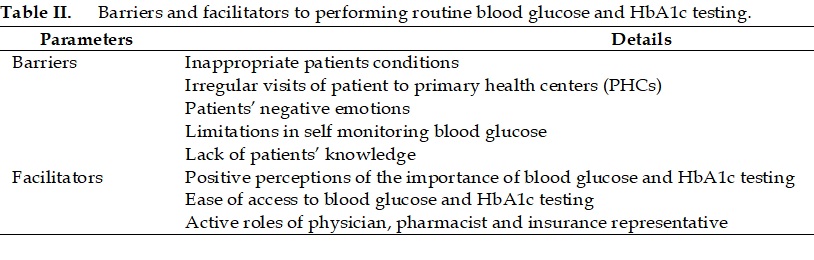
Patients with type 2 diabetes mellitus require regular evaluation of the medication's effectiveness and safety through blood glucose and HbA1c testing. This continuous monitoring is one of the primary roles of pharmacists in collaboration with physicians and supported by health insurance to examine the fluctuation patterns of blood glucose levels in response to diabetes medications. This study aimed to identify the need and feasibility of frequent blood glucose monitoring from the perspective of physicians, pharmacists, national health insurance officials, and diabetes patients. A qualitative study using semi-structured interviews was conducted in six Public Health Centers and seven pharmacies in Banjarmasin, Indonesia, from November 2022 to September 2023. A total of twenty-one respondents were included in this study. Data were tape-recorded, transcribed verbatim, and categorized using manual thematic content analysis. This study reveals that inappropriate patient conditions, irregular visits to Public Health Centers, patients' negative emotions, limitations in self-monitoring blood glucose, and lack of patients' knowledge create barriers to conducting monitoring of diabetes. On the other hand, the frequent blood glucose and HbA1c testing was supported by positive perceptions of the importance of testing, ease of access, and the active roles of physicians, pharmacists, and insurance officials. The barriers and facilitators of continuous diabetes medication monitoring are key factors that pharmacists, physicians, and insurance officials should consider to ensure that medication effectiveness and safety are monitored effectively.
Full text article
References
2. Cannon A, Handelsman Y, Heile M, Shannon M. Burden of Illness in Type 2 Diabetes Mellitus. J Manag Care Spec Pharm. 2018;24(9-a Suppl):S5-13. DOI: 10.18553/jmcp.2018.24.9-a.s5; PMCID: PMC10408423; PMID: 30156443
3. Prescott J, Page MR, Chou L, Toye J, Costello J, Hernandez G, et al. Challenges in Diabetes Management: Glycemic Control, Medication Adherence, and Healthcare Costs. Am J Manag Care. 2017;8:A773.
4. American Diabetes Association Professional Practice Committee. 2. Classification and Diagnosis of Diabetes: Standards of Medical Care in Diabetes-2022. Diabetes Care. 2022;45(Suppl 1):S17-38. DOI: 10.2337/dc22-s002; PMID: 34964875
5. Dunn TC, Xu Y, Hayter G, Ajjan RA. Real-world flash glucose monitoring patterns and associations between self-monitoring frequency and glycaemic measures: A European analysis of over 60 million glucose tests. Diabetes Res Clin Pract. 2018;137:37–46. DOI: 10.1016/j.diabres.2017.12.015; PMID: 29278709
6. Mulyanto J, Wibowo Y, Ernawati DA, Lestari DWD, Kringos DS. Exploring Inequalities in the Use, Quality, and Outcome of the Diabetes Management Program of Indonesian National Health Insurance. Heal Equity. 2023;7(1):644–52. DOI: 10.1089/heq.2023.0025; PMCID: PMC10541918; PMID: 37786529
7. Badan Penyelenggara Jaminan Sosial Kesehatan. Panduan praktis PROLANIS ((Program Pengelolaan Penyakit Kronis). Jakarta: Badan Penyelenggara Jaminan Sosial Kesehatan; 2014.
8. Khoe LC, Wangge G, Soewondo P, Tahapary DL, Widyahening IS. The implementation of community-based diabetes and hypertension management care program in Indonesia. PLoS One. 2020;15(1):e0227806. DOI: 10.1371/journal.pone.0227806; PMCID: PMC6959571; PMID: 31935256
9. Rinda AC, Athiyah U, Hermansyah A. Problems in continuity of care for patients with type 2 diabetes mellitus. Pharm Educ. 2023;23(4):238–41. DOI: 10.46542/pe.2023.234.238241
10. McClurg MR, Sorensen TD, Carroll J. The Patient Care Process for Delivering Comprehensive Medication Management (CMM): Optimizing Medication Use in Patient-Centered, Team-Based Care Settings. Lenexa (KS): CMM in Primary Care Research Team; 2018.
11. Ewen M, Lepeska M, Abdraimova A, Besançon S, Cham NTP, Dunganova A, et al. Availability, prices and affordability of self-monitoring blood glucose devices: surveys in six low-income and middle-income countries. BMJ Public Health. 2025;3(1):e001128. DOI: 10.1136/bmjph-2024-001128; PMCID: PMC11865750; PMID: 40017936
12. Rodbard D. Continuous Glucose Monitoring: A Review of Successes, Challenges, and Opportunities. Diabetes Technol Ther. 2016;18(Suppl 2):S3–13. DOI: 10.1089/dia.2015.0417; PMCID: PMC4717493; PMID: 26784127
13. Wright Jr EE, Gavin 3rd JR. Clinical use of professional continuous glucose monitoring. Diabetes Technol Ther. 2017;19(S2):S12–15. DOI: 10.1089/dia.2017.0037; PMCID: PMC5444501; PMID: 28541135
14. Miller EM. Using continuous glucose monitoring in clinical practice. Clin Diabetes. 2020;38(5):429–38. DOI: 10.2337/cd20-0043; PMCID: PMC7755046; PMID: 33384468
15. Oyewole OO, Ale AO, Ogunlana MO, Gurayah T. Burden of disability in type 2 diabetes mellitus and the moderating effects of physical activity. World J Clin Cases. 2023;11(14):3128–39. DOI: 10.12998/wjcc.v11.i14.3128; PMCID: PMC10237122; PMID: 37274052
16. Courtenay M, Carrier J, Bodman S. Medicines adherence in people with diabetes and disability, and the role of insulin delivery devices. J Diabetes Nurs. 2015;19(8):294–9.
17. Dassah E, Aldersey H, McColl MA, Davison C. Factors affecting access to primary healthcare services for persons with disabilities in rural areas: a “best-fit” framework synthesis. Glob Health Res Policy. 2018;3:36. DOI: 10.1186/s41256-018-0091-x
18. Syed ST, Gerber BS, Sharp LK. Traveling towards disease: transportation barriers to health care access. J Community Health. 2013;38(5):976–93. DOI: 10.1007/s10900-013-9681-1; PMCID; PMC4265215; PMID: 23543372
19. Yadav S, Sarangi A, Amor W, Nugent K. Psychosocial and Demographic Factors That Influence HbA1c Testing Frequency in Diabetics: Data From the 2018 Behavioral and Risk Factor Surveillance Survey (BRFSS). Cureus. 2022;14(9):e29798. DOI: 10.7759/cureus.29798; PMCID: PMC9618474; PMID: 36340524
20. Widayanti AW, Sigalingging KK, Dewi FP, Widyakusuma NN. Issues affecting medication-taking behavior of people with type 2 diabetes in indonesia: A qualitative study. Patient Prefer Adherence. 2021;15:989–98. DOI: 10.2147/ppa.s301501; PMCID: PMC8139640; PMID: 34040353
21. Nah EH, Cho S, Park H, Kim S, Kwon E, Cho HI. The usefulness of the estimated average glucose/fasting blood glucose ratio for pancreatic β-cell function assessment in hyperglycemia during health checkups. J Clin Lab Anal. 2022;36(10):e24693. DOI: 10.1002/jcla.24693; PMCID: PMC9550971; PMID: 36098986
22. DeWaters AL, Mejia D, Thomas J, Elwood B, Bowen ME. Patient Preparation for Outpatient Blood Work and the Impact of Surreptitious Fasting on Diagnoses of Diabetes and Prediabetes. Mayo Clin Proc Innov Qual Outcomes. 2020;4(4):349–56. DOI: 10.1016/j.mayocpiqo.2020.04.002; PMCID: PMC7411170; PMID: 32793862
23. Ong WM, Chua SS, Ng CJ. Barriers and facilitators to self-monitoring of blood glucose in people with type 2 diabetes using insulin: A qualitative study. Patient Prefer Adherence. 2014;8:237–46. DOI: 10.2147/ppa.s57567; PMCID: PMC3931581; PMID: 24627628
24. Brundisini F, Vanstone M, Hulan D, DeJean D, Giacomini M. Type 2 diabetes patients’ and providers’ differing perspectives on medication nonadherence: A qualitative meta-synthesis. BMC Health Serv Res. 2015;15:516. DOI: 10.1186/s12913-015-1174-8; PMCID: PMC4657347; PMID: 26596271
25. Schabert J, Browne JL, Mosely K, Speight J. Social stigma in diabetes: A framework to understand a growing problem for an increasing epidemic. Patient. 2013;6(1):1–10. DOI: 10.1007/s40271-012-0001-0; PMID: 23322536
26. Bhattad PB, Pacifico L. Empowering Patients: Promoting Patient Education and Health Literacy. Cureus. 2022;14(7):e27336. DOI: 10.7759/cureus.27336; PMCID: PMC9411825; PMID: 36043002
27. Tang TS, Funnell MM, Noorulla S, Oh M, Brown MB. Sustaining short-term improvements over the long-term: Results from a 2-year diabetes self-management support (DSMS) intervention. Diabetes Res Clin Pract. 2012;95(1):85–92. DOI: 10.1016/j.diabres.2011.04.003; PMCID: PMC3783218; PMID: 21872962
28. Tang TS, Funnell M, Sinco B, Piatt G, Palmisano G, Spencer MS, et al. Comparative effectiveness of peer leaders and community health workers in diabetes selfmanagement support: Results of a randomized controlled trial. Diabetes Care. 2014;37(6):1525–34. DOI: 10.2337/dc13-2161; PMCID: PMC4030090; PMID: 24722495
29. Roberta L, Amoakoh-Coleman M, Djobalar B, Grobbee DE, Adjei GO, Klipstein-Grobusch K. Diabetes self-management education interventions and self-management in lowresource settings; a mixed methods study. PLoS One. 2023;18(7):e0286974. DOI: 10.1371/journal.pone.0286974; PMCID: PMC10348576; PMID: 37450431
30. Shaji S, Rajendran D, Kumpatla S, Viswanathan V. Evaluation of diabetes self-care with self-monitoring of blood glucose among type 2 diabetic patients and its impact on HbA1c. Int J Diabetes Dev Ctries. 2013;33(3):181–2. DOI: 10.1007/s13410-013-0118-2
31. Shrivastava SR, Shrivastava PS, Ramasamy J. Role of self-care in management of diabetes mellitus. J Diabetes Metab Disord. 2013;12(1):14. DOI: 10.1186/2251-6581-12-14; PMCID: PMC3599009; PMID: 23497559
32. Schwandt A, Best F, Biester T, Grünerbel A, Kopp F, Krakow D, et al. Both the frequency of HbA1c testing and the frequency of self-monitoring of blood glucose predict metabolic control: A multicentre analysis of 15 199 adult type 1 diabetes patients from Germany and Austria. Diabetes Metab Res Rev. 2017;33(7):2908. DOI: 10.1002/dmrr.2908; PMID: 28544457
33. Lin M, Chen T, Fan G. Current status and influential factors associated with adherence to self-monitoring of blood glucose with type 2 diabetes mellitus patients in grassroots communities: a cross-sectional survey based on information-motivation-behavior skills model in China. Front Endocrinol. 2023;14:1111565. DOI: 10.3389/fendo.2023.1111565; PMCID: PMC10335788; PMID: 37441499
Authors
Copyright (c) 2025 Agnes Christie Rinda, Umi Athiyah, Andi Hermansyah

This work is licensed under a Creative Commons Attribution-ShareAlike 4.0 International License.
This work is licensed under a Creative Commons Attribution-ShareAlike 4.0 International License.
Authors continue to retain the copyright to the article if the article is published in the Borneo Journal of Pharmacy. They will also retain the publishing rights to the article without any restrictions.
Authors who publish in this journal agree to the following terms:
- Any article on the copyright is retained by the author(s).
- The author grants the journal the right of first publication with the work simultaneously licensed under a Creative Commons Attribution License that allows others to share work with an acknowledgment of the work authors and initial publications in this journal.
- Authors can enter into separate, additional contractual arrangements for the non-exclusive distribution of published articles (e.g., post-institutional repository) or publish them in a book, with acknowledgment of their initial publication in this journal.
- Authors are permitted and encouraged to post their work online (e.g., in institutional repositories or on their websites) prior to and during the submission process. This can lead to productive exchanges and earlier and greater citations of published work.
- The article and any associated published material are distributed under the Creative Commons Attribution-ShareAlike 4.0 International License.
Article Details