Identification of Gene Variations Associated with Diabetic Neuropathy Using Bioinformatics Approach

Article Sidebar
-
Diabetes, Neuropathic pain, Hyperglycemia, Variants, Single-nucleotide polymorphisms
Abstract
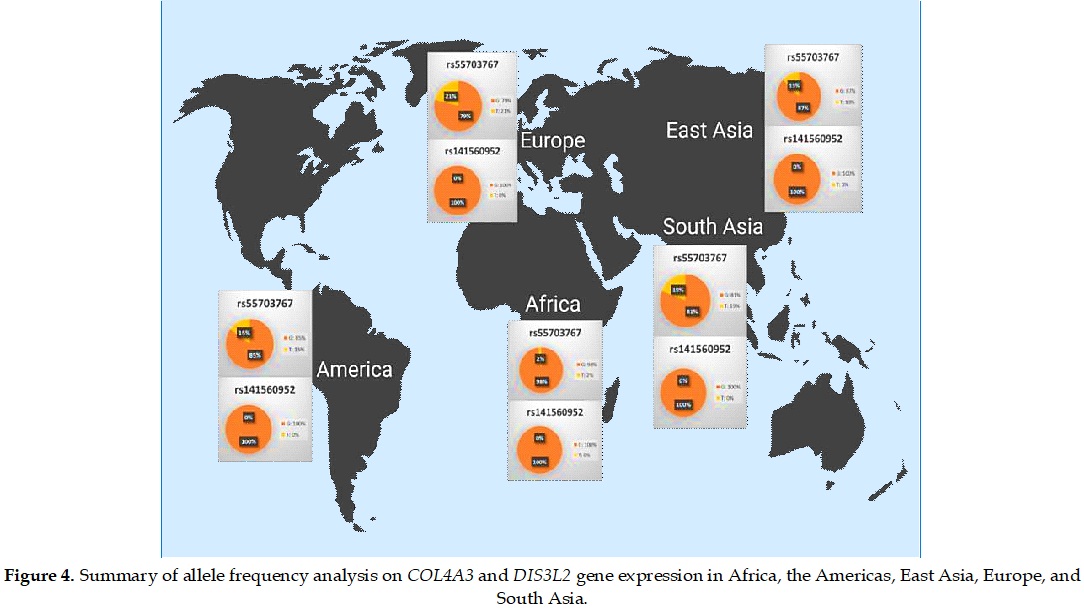
Diabetic neuropathy is the most common complication of diabetes, experienced by almost 90% of diabetic patients. Pain is one of the most common symptoms of diabetic neuropathy, but the pathophysiologic mechanism of pain is not clearly known. The hypothesis of hyperglycemia toxicity to the development of pain complications has been widely accepted worldwide, but there are still other hypotheses proposed. The basic concept in the management of painful diabetic neuropathy is to exclude other causes of peripheral neuropathic pain, improve glycemic control for prophylactic therapy, and use drugs to reduce pain. Variation data for diabetic neuropathy can be obtained from the Ensembl Genome Browser. Here, genes associated with 26 variants were selected according to Haploreg version 4.2. In addition, protein expression of missense gene variants was examined using the GTEx portal to determine two variants: rs55703767, which encodes the COL4A3 gene, and rs141560952, which encodes the DIS3L2 gene. According to data obtained from the Ensembl Genome Browser, the two most prevalent populations for SNP rs55703767, which is linked to the COL4A3 gene, are in Africa, while SNP rs141560952, which is linked to the DIS3L2 gene, is most prevalent in Africa, the Americas, East Asia, Europe, and South Asia.
Full text article
References
2. Parveen K, Hussain MA, Anwar S, Elagib HM, Kausar MA. Comprehensive review on diabetic foot ulcers and neuropathy: Treatment, prevention and management. World J Diabetes. 2025;16(3):100329. DOI: 10.4239/wjd.v16.i3.100329; PMID: 40093290; PMCID: PMC11885961.
3. Lee JE, Won JC. Clinical Phenotypes of Diabetic Peripheral Neuropathy: Implications for Phenotypic-Based Therapeutics Strategies. Diabetes Metab J. 2025;49(4):542-64. DOI: 10.4093/dmj.2025.0299; PMID: 40631458; PMCID: PMC12270570.
4. Rachmantoko R, Afif Z, Rahmawati D, Rakhmatiar R, Kurniawan SN. Diabetic Neuropathic Pain. J Pain Vertigo Headache. 2021;2(1):8–12. DOI: 10.21776/ub.jphv.2021.002.01.3.
5. Pop-Busui R, Boulton AJ, Feldman EL, Bril V, Freeman R, Malik RA, et al. Diabetic Neuropathy: A Position Statement by the American Diabetes Association. Diabetes Care. 2017 ;40(1):136-54. DOI: 10.2337/dc16-2042; PMID: 27999003; PMCID: PMC6977405.
6. Vittersø AD, Halicka M, Buckingham G, Proulx MJ, Bultitude JH. The sensorimotor theory of pathological pain revisited. Neurosci Biobehav Rev. 2022;139:104735. DOI: 10.1016/j.neubiorev.2022.104735; PMID: 35705110.
7. Braunisch MC, Büttner-Herold M, Günthner R, Satanovskij R, Riedhammer KM, Herr PM, et al. Heterozygous COL4A3 Variants in Histologically Diagnosed Focal Segmental Glomerulosclerosis. Front Pediatr. 2018;6:171. DOI: 10.3389/fped.2018.00171; PMID: 29946535; PMCID: PMC6007128.
8. Zhang Y, Böckhaus J, Wang F, Wang S, Rubel D, Gross O, et al. Genotype-phenotype correlations and nephroprotective effects of RAAS inhibition in patients with autosomal recessive Alport syndrome. Pediatr Nephrol. 2021;36(9):2719-30. DOI: 10.1007/s00467-021-05040-9; PMID: 33772369; PMCID: PMC8370956.
9. Warady BA, Agarwal R, Bangalore S, Chapman A, Levin A, Stenvinkel P, et al. Alport Syndrome Classification and Management. Kidney Med. 2020;2(5):639-49. DOI: 10.1016/j.xkme.2020.05.014; PMID: 33094278; PMCID: PMC7568086.
10. Wickman L, Hodgin JB, Wang SQ, Afshinnia F, Kershaw D, Wiggins RC. Podocyte Depletion in Thin GBM and Alport Syndrome. PLoS One. 2016;11(5):e0155255. DOI: 10.1371/journal.pone.0155255; PMID: 27192434; PMCID: PMC4871445.
11. Rigato M, Caprara C, Cabrera-Aguilar JS, Marzano N, Giuliani A, Mancini B, et al. Collagen Type IV Variants and Kidney Cysts: Decoding the COL4A Puzzle. Genes. 2025;16(6):642. DOI: 10.3390/genes16060642; PMID: 40565535; PMCID: PMC12193310.
12. Savige J. Heterozygous Pathogenic COL4A3 and COL4A4 Variants (Autosomal Dominant Alport Syndrome) Are Common, and Not Typically Associated With End-Stage Kidney Failure, Hearing Loss, or Ocular Abnormalities. Kidney Int Rep. 2022;7(9):1933-8. DOI: 10.1016/j.ekir.2022.06.001; PMID: 36090501; PMCID: PMC9458992.
13. Malone AF, Phelan PJ, Hall G, Cetincelik U, Homstad A, Alonso AS, et al. Rare hereditary COL4A3/COL4A4 variants may be mistaken for familial focal segmental glomerulosclerosis. Kidney Int. 2014;86(6):1253-9. DOI: 10.1038/ki.2014.305; PMID: 25229338; PMCID: PMC4245465.
14. Savige J, Harraka P. Pathogenic Variants in the Genes Affected in Alport Syndrome (COL4A3-COL4A5) and Their Association With Other Kidney Conditions: A Review. Am J Kidney Dis. 2021;78(6):857-64. DOI: 10.1053/j.ajkd.2021.04.017; PMID: 34245817.
15. Liu W, Yu Q, Ma J, Cheng Y, Zhang H, Luo W, et al. Knockdown of a DIS3L2 promoter upstream long noncoding RNA (AC105461.1) enhances colorectal cancer stem cell properties in vitro by down-regulating DIS3L2. Onco Targets Ther. 2017;10:2367-76. DOI: 10.2147/OTT.S132708.
16. García-Moreno JF, Lacerda R, da Costa PJ, Pereira M, Gama-Carvalho M, Matos P, et al. DIS3L2 knockdown impairs key oncogenic properties of colorectal cancer cells via the mTOR signaling pathway. Cell Mol Life Sci. 2023;80(7):185. DOI: 10.1007/s00018-023-04833-5; PMID: 37340282; PMCID: PMC10282049.
17. Towler BP, Jones CI, Harper KL, Waldron JA, Newbury SF. A novel role for the 3'-5' exoribonuclease Dis3L2 in controlling cell proliferation and tissue growth. RNA Biol. 2016;13(12):1286-1299. DOI: 10.1080/15476286.2016.1232238; PMID: 27630034; PMCID: PMC5207379.
18. Astuti D, Morris MR, Cooper WN, Staals RH, Wake NC, Fews GA, et al. Germline mutations in DIS3L2 cause the Perlman syndrome of overgrowth and Wilms tumor susceptibility. Nat Genet. 2012;44(3):277-84. DOI: 10.1038/ng.1071; PMID: 22306653.
19. Abbastabar M, Kheyrollah M, Azizian K, Bagherlou N, Tehrani SS, Maniati M, et al. Multiple functions of p27 in cell cycle, apoptosis, epigenetic modification and transcriptional regulation for the control of cell growth: A double-edged sword protein. DNA Repair. 2018;69:63-72. DOI: 10.1016/j.dnarep.2018.07.008; PMID: 30075372.
20. El-Deiry WS. p21(WAF1) Mediates Cell-Cycle Inhibition, Relevant to Cancer Suppression and Therapy. Cancer Res. 2016;76(18):5189-91. DOI: 10.1158/0008-5472.CAN-16-2055; PMID: 27635040; PMCID: PMC5028108.
21. D'Silva S, Prasad T, Kumar M. Dis3l2 is essential for neural crest survival by modulating Akt signaling. Cell Commun Signal. 2025;23(1):277. DOI: 10.1186/s12964-025-02288-8; PMID: 40500755; PMCID: PMC12153101.
22. Jiang S, Baltimore D. RNA-binding protein Lin28 in cancer and immunity. Cancer Lett. 2016;375(1):108-113. DOI: 10.1016/j.canlet.2016.02.050; PMID: 26945970.
23. Beck B, Blanpain C. Unravelling cancer stem cell potential. Nat Rev Cancer. 2013;13(10):727-38. DOI: 10.1038/nrc3597; PMID: 24060864.
24. Barretina J, Caponigro G, Stransky N, Venkatesan K, Margolin AA, Kim S, et al. Addendum: The Cancer Cell Line Encyclopedia enables predictive modelling of anticancer drug sensitivity. Nature. 2019 ;565(7738):E5-6. DOI: 10.1038/s41586-018-0722-x; PMID: 30559381.
25. Suzuki HI, Katsura A, Miyazono K. A role of uridylation pathway for blockade of let-7 microRNA biogenesis by Lin28B. Cancer Sci. 2015;106(9):1174-81. DOI: 10.1111/cas.12721; PMID: 26080928; PMCID: PMC4582986.
26. Williams SG, Sim S, Guiblet WM, George J, Jones JC, Wolin SL. DIS3L2-mediated RNA surveillance and extracellular vesicle packaging prevent innate immune activation by aberrant cellular RNAs. Proc Natl Acad Sci U S A. 2025;122(51):e2526318122. DOI: 10.1073/pnas.2526318122; PMID: 41401009; PMCID: PMC12745716.
27. Luan S, Luo J, Liu H, Li Z. Regulation of RNA decay and cellular function by 3'-5' exoribonuclease DIS3L2. RNA Biol. 2019;16(2):160-5. DOI: 10.1080/15476286.2018.1564466; PMID: 30638126; PMCID: PMC6380269.
28. Eckwahl MJ, Sim S, Smith D, Telesnitsky A, Wolin SL. A retrovirus packages nascent host noncoding RNAs from a novel surveillance pathway. Genes Dev. 2015;29(6):646-57. DOI: 10.1101/gad.258731.115; PMID: 25792599; PMCID: PMC4378196.
29. Newman V, Moore B, Sparrow H, Perry E. The Ensembl Genome Browser: Strategies for Accessing Eukaryotic Genome Data. Methods Mol Biol. 2018;1757:115-39. DOI: 10.1007/978-1-4939-7737-6_6; PMID: 29761458.
30. Łabno A, Warkocki Z, Kuliński T, Krawczyk PS, Bijata K, Tomecki R, et al. Perlman syndrome nuclease DIS3L2 controls cytoplasmic non-coding RNAs and provides surveillance pathway for maturing snRNAs. Nucleic Acids Res. 2016;44(21):10437-53. DOI: 10.1093/nar/gkw649; PMID: 27431325; PMCID: PMC5137419.
31. Krause C, Suwada K, Blomme EAG, Kowalkowski K, Liguori MJ, Mahalingaiah PK, et al. Preclinical species gene expression database: Development and meta-analysis. Front Genet. 2023;13:1078050. DOI: 10.3389/fgene.2022.1078050; PMID: 36733943; PMCID: PMC9887474.
32. Yuan X, Su Q, Wang H, Shi S, Liu L, Lv J, et al. Genetic Variants of the COL4A3, COL4A4, and COL4A5 Genes Contribute to Thinned Glomerular Basement Membrane Lesions in Sporadic IgA Nephropathy Patients. J Am Soc Nephrol. 2023;34(1):132-44. DOI: 10.1681/ASN.2021111447; PMID: 36130833; PMCID: PMC10101589.
33. Eid S, Sas KM, Abcouwer SF, Feldman EL, Gardner TW, Pennathur S, et al. New insights into the mechanisms of diabetic complications: role of lipids and lipid metabolism. Diabetologia. 2019 ;62(9):1539-49. DOI: 10.1007/s00125-019-4959-1; PMID: 31346658; PMCID: PMC6679814.
34. Chen YT, Jiang WZ, Lu KD. Novel COL4A3 synonymous mutation causes Alport syndrome coexistent with immunoglobulin A nephropathy in a woman: A case report. World J Clin Cases. 2023;11(25):5947-53. DOI: 10.12998/wjcc.v11.i25.5947; PMID: 37727481; PMCID: PMC10506036.
35. Salem RM, Todd JN, Sandholm N, Cole JB, Chen WM, Andrews D, et al. Genome-Wide Association Study of Diabetic Kidney Disease Highlights Biology Involved in Glomerular Basement Membrane Collagen. J Am Soc Nephrol. 2019 ;30(10):2000-16. DOI: 10.1681/ASN.2019030218; PMID: 31537649; PMCID: PMC6779358.
36. Towler BP, Pashler AL, Haime HJ, Przybyl KM, Viegas SC, Matos RG, et al. Dis3L2 regulates cell proliferation and tissue growth through a conserved mechanism. PLoS Genet. 2020;16(12):e1009297. DOI: 10.1371/journal.pgen.1009297; PMID: 33370287; PMCID: PMC7793271.
37. Al Ghadeer HA, Alghazal FA, Alessa MA, Alghafli JA, Alkhalaf GI, Bumejdad HN, et al. DIS3L2 Gene Mutation Causes the Perlman Syndrome of Overgrowth and Wilms Tumor Susceptibility. Cureus. 2023;15(12):e49777. DOI: 10.7759/cureus.49777; PMID: 38161545; PMCID: PMC10757746.
38. Pirouz M, Wang CH, Liu Q, Ebrahimi AG, Shamsi F, Tseng YH, et al. The Perlman syndrome DIS3L2 exoribonuclease safeguards endoplasmic reticulum-targeted mRNA translation and calcium ion homeostasis. Nat Commun. 2020;11(1):2619. DOI: 10.1038/s41467-020-16418-y; PMID: 32457326; PMCID: PMC7250864.
39. Preston FG, Riley DR, Azmi S, Alam U. Painful Diabetic Peripheral Neuropathy: Practical Guidance and Challenges for Clinical Management. Diabetes Metab Syndr Obes. 2023;16:1595-612. DOI: 10.2147/DMSO.S370050; PMID: 37288250; PMCID: PMC10243347.
40. Bates D, Schultheis BC, Hanes MC, Jolly SM, Chakravarthy KV, Deer TR, et al. Corrigendum to: A Comprehensive Algorithm for Management of Neuropathic Pain. Pain Med. 2023;24(2):219. DOI: 10.1093/pm/pnac194; PMID: 31152178; PMCID: PMC6544553.
Authors
Copyright (c) 2026 Siti Fatimah Sultan, Adisti Putri Novriyanti, Siti Rohmah, Lalu Muhammad Irham, Nanik Sulistyani, Muhammad Ma'ruf

This work is licensed under a Creative Commons Attribution-ShareAlike 4.0 International License.
This work is licensed under a Creative Commons Attribution-ShareAlike 4.0 International License.
Authors continue to retain the copyright to the article if the article is published in the Borneo Journal of Pharmacy. They will also retain the publishing rights to the article without any restrictions.
Authors who publish in this journal agree to the following terms:
- Any article on the copyright is retained by the author(s).
- The author grants the journal the right of first publication with the work simultaneously licensed under a Creative Commons Attribution License that allows others to share work with an acknowledgment of the work authors and initial publications in this journal.
- Authors can enter into separate, additional contractual arrangements for the non-exclusive distribution of published articles (e.g., post-institutional repository) or publish them in a book, with acknowledgment of their initial publication in this journal.
- Authors are permitted and encouraged to post their work online (e.g., in institutional repositories or on their websites) prior to and during the submission process. This can lead to productive exchanges and earlier and greater citations of published work.
- The article and any associated published material are distributed under the Creative Commons Attribution-ShareAlike 4.0 International License.
Article Details