Metabolite Profiling of the Environmental-Controlled Growth of Marsilea crenata Presl. and Its In Vitro and In Silico Antineuroinflammatory Properties
DOI:
https://doi.org/10.33084/bjop.v5i3.3262Keywords:
Marsilea crenata Presl., Environmental-controlled growth, Neuroinflammatory, HMC3 microglia cells, PhytoestrogensAbstract
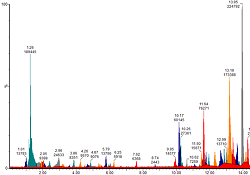
This study was aimed to evaluate the metabolite contents and antineuroinflammatory potential of Marsilea crenata Presl. grown under a controlled environmental condition. The antineuroinflammatory test has been carried out in vitro using ethanolic extract of M. crenata leaves on HMC3 microglia cells. An in silico approach was applied to predict the active compounds of the extract. The HMC3 microglia cells were induced with IFNγ to create prolonged inflammatory conditions and then treated with 96% ethanolic extract of the M. crenata leaves of 62.5, 125, and 250 μg/mL. The expression of MHC II was analyzed using the ICC method with the CLSM instrument. Metabolites of the extract were profiled using UPLC-QToF-MS/MS instrument and MassLynx 4.1 software. In silico evaluation was conducted with molecular docking on 3OLS protein using PyRx 0.8 software, and physicochemical properties of the compounds were analyzed using SwissADME webtool. The ethanolic extract of M. crenata leaves could reduce the MHC II expression in HMC3 microglia cells in all concentrations with the values 97.458, 139.574, and 82.128 AU. The result of metabolite profiling found 79 compounds in the extract. In silico evaluation showed that 19 compounds gave agonist interaction toward 3OLS, and three met all parameters of physicochemical analysis. The ethanolic extract of the environmental-controlled growth of M. crenata leaves antineuroinflammatory activity on HMC3 microglia cells. The extract was predicted to contain some phytoestrogen compounds which act as 3OLS agonists.
Downloads
Published
Issue
Section
Categories
License
Copyright (c) 2022 Burhan Ma'arif, Faisal Akhmal Muslikh, Dilla Amalia, Anisah Mahardiani, Luthfi Achmad Muchlasi, Pramudita Riwanti, Maximus Markus Taek, Hening Laswati, Mangestuti Agil

This work is licensed under a Creative Commons Attribution-ShareAlike 4.0 International License.
This work is licensed under a Creative Commons Attribution-ShareAlike 4.0 International License.
Authors continue to retain the copyright to the article if the article is published in the Borneo Journal of Pharmacy. They will also retain the publishing rights to the article without any restrictions.
Authors who publish in this journal agree to the following terms:
- Any article on the copyright is retained by the author(s).
- The author grants the journal the right of first publication with the work simultaneously licensed under a Creative Commons Attribution License that allows others to share work with an acknowledgment of the work authors and initial publications in this journal.
- Authors can enter into separate, additional contractual arrangements for the non-exclusive distribution of published articles (e.g., post-institutional repository) or publish them in a book, with acknowledgment of their initial publication in this journal.
- Authors are permitted and encouraged to post their work online (e.g., in institutional repositories or on their websites) prior to and during the submission process. This can lead to productive exchanges and earlier and greater citations of published work.
- The article and any associated published material are distributed under the Creative Commons Attribution-ShareAlike 4.0 International License.