Evaluation of Aqueous Extract from Cosmos caudatus Leaves in Alloxan-Induced Diabetic Rats
DOI:
https://doi.org/10.33084/bjop.v8i1.8652Keywords:
Cosmos caudatus, Diabetes mellitus, Alloxan-induced diabetes, Herbal medicineAbstract
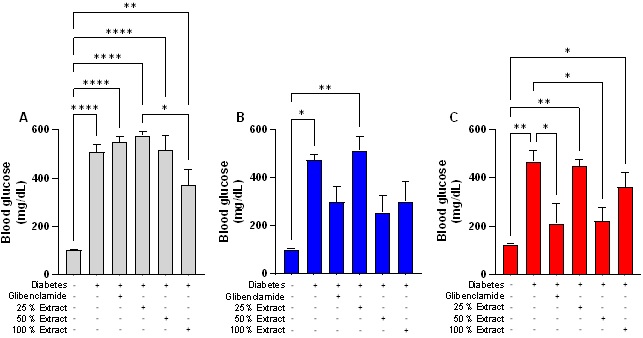
Kenikir (Cosmos caudatus), often consumed as a vegetable in Southeast Asia, possesses therapeutic benefits for several diseases, including diabetes mellitus. However, there has been limited investigation of the aqueous extract of C. caudatus for this disease model. This study aimed to examine the glucose-lowering effect of C. caudatus aqueous extract in an alloxan-induced diabetes model in rats. Ultrasound-assisted extraction was performed to obtain an aqueous extract of C. caudatus leaves. Qualitative phytochemical screening was carried out to identify the presence of bioactive compounds. Male Wistar rats were allocated to the following experimental groups: non-diabetic, diabetic without treatment, and diabetic treated with glibenclamide or aqueous C. caudatus extract at concentrations of 25%, 50%, or 100%. Diabetes was induced by intraperitoneal injection of 150 mg/kg alloxan. Random blood glucose and body weight were monitored before (Day 0) and after treatment (Days 3 and 7). There was a trend of weight loss in diabetic rats compared to non-diabetic rats, though the difference was not statistically significant. After 7 days of treatment, there was a comparable decrease in the blood glucose of diabetic rats treated with 50% or 100% of aqueous C. caudatus extract and those treated with glibenclamide. Qualitative phytochemical screening indicated the presence of steroid, saponin, phenol, and flavonoid compounds. The total phenolic content was 38.48 mg GAE/g and IC50 DPPH antioxidant activity was 375.64 ppm. This study demonstrated that an aqueous extract of C. caudatus exhibits a blood glucose-lowering effect in an alloxan-induced diabetic rat model.
Downloads
References
Yameny AA. Diabetes Mellitus Overview 2024. J Biosci Appl Res. 2024;10(3):641–5. DOI: 10.21608/jbaar.2024.382794
Sun H, Saeedi P, Karuranga S, Pinkepank M, Ogurtsova K, Duncan BB, et al. IDF Diabetes Atlas: Global, regional and country-level diabetes prevalence estimates for 2021 and projections for 2045. Diabetes Res Clin Pract. 2022;183:109119. DOI: 10.1016/j.diabres.2021.109119; PMCID: PMC11057359; PMID: 34879977
DeMarsilis A, Reddy N, Boutari C, Filippaios A, Sternthal E, Katsiki N, et al. Pharmacotherapy of type 2 diabetes: An update and future directions. Metabolism. 2022;137:155332. DOI: 10.1016/j.metabol.2022.155332; PMID: 36240884
Blahova J, Martiniakova M, Babikova M, Kovacova V, Mondockova V, Omelka R. Pharmaceutical drugs and natural therapeutic products for the treatment of type 2 diabetes mellitus. Pharmaceuticals. 2021;14(8):806. DOI: 10.3390/ph14080806; PMCID: PMC8398612; PMID: 34451903
Silveira D, Prieto JM, Freitas MM, Mazzari ALDA. Herbal Medicine and Public Healthcare: Current and Future Challenges. In: Filho VC, editor. Natural Products as Source of Molecules with Therapeutic Potential. Cham: Springer; 2018. DOI: 10.1007/978-3-030-00545-0_13
Mensah M, Komlaga G, Forkuo AD, Firempong C, Anning AK, Dickson RA. Toxicity and safety implications of herbal medicines used in Africa. In: Builders PF, editor. Herbal Medicine. London: IntechOpen; 2019. DOI: 10.5772/intechopen.72437
Ahda M, Jaswir I, Khatib A, Ahmed QU, Mohamad SNAS. A review on Cosmos caudatus as A potential medicinal plant based on pharmacognosy, phytochemistry, and pharmacological activities. Int J Food Prop. 2023;26(1):344–58. DOI: 10.1080/10942912.2022.2158862
Uzbek UH, Shahidan WN. Tasty herb that heals: A review of Cosmos caudatus (Ulam raja) and its potential uses in dentistry. World J Dent. 2019;10(4):321-4. DOI: 10.5005/jp-journals-10015-1651
Rafi M, Hayati F, Umar AH, Septaningsih DA, Rachmatiah T. LC-HRMS-based metabolomics to evaluate the phytochemical profile and antioxidant capacity of Cosmos caudatus with different extraction methods and solvents. Arab J Chem. 2023;16(9):105065. DOI: 10.1016/j.arabjc.2023.105065
Wan-Nadilah WA, Akhtar MT, Shaari K, Khatib A, Hamid AA, Hamid M. Variation in the metabolites and α-glucosidase inhibitory activity of Cosmos caudatus at different growth stages. BMC Complement Altern Med. 2019;19(1):245. DOI: 10.1186/s12906-019-2655-9; PMCID: PMC6727405; PMID: 31488132
Cheng SH, Khoo H, Ismail A, Abdul-Hamid A, Barakatun-Nisak M. Influence of extraction solvents on Cosmos caudatus leaf antioxidant properties. Iran J Sci Technol Trans A Sci. 2016;40(1):51–8. DOI: 10.1007/s40995-016-0007-x
Hasaninezhad F, Tavaf Z, Panahi F, Nourisefat M, Khalafi-Nezhad A, Yousefi R. The assessment of antidiabetic properties of novel synthetic curcumin analogues: α-amylase and α-glucosidase as the target enzymes. J Diabetes Metab Disord. 2020;19(2):1505–15. DOI: 10.1007/s40200-020-00685-z; PMCID: PMC7843858; PMID: 33553036
Moshawih S, Cheema MS, Ahmad Z, Zakaria ZA, Hakim MN. A comprehensive review on Cosmos caudatus (Ulam raja): pharmacology, ethnopharmacology, and phytochemistry. Int Res J Educ Sci. 2017;1(1):14–31.
Ansari P, Choudhury ST, Seidel V, Rahman AB, Aziz MA, Richi AE, et al. Therapeutic potential of quercetin in the management of type-2 diabetes mellitus. Life. 2022;12(8):1146. DOI: 10.3390/life12081146; PMCID: PMC9409999; PMID: 36013325
Latiff NA, Ong PY, Rashid SNAA, Abdullah LC, Amin NAM, Fauzi NAM. Enhancing recovery of bioactive compounds from Cosmos caudatus leaves via ultrasonic extraction. Sci Rep. 2021;11(1):17297. DOI: 10.1038/s41598-021-96623-x; PMCID: PMC8397774; PMID: 34453075
Rehman HU, Ullah K, Rasool A, Manzoor R, Yuan Y, Tareen AM, et al. Comparative impact of streptozotocin on altering normal glucose homeostasis in diabetic rats compared to normoglycemic rats. Sci Rep. 2023;13(1):7921. DOI: 10.1038/s41598-023-29445-8; PMCID: PMC10188608; PMID: 37193696
Opara P, Enemor V, Eneh F, Emengaha F. Blood Glucose–Lowering Potentials of Annona muricata Leaf Extract in Alloxan–Induced Diabetic Rats. Eur J Biol Biotechnol. 2021;2(2):106–13. DOI: 10.24018/ejbio.2021.2.2.178
Woldekidan S, Mulu A, Ergetie W, Teka F, Meressa A, Tadele A, et al. Evaluation of antihyperglycemic effect of extract of moringa stenopetala (Baker f.) aqueous leaves on alloxan-induced diabetic rats. Diabetes Metab Syndr Obes. 2021;14:185–92. DOI: 10.2147/dmso.s266794; PMCID: PMC7815076; PMID: 33488106
Sharma A, Pal P, Sarkar BR, Mohanty J, Bhutia S. Preparation, standardisation and evaluation of hypoglycaemic effect of herbal formulation containing five ethnomedicinal plants in alloxan-induced hyperglycemic wistar rats. Res J Pharm Technol. 2020;13(12):5987–92. DOI: 10.5958/0974-360X.2020.01044.6
Belayneh YM, Birhanu Z, Birru EM, Getenet G. Evaluation of in vivo antidiabetic, antidyslipidemic, and in vitro antioxidant activities of hydromethanolic root extract of Datura stramonium L. (Solanaceae). J Exp Pharmacol. 2019;11:29–38. DOI: 10.2147/jep.s192264; PMCID: PMC6485036; PMID: 31114400
Anyanwu GO, Iqbal J, Khan SU, Zaib S, Rauf K, Onyeneke CE, et al. Antidiabetic activities of chloroform fraction of Anthocleista vogelii Planch root bark in rats with diet-and alloxan-induced obesity-diabetes. J Ethnopharmacol. 2019;229:293–302. DOI: 10.1016/j.jep.2018.10.021; PMID: 30342966
Sheriff OL, Olayemi O, Taofeeq AO, Riskat KE, Ojochebo DE, Ibukunoluwa AO. A new model for alloxan-induced diabetes mellitus in rats. J Bangladesh Soc Physiol. 2019;14(2):56–62. DOI: 10.3329/jbsp.v14i2.44785
Rahma C, Fadillah M, Syam N, Rinawati R. Phytochemical Screening of Coconut Pistil Extract (Pistillum Cocos nucifera) as Traditional Medicine. J Pembelajaran Biol Nukleus JPBN. 2024;10(1):122–31. DOI: 10.36987/jpbn.v10i1.5221
Ibrahim M, Idoko AS, Ganiyu AI, Lawal N, Abu P, Ifebu J, et al. Phytochemical analysis of Hexane, Chloroform, Ethyl acetate, Ethanol and Aqueous Extracts of Azanza garckeana Leaf. Sahel J Life Sci FUDMA. 2023;1(1):25–31. DOI: 10.33003/sajols-2023-0101-003
Shaikh JR, Patil M. Qualitative tests for preliminary phytochemical screening: An overview. Int J Chem Stud. 2020;8(2):603–8. DOI: 10.22271/chemi.2020.v8.i2i.8834
Mohlakoana M, Moteetee A. Southern african soap plants and screening of selected phytochemicals and quantitative analysis of saponin content. Resources. 2021;10(10):96. DOI: 10.3390/resources10100096
Klangmanee K, Athipornchai A. A rapid phytochemical screening of the effective phenolic antioxidant agents using FeCl3 reagent. J Pharm Sci Res. 2019;11(10):3475–80.
Rumpf J, Burger R, Schulze M. Statistical evaluation of DPPH, ABTS, FRAP, and Folin-Ciocalteu assays to assess the antioxidant capacity of lignins. Int J Biol Macromol. 2023;233:123470. DOI: 10.1016/j.ijbiomac.2023.123470; PMID: 36736974
Aziz S, Mitu TK. Analysis of fatty acid and determination of total protein and phytochemical content of Cassia sophera Linn leaf, stem, flower, and seed. Beni-Suef Univ J Basic Appl Sci. 2019;8:3. DOI: 10.1186/s43088-019-0004-1
Boondam Y, Songvut P, Tantisira MH, Tapechum S, Tilokskulchai K, Pakaprot N. Inverted U-shaped response of a standardized extract of Centella asiatica (ECa 233) on memory enhancement. Sci Rep. 2019;9(1):8404. DOI: 10.1038/s41598-019-44867-z; PMCID: PMC6557898; PMID: 31182820
Wang L, Zhang F, Wang J, Wang Q, Chen X, Cheng J, et al. Machine learning prediction of dual and dose-response effects of flavone carbon and oxygen glycosides on acrylamide formation. Front Nutr. 2022;9:1042590. DOI: 10.3389/fnut.2022.1042590; PMCID: PMC9748078; PMID: 36532517
Shi Y. Support vector regression-based QSAR models for prediction of antioxidant activity of phenolic compounds. Sci Rep. 2021;11(1):8806. DOI: 10.1038/s41598-021-88341-1; PMCID: PMC8062522; PMID: 33888843
Seyedreihani S, Tan TC, Alkarkhi AF, Easa AM. Total phenolic content and antioxidant activity of Ulam raja (Cosmos caudatus) and quantification of its selected marker compounds: Effect of extraction. Int J Food Prop. 2017;20(2):260–70. DOI: 10.1080/10942912.2016.1155055
Ahmad WNW, Shaari K, Khatib A, Hamid AA, Hamid M. Chemical profile, total phenolic content, DPPH free radical scavenging and α-glucosidase inhibitory activities of Cosmos caudatus Kunth leaves. Pertanika J Trop Agric Sci. 2018;41(3):1367-81.
Mediani A, Abas F, Tan CP, Khatib A. Effects of different drying methods and storage time on free radical scavenging activity and total phenolic content of Cosmos caudatus. Antioxidants. 2014;3(2):358–70. DOI: 10.3390/antiox3020358; PMCID: PMC4665491; PMID: 26784876
Muflihah YM, Gollavelli G, Ling YC. Correlation Study of Antioxidant Activity with Phenolic and Flavonoid Compounds in 12 Indonesian Indigenous Herbs. Antioxidants. 2021;10(10):1530. DOI: 10.3390/antiox10101530; PMCID: PMC8533117; PMID: 34679665
Firdaus MD, Artanti N, Hanafi M, Rosmalena. Phytochemical Constituents and In vitro Antidiabetic and Antioxidant Properties of Various Extracts of Kenikir (Cosmos caudatus) Leaves. Pharmacogn J. 2021;13(4):890-5. DOI: 10.5530/pj.2021.13.114
Rusmana D, Wahyudianingsih R, Elisabeth M, Balqis B, Maesaroh M, Widowati W. Antioxidant activity of Phyllanthus niruri extract, rutin and quercetin. Indones Biomed J. 2017;9(2):84–90. DOI: 10.18585/inabj.v9i2.281
Lee KS, Park SN. Cytoprotective effects and mechanisms of quercetin, quercitrin and avicularin isolated from Lespedeza cuneata G. Don against ROS-induced cellular damage. J Ind Eng Chem. 2019;71:160–6. DOI: 10.1016/j.jiec.2018.11.018
Ighodaro OM, Adeosun AM, Akinloye OA. Alloxan-induced diabetes, a common model for evaluating the glycemic-control potential of therapeutic compounds and plants extracts in experimental studies. Medicina. 2017;53(6):365–74. DOI: 10.1016/j.medici.2018.02.001; PMID: 29548636
Ajiboye BO, Shonibare MT, Oyinloye BE. Antidiabetic activity of watermelon (Citrullus lanatus) juice in alloxan-induced diabetic rats. J Diabetes Metab Disord. 2020;19(1):343–52. DOI: 10.1007/s40200-020-00515-2; PMCID: PMC7270380; PMID: 32550185
Ezeja MI, Anaga AO, Asuzu IU. Antidiabetic, antilipidemic, and antioxidant activities of Gouania longipetala methanol leaf extract in alloxan-induced diabetic rats. Pharm Biol. 2015;53(4):605–14. DOI: 10.3109/13880209.2014.935864; PMID: 25330778
Savych A, Marchyshyn S, Mosula L, Bilyk O, Humeniuk I, Davidenko A. Analysis of amino acids content in the plant components of the antidiabetic herbal mixture by GC-MS. Pharmacia. 2022;69(1):69–76. DOI: 10.3897/pharmacia.69.e77251
van Sloun B, Goossens GH, Erdos B, Lenz M, van Riel N, Arts IC. The impact of amino acids on postprandial glucose and insulin kinetics in humans: a quantitative overview. Nutrients. 2020;12(10):3211. DOI: 10.3390/nu12103211; PMCID: PMC7594055; PMID: 33096658
Magomya A, Kubmarawa D, Ndahi J, Yebpella G. Determination of plant proteins via the Kjeldahl method and amino acid analysis: A comparative study. Int J Sci Technol Res. 2014;3(4):68–72.
Dickson RA, Annan K, Fleischer TC, Amponsah IK, Nsiah K, Oteng J. Phytochemical investigations and nutritive potential of eight selected plants from Ghana. J Pharm Nutr Sci. 2012;2(2):172–7. DOI: 10.6000/1927-5951.2012.02.02.9
Garcés-Rimón M, Morales D, Miguel-Castro M. Potential role of bioactive proteins and peptides derived from legumes towards metabolic syndrome. Nutrients. 2022;14(24):5271. DOI: 10.3390/nu14245271; PMCID: PMC9782127; PMID: 36558429
Patil SP, Goswami A, Kalia K, Kate AS. Plant-derived bioactive peptides: A treatment to cure diabetes. Int J Pept Res Ther. 2020;26(2):955–68. DOI: 10.1007/s10989-019-09899-z; PMCID: PMC7223764; PMID: 32435169
Downloads
Published
Issue
Section
Categories
License
Copyright (c) 2025 Ayeshah Augusta Rosdah, Amanda Natasha, Nia Savitri Tamzil, Subandrate Subandrate

This work is licensed under a Creative Commons Attribution-ShareAlike 4.0 International License.
This work is licensed under a Creative Commons Attribution-ShareAlike 4.0 International License.
Authors continue to retain the copyright to the article if the article is published in the Borneo Journal of Pharmacy. They will also retain the publishing rights to the article without any restrictions.
Authors who publish in this journal agree to the following terms:
- Any article on the copyright is retained by the author(s).
- The author grants the journal the right of first publication with the work simultaneously licensed under a Creative Commons Attribution License that allows others to share work with an acknowledgment of the work authors and initial publications in this journal.
- Authors can enter into separate, additional contractual arrangements for the non-exclusive distribution of published articles (e.g., post-institutional repository) or publish them in a book, with acknowledgment of their initial publication in this journal.
- Authors are permitted and encouraged to post their work online (e.g., in institutional repositories or on their websites) prior to and during the submission process. This can lead to productive exchanges and earlier and greater citations of published work.
- The article and any associated published material are distributed under the Creative Commons Attribution-ShareAlike 4.0 International License.