Isolation of Endophytic Fungus from Leaves of Uncaria cordata (Lour.) Merr and Antibacterial Activity Against Propionibacterium acnes and Escherichia coli
DOI:
https://doi.org/10.33084/bjop.v5i3.3692Keywords:
Antibacterial, Endophyte Fungi, Isolation, Uncaria cordataAbstract
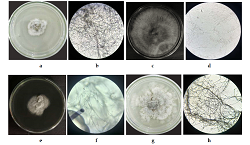
Uncaria cordata (Lour). Merr (akar kaik-kaik) is one of the medicinal plants used as antibacterial because it contains bioactive compounds that can inhibit the growth of microorganisms. The plant is one of the sources of endophyte fungal isolates that can be developed as an alternative to producing antibacterial compounds. This research aimed to isolate the endophytic fungus from the leaves of U. cordata and know the antibacterial activity against Propionibacterium acnes and Escherichia coli by disc diffusion. The Fungi that were isolated from the leaves of U. cordata were 17 isolates. The isolates were continued for antibacterial activity testing: IFED 1 (Nigrospora sp.), IFED 2 (Aspergillus sp.), IFED 3 (Fusarium sp.), and IFED 4, whose genus was unknown. The results obtained were fungal isolates IFED 1 to IFED 4 had activity in inhibiting the growth of P. acnes with moderate category (18.16 mm) and weak categories (6.21, 6.16, and 6.68 mm) and in E. coli with moderate category (14.56 mm) and weak categories (6.53, 6.71, and 7.23 mm). The results of One-Way ANOVA and Tukey's test showed a significant difference (p <0.05) between the diameter of the inhibition zone with the type of endophytic fungus supernatant isolated from the leaves of U. cordata. The best isolate of endophytic fungi inhibiting P. acnes and E. coli bacteria was IFED 1 (Nigrospora sp).
Downloads
Published
Issue
Section
Categories
License
Copyright (c) 2022 Melzi Octaviani, Winda Yusma Ameliah, Neni Frimayanti, Meiriza Djohari, Haiyul Fadhli

This work is licensed under a Creative Commons Attribution-ShareAlike 4.0 International License.
This work is licensed under a Creative Commons Attribution-ShareAlike 4.0 International License.
Authors continue to retain the copyright to the article if the article is published in the Borneo Journal of Pharmacy. They will also retain the publishing rights to the article without any restrictions.
Authors who publish in this journal agree to the following terms:
- Any article on the copyright is retained by the author(s).
- The author grants the journal the right of first publication with the work simultaneously licensed under a Creative Commons Attribution License that allows others to share work with an acknowledgment of the work authors and initial publications in this journal.
- Authors can enter into separate, additional contractual arrangements for the non-exclusive distribution of published articles (e.g., post-institutional repository) or publish them in a book, with acknowledgment of their initial publication in this journal.
- Authors are permitted and encouraged to post their work online (e.g., in institutional repositories or on their websites) prior to and during the submission process. This can lead to productive exchanges and earlier and greater citations of published work.
- The article and any associated published material are distributed under the Creative Commons Attribution-ShareAlike 4.0 International License.