Chemoinformatic-aided Antidiabetic Analysis of the Therapeutic Potential of Phytoconstituents in Eremomastax speciosa Extracts
DOI:
https://doi.org/10.33084/bjop.v7i2.6820Keywords:
Antihyperglycemic, Phytochemicals, α-amylase, Molecular docking, MetforminAbstract
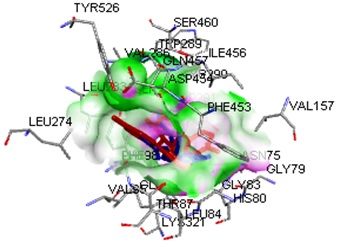
This research attempts to establish the antihyperglycemic potential of Eremomastax speciosa, a medicinal plant utilized in traditional West African diabetes therapy, through virtual simulation. While numerous reports have validated its biological potency, studies on the drug-likeness and antidiabetic properties of its compounds are limited. The in silico pharmacological, and toxicological profile of aqueous, methanolic/methylene phytochemicals from previously reported work was analyzed using Swiss ADME and Protox II online server. The docking process was performed using PyRx-0.8, coupled with AutoDock Vina. Phytochemicals that aligned with Lipinski’s rules for drugs were then subjected to a virtual docking simulation. This simulation replicated the inhibitory effects of E. speciosa phytochemicals on sodium-glucose co-transporters (SGLT2) and α-amylase, similar to metformin, an FDA-approved antidiabetic medicine utilized as a control. Phytochemicals such as 8, 9,10-dimethyltricyclo[4.2.1.1(2,5)]decane-9,10-diol (-6.6 kcal/mol), 11-isopropylidenetricyclo[4.3.1.1(2,5)]undec-3-en-10-one (-7.9 kcal/mol), 4-(1,5-dihydroxy-2,6,6-trimethylcyclohex-2-enyl)but-3-en-2-one (-7.3 kcal/mol), and N-methyl-N-4-[2-acetoxymethyl-1-pyrrolidyl]-2-butynyl]-acetamide (-7.5 kcal/mol) exhibits superior binding affinities to the specific proteins targeted, compared to metformin, implying that E. speciosa is a source of druggable antidiabetic molecules that can be enhanced to achieve better efficacy.
Downloads
References
Andrade C, Gomes NG, Duangsrisai S, Andrade PB, Pereira DM, Valentao P. Medicinal plants utilized in Thai Traditional Medicine for diabetes treatment: ethnobotanical surveys, scientific evidence and phytochemicals. J Ethnopharmacol. 2020;263:113177. DOI: 10.1016/j.jep.2020.113177; PMID: 32768637
Hussain A, Bhowmik B, do Vale Moreira NC. COVID-19 and diabetes: Knowledge in progress. Diabetes Res Clin Pract. 2020;162:108142. DOI: 10.1016/j.diabres.2020.108142; PMCID: PMC7144611; PMID: 32278764
Rachdaoui N. Insulin: the friend and the foe in the development of type 2 diabetes mellitus. Int J Mol Sci. 2020;21(5):1770. DOI: 10.3390/ijms21051770; PMCID: PMC7084909; PMID: 32150819
Hameed I, Masoodi SR, Mir SA, Nabi M, Ghazanfar K, Ganai BA. Type 2 diabetes mellitus: from a metabolic disorder to an inflammatory condition. World J Diabetes. 2015;6(4):598-612. DOI: 10.4239/wjd.v6.i4.598; PMCID: PMC4434080; PMID: 25987957
Galicia-Garcia U, Benito-Vicente A, Jebari S, Larrea-Sebal A, Siddiqi H, Uribe KB, et al. Pathophysiology of Type 2 Diabetes Mellitus. Int J Mol Sci. 2020;21(17):6275. DOI: 10.3390/ijms21176275; PMCID: PMC7503727; PMID: 32872570
Sacks KN, Friger M, Shoham-Vardi I, Abokaf H, Spiegel E, Sergienko R, et al. Prenatal exposure to gestational diabetes mellitus as an independent risk factor for long-term neuropsychiatric morbidity of the offspring. Am J Obstet Gynecol. 2016;215(3):380.e1-7. DOI: 10.1016/j.ajog.2016.03.030; PMID: 27018463
Astutik S, Pretzsch J, Kimengsi JN. Asian medicinal plants’ production and utilization potentials: A review. Sustainability. 2019;11(19):5483. DOI: 10.3390/su11195483
Pundarikakshudu K, Shah PA, Patel MG. Chapter 1 - A comprehensive review of Indian medicinal plants effective in diabetes management: Current status and future prospects. In: Naeem M, Aftab T, editors. Antidiabetic Medicinal Plants: Applications and Opportunities. Cambridge; Academic Press: 2024. p. 3-73. DOI: 10.1016/B978-0-323-95719-9.00013-6
Nchegang B, Mezui C, Longo F, Nkwengoua Z, Amang A, Tan P. Effects of the aqueous extract of Eremomastax speciosa (Acanthaceae) on sexual behavior in normal male rats. Biomed Res Int. 2016;2016:9706429. DOI: 10.1155/2016/9706429; PMCID: PMC4971301; PMID: 27525283
Effiong GS, Ebe NU, Akpanyung EO, Emeka RA, Nwuzor EO. Effects of Ethanol Leaf Extract of Eremomastax speciosa (African Blood Tonic) on Female Reproductive Hormones of Albino Wistar Rats. Int J Biochem Bioinform Biotechnol Stud. 2020;5(1):1-12.
Onoja SO, Eke C, Ejiofor E, Madubuike KG, Ezeja MI, Omeh YN, et al. antioxidant, anti-inflammatory and anti-nociceptive properties of hydro-methanol extract of Eremomastax speciosa (Hochst.) Cufod leaf. Afr J Tradit Complement Altern Med. 2017;14(6):56-63. DOI: 10.21010/ajtcam.v14i6.6
Barlow D, Buriani A, Ehrman T, Bosisio E, Eberini I, Hylands P. In-silico studies in Chinese herbal medicines’ research: evaluation of in-silico methodologies and phytochemical data sources, and a review of research to date. J Ethnopharmacol. 2012;140(3):526-34. DOI: 10.1016/j.jep.2012.01.041; PMCID: PMC7126886; PMID: 22326356
Ibrahim SO, Lukman HY, Zubair MF, Amusan OT, Abdulkadri FR, Lawal B, et al. An Insight into the Physicochemical, Drug-likeness, Pharmacokinetics and Toxicity Profile of Kigelia africana (Lam) Bioactive Compounds. Al-Bahir J Eng Pure Sci. 2024;4(1):4. DOI: 10.55810/2313-0083.1050
Rehman A, Bukhari SA, Akhter N, Hussain MAI, Chaudhary Z. In Silico identification of novel phytochemicals that target SFRP4: An early biomarker of diabesity. PLoS One. 2023;18(11):e0292155. DOI: 10.1371/journal.pone.0292155; PMCID: PMC10635506; PMID: 37943820
Jamtsho T, Yeshi K, Perry MJ, Loukas A, Wangchuk P. Approaches, Strategies and Procedures for Identifying Anti-Inflammatory Drug Lead Molecules from Natural Products. Pharmaceuticals. 2024;17(3):283. DOI: 10.3390/ph17030283; PMCID: PMC10974486; PMID: 38543070
Siwe GT, Ernestine NZ, Amang A, Mezui C, Choudhary I, Tan P. Comparative GC-MS analysis of two crude extracts from Eremomastax speciosa (Acanthaceae) leaves. J Med Plant Stud. 2019;7(2):25-9.
Daina A, Michielin O, Zoete V. SwissADME: a free web tool to evaluate pharmacokinetics, drug-likeness and medicinal chemistry friendliness of small molecules. Sci Rep. 2017;7(1):42717. DOI: 10.1038/srep42717; PMCID: PMC5335600; PMID: 28256516
Banerjee P, Eckert AO, Schrey AK, Preissner R. ProTox-II: a webserver for the prediction of toxicity of chemicals. Nucleic Acids Res. 2018;46(W1):W257-63. DOI: 10.1093/nar/gky318; PMCID: PMC6031011; PMID: 29718510
Kalra S, Jacob J, Baruah MP. Metformin + Sodium-glucose Co-transporter-2 Inhibitor: Salutogenic Lifestyle Mimetics in a Tablet? Indian J Endocrinol Metab. 2018;22(1):164-6. DOI: 10.4103/ijem.ijem_266_17; PMCID: PMC5838898; PMID: 29535955
Oboh G, Ogunsuyi OB, Ogunbadejo MD, Adefegha SA. Influence of gallic acid on α-amylase and α-glucosidase inhibitory properties of acarbose. J Food Drug Anal. 2016;24(3):627-34. DOI: 10.1016/j.jfda.2016.03.003; PMCID: PMC9336674; PMID: 28911570
Trott O, Olson AJ. AutoDock Vina: improving the speed and accuracy of docking with a new scoring function, efficient optimization, and multithreading. J Comput Chem. 2010;31(2):455-61. DOI: 10.1002/jcc.21334; PMCID: PMC3041641; PMID: 19499576
Antoni C, Vera L, Devel L, Catalani MP, Czarny B, Cassar-Lajeunesse E, et al. Crystallization of bi-functional ligand protein complexes. J Strcut Biol. 2013;182(3):246-54. DOI: 10.1016/j.jsb.2013.03.015; PMID: 23567804
Aribisala JO, Sabiu S. Cheminformatics identification of phenolics as modulators of penicillin-binding protein 2a of Staphylococcus aureus: A structure–activity-relationship-based study. Pharmaceutics. 2022;14(9):1818. DOI: 10.3390/pharmaceutics14091818; PMCID: PMC9503099; PMID: 36145565
Manaia EB, Abuçafy MP, Chiari-Andréo BG, Silva BL, Junior JAO, Chiavacci LA. Physicochemical characterization of drug nanocarriers. Int J Nanomedicine. 2017;12:4991-5011. DOI: 10.2147/ijn.s133832; PMCID: PMC5516877; PMID: 28761340
Saravanakumar A, Sadighi A, Ryu R, Akhlaghi F. Physicochemical properties, biotransformation, and transport pathways of established and newly approved medications: a systematic review of the top 200 most prescribed drugs vs. the FDA-approved drugs between 2005 and 2016. Clin Pharmacokinet. 2019;58(10):1281-94. DOI: 10.1007/s40262-019-00750-8; PMCID: PMC6773482; PMID: 30972694
Kadri A, Aouadi K. In vitro antimicrobial and α-glucosidase inhibitory potential of enantiopure cycloalkylglycine derivatives: Insights into their in silico pharmacokinetic, druglikeness, and medicinal chemistry properties. J Appl Pharm Sci. 2020;10(6):107-15. DOI: 10.7324/JAPS.2020.10614
Lipinski CA. Lead-and drug-like compounds: the rule-of-five revolution. Drug Discov Today Technol. 2004;1(4):337-41. DOI: 10.1016/j.ddtec.2004.11.007; PMID: 24981612
Riaz M, Zia-Ul-Haq M, Saad B. Anthocyanins and human health: biomolecular and therapeutic aspects. Cham: Springer; 2016. DOI: 10.1007/978-3-319-26456-1
Ahmed AH, Alkali YI. In silico pharmacokinetics and molecular docking studies of lead compounds derived from Diospyros mespiliformis. PharmaTutor. 2019;7(3):31-7. DOI: 10.29161/PT.v7.i3.2019.31
Welcome MO. Blood brain barrier inflammation and potential therapeutic role of phytochemicals. PharmaNutrition. 2020;11:100177. DOI: 10.1016/j.phanu.2020.100177
Pardridge WM. Drug transport across the blood–brain barrier. J Cereb Blood Flow Metab. 2012;32(11):1959-72. DOI: 10.1038/jcbfm.2012.126; PMCID: PMC3494002; PMID: 22929442
Pinzi L, Rastelli G. Molecular docking: shifting paradigms in drug discovery. Int J Mol Sci. 2019;20(18):4331. DOI: 10.3390/ijms20184331; PMCID: PMC6769923; PMID: 31487867
Jiao X, Jin X, Ma Y, Yang Y, Li J, Liang L, et al. A comprehensive application: Molecular docking and network pharmacology for the prediction of bioactive constituents and elucidation of mechanisms of action in component-based Chinese medicine. Comput Biol Chem. 2021;90:107402. DOI: 10.1016/j.compbiolchem.2020.107402; PMID: 33338839
Gong L, Feng D, Wang T, Ren Y, Liu Y, Wang J. Inhibitors of α‐amylase and α‐glucosidase: Potential linkage for whole cereal foods on prevention of hyperglycemia. Food Sci Nutr. 2020;8(12):6320-37. DOI: 10.1002/fsn3.1987; PMCID: PMC7723208; PMID: 33312519
Swain SS, Hussain T. Combined Bioinformatics and Combinatorial Chemistry Tools to Locate Drug‐Able Anti‐TB Phytochemicals: A Cost‐Effective Platform for Natural Product‐Based Drug Discovery. Chem Biodivers. 2022;19(11):e202200267. DOI: 10.1002/cbdv.202200267
Nasim N, Sandeep IS, Mohanty S. Plant-derived natural products for drug discovery: current approaches and prospects. Nucleus. 2022;65(3):399-411. DOI: 10.1007/s13237-022-00405-3; PMCID: PMC9579558; PMID: 36276225
Vaou N, Stavropoulou E, Voidarou C, Tsigalou C, Bezirtzoglou E. Towards Advances in Medicinal Plant Antimicrobial Activity: A Review Study on Challenges and Future Perspectives. Microorganisms. 2021;9(10):2041. DOI: 10.3390/microorganisms9102041; PMCID: PMC8541629; PMID: 34683362
Downloads
Published
Issue
Section
Categories
License
Copyright (c) 2024 Sulyman Olalekan Ibrahim, Halimat Yusuf Lukman, Israel Ehizuelen Ebhohimen, Halimah Funmilayo Babamale, Fatimah Ronke Abdulkadir, Abdulmumeen Amao Hamid, Marili Funmilayo Zubair, Olubunmi Atolani

This work is licensed under a Creative Commons Attribution-ShareAlike 4.0 International License.
This work is licensed under a Creative Commons Attribution-ShareAlike 4.0 International License.
Authors continue to retain the copyright to the article if the article is published in the Borneo Journal of Pharmacy. They will also retain the publishing rights to the article without any restrictions.
Authors who publish in this journal agree to the following terms:
- Any article on the copyright is retained by the author(s).
- The author grants the journal the right of first publication with the work simultaneously licensed under a Creative Commons Attribution License that allows others to share work with an acknowledgment of the work authors and initial publications in this journal.
- Authors can enter into separate, additional contractual arrangements for the non-exclusive distribution of published articles (e.g., post-institutional repository) or publish them in a book, with acknowledgment of their initial publication in this journal.
- Authors are permitted and encouraged to post their work online (e.g., in institutional repositories or on their websites) prior to and during the submission process. This can lead to productive exchanges and earlier and greater citations of published work.
- The article and any associated published material are distributed under the Creative Commons Attribution-ShareAlike 4.0 International License.