Method Development and Characterization of Liposomal Formulation of Isotretinoin
DOI:
https://doi.org/10.33084/bjop.v4i2.1915Keywords:
Isotretinoin, Emulsion spray drying, Suspension Spray drying, Liposomes, Thin-film hydrationAbstract
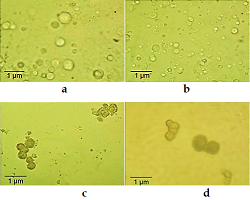
This study aims to develop a liposomal drug delivery system of isotretinoin, an acne drug-using spray drying, as a cost-effective and time-effective technique. The liposomal formulation was prepared by using spray drying; three different strategies were adopted: suspension spray drying (SSD), thin-film hydration and spray drying (TFHSD), and emulsion spray drying (ESD). Isotretinoin was 99% bound with lipid, so lipids hydrogenated soy phosphatidylcholine (HSPC), distearoyl phosphatidylglycerol (DSPG), and cholesterol were selected for the formulation development. The HSPC, DSPG, cholesterol, and isotretinoin were taken in the ratio 4 : 1 : 0.16 : 3.1 mmol. In vitro drug release studies, microscopy, drug content, and related substance characterizations were done to formulate each strategy of spray drying prepared dry liposomes of isotretinoin. Results were compared with the USP monograph of isotretinoin. It was revealed that isotretinoin's liposomal formulation using ESD was having drug release according to the USP limits. Drug content was also according to the USP requirement; no free drug crystals were found in microscopy, multivesicular vesicles were found in shape, a particle size of up 60 µ was found. The ESD technique was a successful, time-effective, and cost-effective technique for preparing a liposomal drug delivery system for isotretinoin.
Downloads
Downloads
Published
Issue
Section
Categories
License
Copyright (c) 2021 Md Iftekhar Ahmad, Punet Kumar, Sangam Singh, Nitin Kumar

This work is licensed under a Creative Commons Attribution-ShareAlike 4.0 International License.
This work is licensed under a Creative Commons Attribution-ShareAlike 4.0 International License.
Authors continue to retain the copyright to the article if the article is published in the Borneo Journal of Pharmacy. They will also retain the publishing rights to the article without any restrictions.
Authors who publish in this journal agree to the following terms:
- Any article on the copyright is retained by the author(s).
- The author grants the journal the right of first publication with the work simultaneously licensed under a Creative Commons Attribution License that allows others to share work with an acknowledgment of the work authors and initial publications in this journal.
- Authors can enter into separate, additional contractual arrangements for the non-exclusive distribution of published articles (e.g., post-institutional repository) or publish them in a book, with acknowledgment of their initial publication in this journal.
- Authors are permitted and encouraged to post their work online (e.g., in institutional repositories or on their websites) prior to and during the submission process. This can lead to productive exchanges and earlier and greater citations of published work.
- The article and any associated published material are distributed under the Creative Commons Attribution-ShareAlike 4.0 International License.