Campylobacter Species, Microbiological Source Tracking and Risk Assessment of Bacterial pathogens
DOI:
https://doi.org/10.33084/bjop.v5i2.3363Keywords:
campylobacter, campylobacteriosis, microbial risk assessment, source attribution, bacterial pathogensAbstract
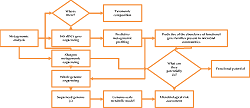
Campylobacter species continue to remain critical pathogens of public health interest. They are responsible for approximately 500 million cases of gastroenteritis per year worldwide. Infection occurs through the consumption of contaminated food and water. Microbial risk assessment and source tracking are crucial epidemiological strategies to monitor the outbreak of campylobacteriosis effectively. Various methods have been proposed for microbial source tracking and risk assessment, most of which rely on conventional microbiological techniques such as detecting fecal indicator organisms and other novel microbial source tracking methods, including library-dependent microbial source tracking and library-independent source tracking approaches. However, both the traditional and novel methods have their setbacks. For example, while the conventional techniques are associated with a poor correlation between indicator organism and pathogen presence, on the other hand, it is impractical to interpret qPCR-generated markers to establish the exact human health risks even though it can give information regarding the potential source and relative human risk. Therefore, this article provides up-to-date information on campylobacteriosis, various approaches for source attribution, and risk assessment of bacterial pathogens, including next-generation sequencing approaches such as shotgun metagenomics, which effectively answer the questions of potential pathogens are there and in what quantities.
Downloads
Published
Issue
Section
Categories
License
Copyright (c) 2022 Bashar Haruna Gulumbe, Abbas Yusuf Bazata, Musbahu Abdullahi Bagwai

This work is licensed under a Creative Commons Attribution-ShareAlike 4.0 International License.
This work is licensed under a Creative Commons Attribution-ShareAlike 4.0 International License.
Authors continue to retain the copyright to the article if the article is published in the Borneo Journal of Pharmacy. They will also retain the publishing rights to the article without any restrictions.
Authors who publish in this journal agree to the following terms:
- Any article on the copyright is retained by the author(s).
- The author grants the journal the right of first publication with the work simultaneously licensed under a Creative Commons Attribution License that allows others to share work with an acknowledgment of the work authors and initial publications in this journal.
- Authors can enter into separate, additional contractual arrangements for the non-exclusive distribution of published articles (e.g., post-institutional repository) or publish them in a book, with acknowledgment of their initial publication in this journal.
- Authors are permitted and encouraged to post their work online (e.g., in institutional repositories or on their websites) prior to and during the submission process. This can lead to productive exchanges and earlier and greater citations of published work.
- The article and any associated published material are distributed under the Creative Commons Attribution-ShareAlike 4.0 International License.