Potential of Indonesian Plants as Polymicrobial Anti-Biofilm
DOI:
https://doi.org/10.33084/bjop.v7i1.5645Keywords:
Quorum sensing, Adhesion, Polyphenols, PolymicrobialAbstract
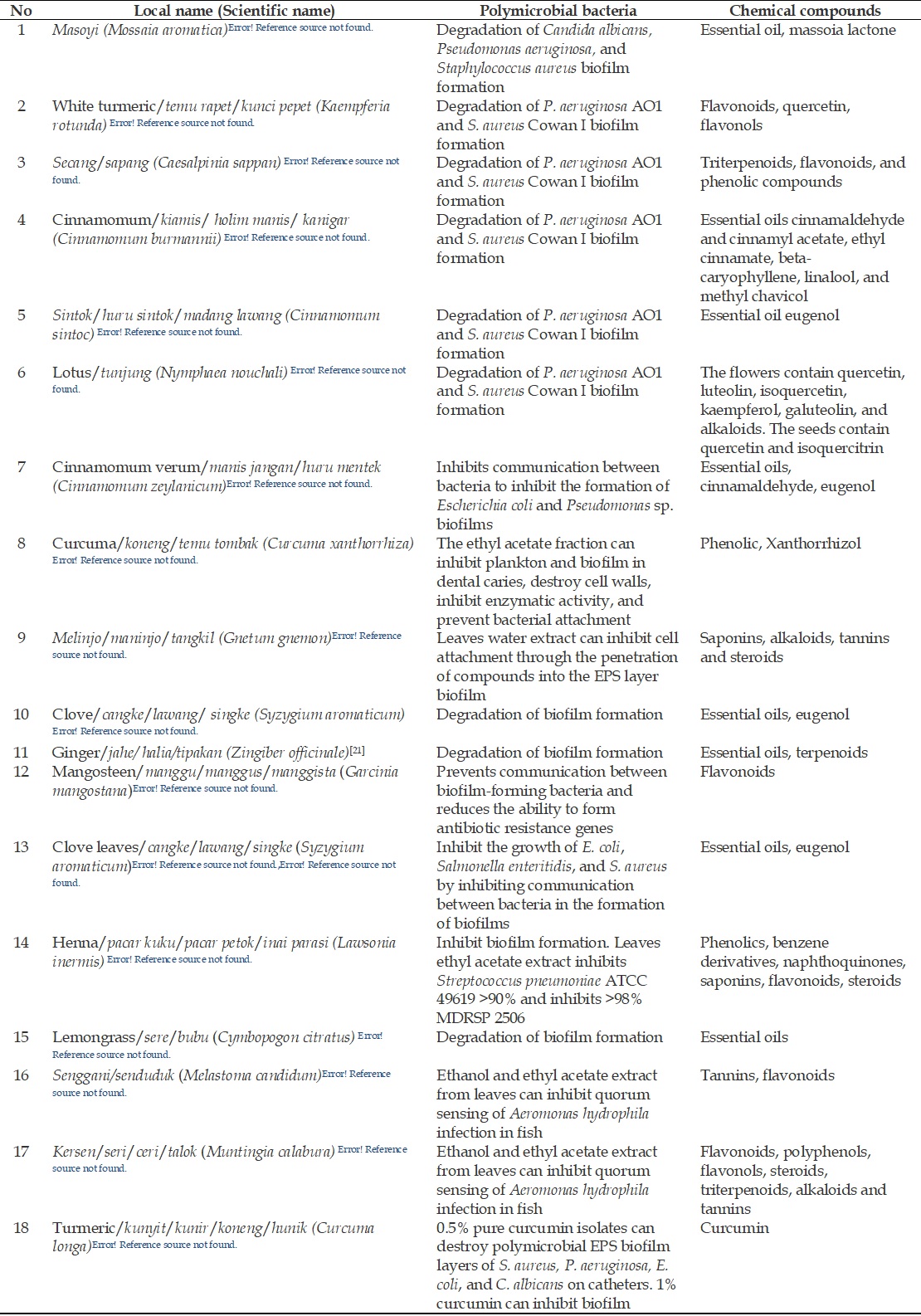
Biofilm infection occurs in 80% of chronic infections caused by 60% of biofilms from plankton cells and polymicrobial biofilms. Due to synergistic interactions between species, infections caused by polymicrobial biofilms are more virulent than monospecies biofilm infections. New anti-biofilm candidates are constantly being developed by tracing the content of active compounds from medicinal plants native to Indonesia. The need to find new plant sources that have the potential as anti-biofilms is increasingly needed along with increasing microbial resistance. Various studies show that active compounds that have anti-biofilm potential are polyphenols, quercetin, curcumin, gallic acid, and ferulic acid. The mechanism of action of anti-biofilms is through the prevention of attachment and formation of biofilms, inhibition of quorum sensing, and inhibition of gene expression in microbes.
Downloads
References
Aslam B, Wang W, Arshad MI, Khurshid M, Muzammil S, Rasool MH, et al. Antibiotic resistance: a rundown of a global crisis. Infect Drug Resist. 2018;11:1645-58. DOI: 10.2147/idr.s173867; PMCID: PMC6188119; PMID: 30349322
Dostert M. Antibiofilm peptides: overcoming biofilm-related treatment failure. RSC Adv. 2021;11(5):2718–28. DOI: 10.1039/d0ra09739j; PMCID: PMC8694000; PMID: 35424252
Amankwah S, Abdella K, Kassa T. Bacterial Biofilm Destruction: A Focused Review on the Recent Use of Phage-Based Strategies with Other Antibiofilm Agents. Nanotechnol Sci Appl.2021;14:161-77. DOI: 10.2147/nsa.s325594; PMCID: PMC8449863; PMID: 34548785
Preda VG, Săndulescu O. Communication is the key: biofilms, quorum sensing, formation and prevention. Discoveries. 2019;7(3):e100. DOI: 10.15190/d.2019.13; PMCID: PMC7086079; PMID: 32309618
Anju VT, Busi S, Imchen M, Kumavath R, Mohan MS, Salim SA, et al. Polymicrobial Infections and Biofilms: Clinical Significance and Eradication Strategies. Antibiotics. 2022;11(12):1731. DOI: 10.3390/antibiotics11121731; PMCID: PMC9774821; PMID: 36551388
Orazi G, O'Toole GA. "It Takes a Village": Mechanisms Underlying Antimicrobial Recalcitrance of Polymicrobial Biofilms. J Bacteriol. 2019;202(1):e00530-19. DOI: 10.1128/jb.00530-19; PMCID: PMC6932244; PMID: 31548277
Sartini S, Permana AD, Mitra S, Tareq AM, Salim E, Ahmad I, et al. Current State and Promising Opportunities on Pharmaceutical Approaches in the Treatment of Polymicrobial Diseases. Pathogens. 2021;10(2):245. DOI: 10.3390/pathogens10020245
Rodrigues ME, Gomes F, Rodrigues CF. Candida spp./Bacteria Mixed Biofilms. J Fungi. 2019;6(1):5. DOI: 10.3390/jof6010005; PMCID: PMC7151131; PMID: 31861858
Gabrilska RA, Rumbaugh KP. Biofilm models of polymicrobial infection. Future Microbiol. 2015;10(12):1997-2015. DOI: 10.2217/fmb.15.109; PMCID: PMC4944397; PMID: 26592098
Dutt Y, Dhiman R, Singh T, Vibhuti A, Gupta A, Pandey RP, et al. The Association between Biofilm Formation and Antimicrobial Resistance with Possible Ingenious Bio-Remedial Approaches. Antibiotics. 2022;11(7):930. DOI: 10.3390/antibiotics11070930; PMCID: PMC9312340; PMID: 35884186
Salam MA, Al-Amin MY, Salam MT, Pawar JS, Akhter N, et al. Antimicrobial Resistance: A Growing Serious Threat for Global Public Health. Healthcare. 2023;11(13):1946. DOI: 10.3390/healthcare11131946; PMCID: PMC10340576; PMID: 37444780
Abdallah EM, Alhatlani BY, Menezes RdP, Martins CHG. Back to Nature: Medicinal Plants as Promising Sources for Antibacterial Drugs in the Post-Antibiotic Era. Plants. 2023;12(17):3077. DOI: 10.3390/plants12173077; PMCID: PMC10490416; PMID: 37687324
Cleary DFR, DeVantier L. Indonesia: Threats to the Country's Biodiversity. In: Nriagu JO, editor. Encyclopedia of Environmental Health. Amsterdam: Elsevier Science; 2011. p. 187-97. DOI: 10.1016/B978-0-444-52272-6.00504-3
Setiawan A. Keanekaragaman Hayati Indonesia: Masalah dan Upaya Konservasinya. Indones J Conserv. 2022;11(1):13-21. DOI: 10.15294/ijc.v11i1.34532
Arozal W, Louisa M, Soetikno V. Selected Indonesian Medicinal Plants for the Management of Metabolic Syndrome: Molecular Basis and Recent Studies. Front Cardiovasc Med. 2020;7:82. DOI: 10.3389/fcvm.2020.00082; PMCID: PMC7218133; PMID: 32435657
Arisanti IP, Yamasari Y. Mengenali Jenis Tanaman Obat Berbasis Pola Citra Daun Dengan Algoritma K-Nearest Neighbors. J Informatics Comput Sci 2021;3(2):95-103. DOI: 10.26740/jinacs.v3n02.p95-103
Pangastuti A, Sari SLA, Budiharjo A, Fitri ST, Sayekti P, Putri SR. Screening of some Indonesian medicinal plant extracts for anti quorum sensing activity to prevent Aeromonas hydrophila infection on Oreochromis niloticus. Biodiversitas. 2021;22(8):3517-22. DOI: 10.13057/biodiv/d220851
Fitria A. The Bactericidal and Antibiofilm Activity of Stem Bark of Jatropha multifida L. Against Staphylococcus aureus and MRSA. Eksakta J Sci Data Anal. 2018;18(1):42–55. DOI: 10.20885/eksakta.vol18.iss1.art5
Zhao A, Sun J, Liu Y. Understanding bacterial biofilms: From definition to treatment strategies. Front Cell Infect Microbiol. 2023;13:1137947. DOI: 10.3389/fcimb.2023.1137947; PMCID: PMC10117668; PMID: 37091673
Sharma S, Mohler J, Mahajan SD, Schwartz SA, Bruggema L, Aalinkeel R. Microbial Biofilm: A Review on Formation, Infection, Antibiotic Resistance, Control Measures, and Innovative Treatment. Microorganisms. 2023;11(6):1614. DOI: 10.3390/microorganisms11061614; PMCID: PMC10305407; PMID: 37375116
Prazdnova E, Gorovtsov AV, Vasilchenko NG, Kulikov MP, Statsenko VN, Bogdanova AA, et al. Quorum-Sensing Inhibition by Gram-Positive Bacteria. Microorganisms. 2022;10(2):350. DOI: 10.3390/microorganisms10020350; PMCID: PMC8875677; PMID: 35208805
Hrynyshyn A, Simões M, Borges A. Biofilms in Surgical Site Infections: Recent Advances and Novel Prevention and Eradication Strategies. Antibiotics. 2022;11(1):69. DOI: 10.3390/antibiotics11010069; PMCID: PMC8773207; PMID: 35052946
Jamal M, Ahmad W, Andleeb S, Jalil F, Imran M, Nawaz MA, et al. Bacterial biofilm and associated infections. J Chin Med Assoc. 2018;81(1):7-11. DOI: 10.1016/j.jcma.2017.07.012; PMID: 29042186
Manner S, Fallarero A. Screening of Natural Product Derivatives Identifies Two Structurally Related Flavonoids as Potent Quorum Sensing Inhibitors against Gram-Negative Bacteria. Int J Mol Sci. 2018;19(5):1346. DOI: 10.3390/ijms19051346; PMCID: PMC5983823; PMID: 29751512
Rather MA, Gupta K, Mandal M. Microbial biofilm: formation, architecture, antibiotic resistance, and control strategies. Braz J Microbiol. 2021;52(4):1701-18. DOI: 10.1007/s42770-021-00624-x; PMCID: PMC8578483; PMID: 34558029
Bowen WH, Burne RA, Wu H, Oral Biofilms: Pathogens, Matrix, and Polymicrobial Interactions in Microenvironments. Trends Microbiol. 2018;26(3):229–42. DOI: 10.1016/j.tim.2017.09.008; PMCID: PMC5834367; PMID: 29097091
Pratiwi SUT, Lagendijk EL, Hertiani T, de Weert S, van den Hondel CAMJJ. Antimicrobial effects of Indonesia medicinal plants extracts on planktonic and biofilm growth of Psedomonas aeruginosa and Staphylococcus aureus. J Hortic. 2015;2(1):1000119. DOI: 10.4172/2376-0354.1000119
Hertiani T, Pratiwi SUT, Irianto IDK, Adityaningrum D, Pranoto B. Effect of Indonesian medicinal plants essential oils on Streptococcus mutans biofilm. Indones J Pharm. 2011;22(3):174–81. DOI: 10.14499/indonesianjpharm0iss0pp174-181
Kining E, Falah S, Nurhidayat N. The in vitro antibiofilm activity of water leaf extract of papaya (Carica papaya L) against Pseudomonas aeruginosa. Curr Biochem 2016;2(3):150–63. DOI: 10.29244/cb.2.3.150-163
Gracia E, Magdalena S, Wina E, Sinurat AP, Purwadaria T. Plant extract as antioxidant and antibiofilm against chicken gut bacteria. J Ilmu Ternak Vet. 2018;23(1):11–7. DOI: 10.14334/jitv.v23i1.1800
Hamzah H, Hertiani T, Pratiwi SUT, Nuryastuti T. Inhibitory activity and degradation of curcumin as antibiofilm polymicrobial on catheters. Int J Res Pharm Sci. 2020;11(1):830–5. DOI: 10.26452/ijrps.v11i1.1902
Hamzah H, Rasdianah N, Nurwijayanto A, Nandini E. Aktivitas ekstrak etanol daun calincing terhadap biofilm Candida albicans. J Farmasetis. 2021;10(1):21–8. DOI: 10.32583/farmasetis.v10i1.1319
Tobi CHB, Saptarini O, Rahmawati I. Aktivitas Antibiofilm Ekstrak dan Fraksi-Fraksi Biji Pinang (Areca catechu L.) Terhadap Staphylococcus aureus ATCC 25923. J Pharm Sci Clin Res. 2022;7(1):56–70. DOI: 10.20961/jpscr.v7i1.43698
Wahabi AIS. Pengaruh Ekstrak Biji Kepayang (Pangium edule Reinw.) terhadap Destruksi Biofilm Bakteri Streptococcus sanguinis ATCC 10556 [bachelor’s thesis]. Yogyakarta: Universitas Gadjah Mada; 2022. Available from: https://etd.repository.ugm.ac.id/penelitian/detail/210344
Wirasisya DG. Aktivitas Antibakteri dan Antibiofilm Ekstrak Etanolik dan Fraksi Larut Metanol Umbi Bawang Tiwai (Eleutherine americana. Merr) pada Isolat Klinis Staphylococcus aureus [bachelor’s thesis]. Yogyakarta: Universitas Gadjah Mada; 2014. Available from: https://etd.repository.ugm.ac.id/home/detail_pencarian/74306
Rahmaningtyas AN. Pengaruh Ekstrak Etanol Biji Ketumbar (Coriandrum sativum L) Terhadap Penghambatan Pembentukan Biofilm Streptococcus mutans ATCC 25175 in Vitro [bachelor’s thesis]. Yogyakarta: Universitas Gadjah Mada; 2021. Available from: https://etd.repository.ugm.ac.id/penelitian/detail/207004
Simangasing NA. Pengaruh Ekstrak Daun Nangka (Artocarpus Heterophyllus) terhadap Destruksi Biofilm Streptococcus sanguinis ATCC 10556 In Vitro [bachelor’s thesis]. Yogyakarta: Universitas Gadjah Mada; 2021. Available from: https://etd.repository.ugm.ac.id/penelitian/detail/206831
Ardani M, Pratiwi SUT, Hertiani T. Effect of cengkeh leaves and kayu manis cortex essential oils blend as anti dental plaque. Indones J Pharm, 2010;21(3):191–201. DOI: 10.14499/indonesianjpharm0iss0pp191-201
Kining E, Falah S, Nurhidayat N. Aktivitas Antibiofilm Ekstrak Air Daun Melinjo, Daun Singkong, Dan Daun Pepaya Terhadap Bakteri Pseudomonas Aeruginosa Secara In Vitro [master’s thesis]. Bogor: IPB University; 2015. Available from: http://repository.ipb.ac.id/handle/123456789/78746
Rollando R, Prasetyo YSA, Sitepu R. Uji Antimikroba Minyak Atsiri Masoyi (Massoia aromatica) terhadap Bakteri Streptococcus mutans. Majalah Farmasi Farmakologi. 2019;23(2):52–7. DOI: 10.20956/mff.v23i2.6585
Pratiwi SUT, Lagendijk EL, de Weert S, Idroes R, Hertiani T, van den Hondel C. Effect of Cinnamomum burmannii Nees ex Bl. and Massoia aromatica Becc. Essential Oils on Planktonic Growth and Biofilm formation of Pseudomonas aeruginosa and Staphylococcus aureus In Vitro. Int J Appl Res Nat Prod. 2015;8(2):1–13.
Hamzah H, Nuryastuti T, Rahmah W, Chabib L, Syamsul ES, Lestari D, et al. Molecular Docking Study of the C-10 Massoia Lactone Compound as an Antimicrobial and Antibiofilm Agent against Candida tropicalis. ScientificWorldJournal. 2023;2023:6697124. DOI: 10.1155/2023/6697124; PMCID: 10522437; PMID: 37766863
Utami DT, Pratiwi SUT, Spaink HP, Haniastuti T, Hertiani T. Antibiofilm effect of C-10 massoia lactone toward polymicrobial oral biofilms. J Adv Pharm Technol Res. 2021;12(1):89-93. DOI: 10.4103/japtr.japtr_105_20; PMCID: 7832195; PMID: 33532362
Tabunhan S, Tungsukruthai P. Antibiofilm Activity of a Curcuma zedoaria Rosc Rhizome Extract against Methicillin-Resistant and Susceptible Staphylococcus aureus. Microbiol Biotechnol Lett. 2022;50(2):193–201. DOI: 10.48022/mbl.2201.01007
Syamsunarno MRA, Safitri R, Kamisah Y. Protective Effects of Caesalpinia sappan Linn. and Its Bioactive Compounds on Cardiovascular Organs. Front Pharmacol. 2021;12:725745. DOI: 10.3389/fphar.2021.725745; PMCID: PMC8479160; PMID: 34603037
Batubara I, Mitsunaga T, Ohashi H. Brazilin from Caesalpinia sappan wood as an antiacne agent. J Wood Sci. 2010;56:77-81. DOI: 10.1007/s10086-009-1046-0
Utami TW, Ekananda BN, Anjani YR, Listyarifah D, Nur A, Syahbudin A. Comparison Effect of Leaves and Bark Extract of Eucalyptus (Melaleuca leucadendra), Sappan (Caesalpinia sappan), and Cinnamon (Cinnamomum zeylanicum) to Reduce Streptococcus mutans Biofilm Formation. Majalah Kedokteran Gigi Indones. 2023;9(1):81. DOI: 10.22146/majkedgiind.83283
Nirmal NP, Rajput MS, Prasad RGSV, Ahmad M. Brazilin from Caesalpinia sappan heartwood and its pharmacological activities: A review. Asian Pac J Trop Med. 2015;8(6):421–30. DOI: 10.1016/j.apjtm.2015.05.014; PMID: 26194825
Al-Dhubiab BE. Pharmaceutical applications and phytochemical profile of Cinnamomum burmannii. Pharmacogn Rev. 2012;6(12):125-31. DOI: 10.4103/0973-7847.99946; PMCID: PMC3459454; PMID: 23055638
Foudah AI, Shakeel F, Alqarni MH, Ross SA, Salkini MA, Alam P. Simultaneous Estimation of Cinnamaldehyde and Eugenol in Essential Oils and Traditional and Ultrasound-Assisted Extracts of Different Species of Cinnamon Using a Sustainable/Green HPTLC Technique. Molecules. 2021;26(7):2054. DOI: 10.3390/molecules26072054; PMCID: PMC8038348; PMID: 33916710
Pratiwi SUT. Anti-microbial and anti-biofilm compounds from Indonesian medicinal plants [dissertation]. Leiden: Universiteit Leiden; 2015. Available from: https://hdl.handle.net/1887/36530
Muhamad KZ. Uji Aktivitas Antibakteri Ekstrak dan Fraksi Daun Sintok (Cinnamomun sintoc) terhadap Staphylococcus aureus dan Pseudomonas aeruginosa serta Analisa Kom[onen Senyawa Fraksi Aktif dengan Kromatografi Gas-Spektrometri Massa [bachelor’s thesis]. Jakarta: Universitas Islam Negeri Syarif Hidayatullah; 2014. Available from: http://repository.uinjkt.ac.id/dspace/handle/123456789/25844
Helmy YA, Taha-Abdelaziz K, Hawwas HAE, Ghosh S, AlKafaas SS, Moawad MMM, et al. Antimicrobial Resistance and Recent Alternatives to Antibiotics for the Control of Bacterial Pathogens with an Emphasis on Foodborne Pathogens. Antibiotics. 2023;12(2):274. DOI: 10.3390/antibiotics12020274; PMCID: PMC9952301; PMID: 36830185
Dash BK, Sen MK, Alam K, Hossain K, Islam R, Banu NA, et al. Antibacterial activity of Nymphaea nouchali (Burm. f) flower. Ann Clin Microbiol Antimicrob. 2013;12(1):27. DOI: 10.1186/1476-0711-12-27; PMCID: PMC3852100; PMID: 24099586
Alves DdN, Monteiro AFM, Andrade PN, Lazarini JG, Abílio GMF, Guerra FQS, et al. Docking Prediction, Antifungal Activity, Anti-Biofilm Effects on Candida spp., and Toxicity against Human Cells of Cinnamaldehyde. Molecules. 2020;25(24):5969. DOI: 10.3390/molecules25245969; PMCID: PMC7767272; PMID: 33339401
Firmino DF, Cavalcante TTA, Gomes GA, Firmino NCS, Rosa LD, de Carvalho MG, et al. Antibacterial and Antibiofilm Activities of Cinnamomum Sp. Essential Oil and Cinnamaldehyde: Antimicrobial Activities. ScientificWorldJournal. 2018;2018:7405736. DOI: 10.1155/2018/7405736; PMCID: PMC6011056; PMID: 29977171
Rahmat E, Lee J, Kang Y. Javanese Turmeric (Curcuma xanthorrhiza Roxb.): Ethnobotany, Phytochemistry, Biotechnology, and Pharmacological Activities. Evid Based Complement Alternat Med. 2021;2021:9960813. DOI: 10.1155/2021/9960813; PMCID: PMC8214482; PMID: 34194529
Kining E, Firdiani D, Sogandi, Aminullah, Asma S. Antibacterial and Antibiofilm Activity of Melinjo Leaf Water Extract against Pseudomonas aeruginosa Bacteria. Indones Nat Res Pharm J. 2022;7(1):19–31. DOI: 10.52447/inrpj.v7i1.5901
Kačániová M, Galovičová L, Borotová P, Valková V, Ďúranová H, Kowalczewski PŁ, et al. Chemical Composition, In Vitro and In Situ Antimicrobial and Antibiofilm Activities of Syzygium aromaticum (Clove) Essential Oil. Plants. 2021;10(10):2185. DOI: 10.3390/plants10102185; PMCID: PMC8538430; PMID: 34685994
Akbari S, Didar Z, Vazifedoost M, Hajirostamloo B, Mohtashami M. Antibiofilm Activity of Ginger (Zingiber officinale) Extracts In Vitro and Food Model. J Food Process Preserv 2023;2023:5134332. DOI: 10.1155/2023/5134332
Kunarti S, Ramadhani A, Setyowati L. Antibiofilm Activity of Mangosteen (Garcinia mangostana L.) Flavonoids against Streptococcus mutans Bacteria. Conserv Dent J 2020;10(2):48-50. DOI: 10.20473/cdj.v10i2.2020.48-50
Ribeiro SM, Fratucelli EDO, Bueno PCP, de Castro MKV, Francisco AA, Cavalheiro AJ, et al. Antimicrobial and antibiofilm activities of Casearia sylvestris extracts from distinct Brazilian biomes against Streptococcus mutans and Candida albicans. BMC Complement Altern Med. 2019;19(1):308. DOI: 10.1186/s12906-019-2717-z; PMCID: PMC6852947; PMID: 31718633
Triveni AG, Kumar MS, Shivannavar CT, Gaddad SM. Antibacterial and antibiofilm activities of crude extracts of Lawsonia inermis against methicillin-resistant Staphylococcus aureus. Asian J Pharm Clin Res. 2016;9(6):263–5. DOI: 10.22159/ajpcr.2016.v9i6.14362
Sahal G, Woerdenbag HJ, Hinrichs WLJ, Visser A, Tepper PG, Quax WJ, et al. Antifungal and biofilm inhibitory effect of Cymbopogon citratus (lemongrass) essential oil on biofilm forming by Candida tropicalis isolates; an in vitro study. J Ethnopharmacol. 2020;246:112188. DOI: 10.1016/j.jep.2019.112188; PMID: 31470085
Ambade SV, Deshpande NM. Antimicrobial and Antibiofilm Activity of Essential Oil of Cymbopogon citratus against Oral Microflora Associated with Dental Plaque. Eur J Med Plants. 2019;28(4):1–11. DOI: 10.9734/ejmp/2019/v28i430143
Wang YC, Hsu HW, Liao WL. Antibacterial activity of Melastoma candidum D. Don. LWT - Food Sci Technol. 2008;41(10):1793–8. DOI: 10.1016/j.lwt.2008.02.005
Omar SNC, Abdullah JO, Khairoji KA, Chin SC, Hamid M. Effects of Flower and Fruit Extracts of Melastoma malabathricum Linn. on Growth of Pathogenic Bacteria: Listeria monocytogenes, Staphylococcus aureus, Escherichia coli, and Salmonella typhimurium. Evidence-Based Complement Altern Med. 2013;2013:459089. DOI: 10.1155/2013/459089; PMCID: PMC3638579; PMID: 23662136
Sufian AS, Ramasamy K, Ahmat N, Zakaria ZA, Yusof MIM. Isolation and identification of antibacterial and cytotoxic compounds from the leaves of Muntingia calabura L. J Ethnopharmacol. 2013;146(1):198–204. DOI: 10.1016/j.jep.2012.12.032; PMID: 23276785
MosaChristas K, Kowsalya E, Karthick R, Jaquline CRI. Antibacterial, antibiofilm and anti-quorum sensing activities of Muntingia calabura L. leaf extract against Pseudomonas aeruginosa. Lett Appl Microbiol. 2022;75(3):588–97. DOI: 10.1111/lam.13595; PMID: 34725846
Di Salle A, Viscusi G, Di Cristo F, Valentino A, Gorrasi G, Lamberti E, et al. Antimicrobial and Antibiofilm Activity of Curcumin-Loaded Electrospun Nanofibers for the Prevention of the Biofilm-Associated Infections. Molecules. 2021;26(16):4866. DOI: 10.3390/molecules26164866; PMCID: PMC8400440; PMID: 34443457
Hamzah H, Siregar KAAK, Nurwijayanto A, Wahyuningrum R, Sari S. Effectiveness of Oxalis corniculata L. Ethanol Extract against Mono-Species of Biofilm Staphylococcus aureus. Borneo J Pharm. 2021;4(3):184–91. DOI: 10.33084/bjop.v4i3.2418
Sari LM, Hakim RF, Mubarak Z, Andriyanto A. Analysis of phenolic compounds and immunomodulatory activity of areca nut extract from Aceh, Indonesia, against Staphylococcus aureus infection in Sprague-Dawley rats. Vet World. 2020;13(1):134-40. DOI: 10.14202/vetworld.2020.134-140; PMCID: PMC7020107; PMID: 32158163
Firdausi A, Siswoyo TA, Wiryadiputra S. Identification of Potential Plants Producing Tannin-protein Complex for
-amylase as Botanical Pesticide. Pelita Perkebunan. 2013;29(1):31–43. DOI: 10.22302/iccri.jur.pelitaperkebunan.v29i1.189
Keyvani-Ghamsari S, Rahimi M, Khorsandi K. An update on the potential mechanism of gallic acid as an antibacterial and anticancer agent. Food Sci Nutr. 2023;11(10):5856-72. DOI: 10.1002/fsn3.3615; PMCID: PMC10563697; PMID: 37823155
Sutomo S, Pratama MRF. Measuring the potential antioxidant activity of methyl gallate: Molecular docking study. Thai J Pharm Sci. 2019;44(1):14-22.
Rollando R. Isolasi, Identifikasi, Karakterisasi, dan Uji Antibiofilm Derivat Asam Galat dari Kulit Batang Sterculia quadrifida R.Br. J Kefarmasian Indones. 2017;7(2):105–11.
Karo-karo SU, Arianto A, Salim E. Antibacterial Activity and Determination of Total Phenol and Flavonoid of Carica papaya L. Ethanol Extract. Int J Sci Technol Manag. 2023;4(1):233-8. DOI: 10.46729/ijstm.v4i1.738
Singh SP, Kumar S, Mathan SV, Tomar MS, Singh RK, Verma PK, et al. Therapeutic application of Carica papaya leaf extract in the management of human diseases. Daru. 2020;28(2):735-44. DOI: 10.1007/s40199-020-00348-7; PMCID: PMC7704890; PMID: 32367410
Borges A, Saavedra M, Simões M. The activity of ferulic and gallic acids in biofilm prevention and control of pathogenic bacteria. Biofouling. 2012;28(7):755–67. DOI: 10.1080/08927014.2012.706751; PMID: 22823343
Dasagrandhi C, Park S, Jung WK, Kim YM. Antibacterial and Biofilm Modulating Potential of Ferulic Acid-Grafted Chitosan against Human Pathogenic Bacteria. Int J Mol Sci. 2018;19(8):2157. DOI: 10.3390/ijms19082157; PMCID: PMC6121546; PMID: 30042337
Makagansa C, Mamuaja CF, Mandey LC. The Antibacterial Activity of Pangi Kernel Extract (Pangium Edule Reinw) Towards Staphylococcus Aureus, Bacillus Cereus, Pseudomonas Aeruginosa and Escherichia Coli in Vitro. J Ilmu Teknologi Pangan. 2015;3(1):16–20.
Kamarudin AA, Sayuti NH, Saad N, Razak NAA, Esa NM. Eleutherine bulbosa (Mill.) Urb. Bulb: Review of the Pharmacological Activities and Its Prospects for Application. Int J Mol Sci. 2021;22(13):6747. DOI: 10.3390/ijms22136747; PMCID: PMC8268349; PMID: 34201683
Pratama MRF, Aziz IR. Molecular Docking of Bawang Dayak (Eleutherine bulbosa) Secondary Metabolites as Bacterial Cell Wall Synthesis Inhibitor. In: Harini S, Hafsan, Sahara, Aziz IR, Rahim R, editors. 1st International Conference on Science and Technology, ICOST 2019, 2-3 May, Makassar, Indonesia. Gent: European Alliance for Innovation; 2019. p. 1-11. DOI: 10.4108/eai.2-5-2019.2284686
Molina RDI, Campos-Silva R, Macedo AJ, Blázquez MA, Alberto MR, Arena ME. Antibiofilm activity of coriander (Coriander sativum L.) grown in Argentina against food contaminants and human pathogenic bacteria. Ind Crops Prod. 2020;151:112380. DOI: 10.1016/j.indcrop.2020.112380
Tripathi K, Kumar P, Kumar R, Saxena R, Kumar A, Badoni H, et al. Efficacy of jackfruit components in prevention and control of human disease: A scoping review. J Educ Health Promot. 2023;12:361. DOI: 10.4103/jehp.jehp_1683_22; PMCID: PMC10743863; PMID: 38144022
Khan MR, Omoloso AD, Kihara M. Antibacterial activity of Artocarpus heterophyllus. Fitoterapia. 2003;74(5):501–5. DOI: 10.1016/s0367-326x(03)00120-5; PMID: 12837372
Sato M, Fujiwara S, Tsuchiya H, Fujii T, Iinuma M, Tosa H, et al. Flavones with antibacterial activity against cariogenic bacteria. J Ethnopharmacol. 1996;54(2–3):171–6. DOI: 10.1016/s0378-8741(96)01464-x; PMID: 8953432
Ningsih I, Rosalinda DA, Kiranasari A, Dewi BE, Sjatna F. In Vitro Antibacterial Activity Test of Jackfruit (Artocarpus heterophyllus Lam.) Leaf Extract against Methicillin-Resistant Staphylococcus aureus (MRSA). In: Proceeding of the Bromo Conference Symposium on Natural Products and Biodiversity, 11-12 July 2018 Surabaya, East Java, Indonesia. Setúba: SciTePress; 2018. p. 1-5. DOI: 10.5220/0008360702450249
Ginting EV, Retnaningrum E, Widiasih DA. Antibacterial activity of clove (Syzygium aromaticum) and cinnamon (Cinnamomum burmannii) essential oil against extended-spectrum β-lactamase-producing bacteria. Vet World. 2021;14(8):2206–11. DOI: 10.14202/vetworld.2021.2206-2211; PMCID: PMC8448639; PMID: 34566340
Published
Issue
Section
Categories
License
Copyright (c) 2024 Rafika Sari, Sylvia Utami Tunjung Pratiwi, Yosi Bayu Murti, Ema Damayanti

This work is licensed under a Creative Commons Attribution-ShareAlike 4.0 International License.
This work is licensed under a Creative Commons Attribution-ShareAlike 4.0 International License.
Authors continue to retain the copyright to the article if the article is published in the Borneo Journal of Pharmacy. They will also retain the publishing rights to the article without any restrictions.
Authors who publish in this journal agree to the following terms:
- Any article on the copyright is retained by the author(s).
- The author grants the journal the right of first publication with the work simultaneously licensed under a Creative Commons Attribution License that allows others to share work with an acknowledgment of the work authors and initial publications in this journal.
- Authors can enter into separate, additional contractual arrangements for the non-exclusive distribution of published articles (e.g., post-institutional repository) or publish them in a book, with acknowledgment of their initial publication in this journal.
- Authors are permitted and encouraged to post their work online (e.g., in institutional repositories or on their websites) prior to and during the submission process. This can lead to productive exchanges and earlier and greater citations of published work.
- The article and any associated published material are distributed under the Creative Commons Attribution-ShareAlike 4.0 International License.